Introduction
Ever noticed how your eyes adjust in bright sunlight vs. a dim room? Your camera’s aperture works the same way! Let’s decode this photo wizardry in plain, fun language.
1. Aperture = Light Gateway
The aperture is the adjustable “hole” in your camera lens that controls how much light enters. Think of it like a window:
- Bigger window (large aperture): Floods in more light (perfect for dark rooms!).
- Smaller window (small aperture): Lets in less light (great for sunny days).
2. F-Stop Numbers: The Reverse Logic
Aperture sizes are measured in f-stops—but here’s the twist:
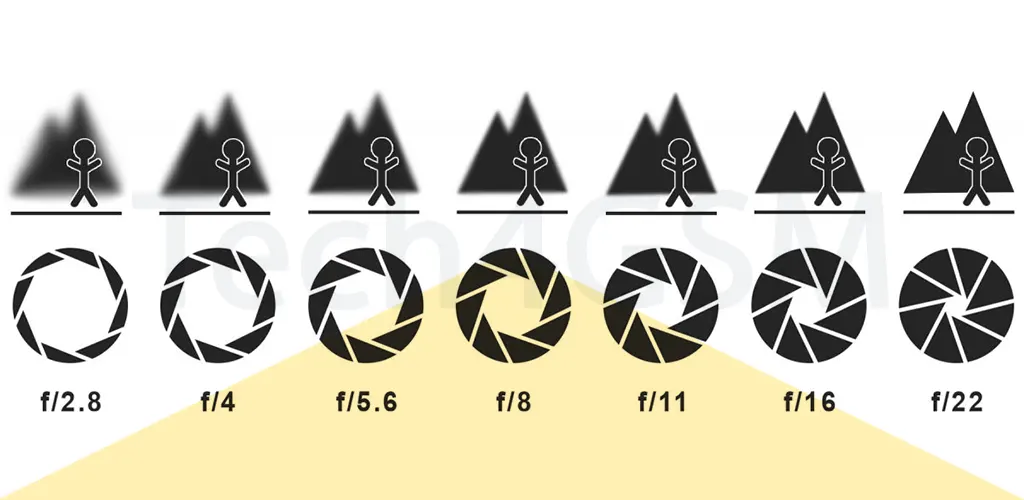
- Lower f-stop number (e.g., f/1.4) = Larger aperture (more light!).
- Higher f-stop number (e.g., f/8) = Smaller aperture (less light!).
Confused? Imagine f-stops as fractions: f/2 is bigger than f/8, just like 1/2 pizza is larger than 1/8! 🍕
3. Why Aperture Choices Matter
- Low Light? Use a wide aperture (e.g., f/1.4) to grab every drop of light.
- Bright Sun? Switch to a narrow aperture (e.g., f/16) to avoid overexposed photos.
- Creative Effects: Large apertures blur backgrounds (hello, portrait mode!), while small apertures keep everything sharp (ideal for landscapes).
Quick Cheat Sheet
| Aperture (f-stop) | Light Intake | Best For |
|---|---|---|
| f/1.4 | Massive | Night shots, portraits |
| f/4 | Moderate | Everyday photos |
| f/8 | Low | Landscapes, group pics |
Fun Fact:
Smartphone cameras often have fixed apertures (like f/1.8 on iPhones), but pro cameras let you adjust them manually. 📱 vs. 📸!
In a Nutshell:
Aperture is your camera’s secret tool for balancing light and creativity. Whether you’re snapping moonlit selfies or sunlit mountains, mastering f-stops turns “good” photos into “wow” ones!