Introduction
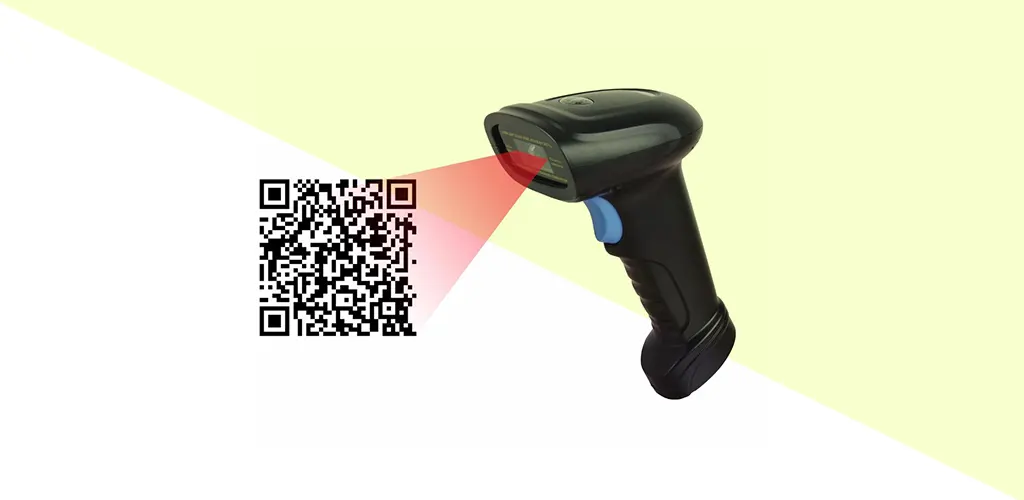
A Barcode Reader (BCR), or barcode scanner, is a device that scans and decodes data from barcodes. These black-and-white lines (or 2D patterns) store information like product details, prices, or tracking codes. The BCR uses a light source, lens, and sensor to convert the barcode into readable data for computers.
How Does a Barcode Reader Work?
- Scan: A laser/LED light scans the barcode.
- Capture: The sensor detects light reflections (dark lines absorb light, spaces reflect it).
- Decode: A decoder chip converts the pattern into text/numbers.
- Transfer: Data is sent to a connected system (e.g., POS, inventory software).
6 Types of Barcode Scanners
- Handheld Scanners: Portable, used in retail or warehouses.
- Stationary Scanners: Fixed on counters (e.g., supermarket checkouts).
- Presentation Scanners: Hands-free, ideal for fast retail environments.
- Industrial Scanners: Rugged, dust-resistant for factories.
- 2D Scanners: Read QR codes and complex patterns (e.g., smartphones).
- Mobile Scanners: Wireless devices for on-the-go scanning (learn more in FAQ).
Where Are Barcode Readers Used?
- Retail: Speed up checkouts and track inventory.
- Warehouses: Manage shipments and stock levels.
- Healthcare: Ensure correct medication and patient ID.
- Manufacturing: Monitor production lines.
- Logistics: Track packages globally.
Top 5 Benefits of Barcode Technology
✅ Accuracy: Reduces manual data entry errors.
✅ Speed: Scans in seconds, saving time.
✅ Cost-Effective: Cuts labor costs and boosts ROI.
✅ Durability: Built to last in tough environments.
✅ Easy to Use: Minimal training required.
Limitations to Consider
- Damaged barcodes (scratched/torn) may not scan.
- Limited data storage vs. RFID tags.
- Initial setup costs for advanced systems.
FAQs: Quick Answers
Q1. What’s a mobile scanner?
A wireless, portable device (often smartphone-compatible) for scanning in remote areas like warehouses.
Q2. How do hospitals use BCRs?
To track medications, patient wristbands, and equipment, reducing errors.
Q3. Can BCRs read 2D codes?
Yes! 2D scanners read QR codes, storing URLs, contact info, and more.
Q4. Are barcode systems expensive?
Basic scanners are affordable, but industrial-grade models cost more.
Conclusion
Barcode readers are game-changers for businesses in 2025, offering speed, accuracy, and versatility. Whether in retail, healthcare, or logistics, BCR tech simplifies workflows and cuts costs.