Introduction
Remember the grainy, pixelated video calls of the 2000s? You can thank H.263—the video codec that made early videoconferencing and mobile streaming possible. Let’s dive into why this tech was revolutionary (and where it still matters today).
What is H.263?
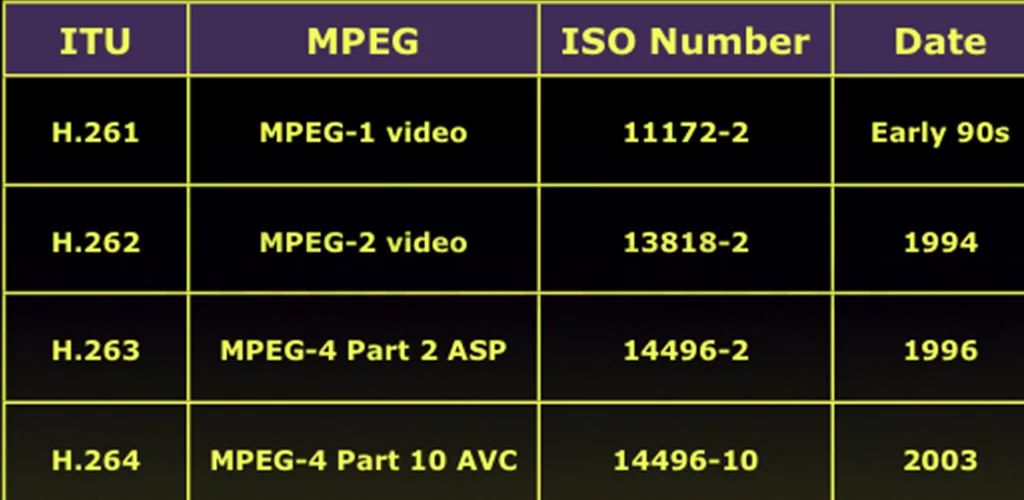
H.263 is a video compression standard created in the late 1990s by the ITU-T (a UN tech group). Designed for low-bitrate video, it squeezed video files small enough to work on dial-up internet and early mobile networks. Think of it as the “MP3” for video—making smooth streaming possible even with sluggish connections.
Why H.263 Was a Big Deal
- Videoconferencing Hero: Before Zoom, apps like Skype and early business systems relied on H.263 to transmit video without freezing.
- Mobile Streaming’s First Star: It became the go-to codec for 3G mobile video—letting you watch news clips or short videos on ancient flip phones!
- Efficiency Master: By focusing on low data usage, it worked in regions with poor internet infrastructure.
H.263’s “Postage Stamp” Resolutions
To save data, H.263 used tiny video sizes:
- SQCIF: 128 x 96 pixels (like a postage stamp).
- QCIF: 176 x 144 pixels (slightly bigger, but still smaller than a SIM card).
- CIF: 352 x 288 pixels (the “HD” of its day).
For comparison: A modern 1080p video is 1920 x 1080—over 20x sharper!
Video Only! Where’s the Sound?
H.263 handled only the video part of a stream. The audio? It used separate codecs like:
- AMR (Adaptive Multi-Rate): A popular audio format for early mobile calls.
- G.723: Often paired with H.263 in videoconferencing systems.
This duo worked like a TV team—H.263 managed the visuals, while AMR handled the voice.
Why You Might Still Encounter H.263 Today
- Legacy Systems: Some security cameras or telehealth devices still use it for its simplicity.
- Low-Bandwidth Regions: In areas with 2G/3G networks, H.263’s efficiency keeps video calls alive.
- Backward Compatibility: Older video files or devices may rely on it to play archived footage.
H.263 vs. Modern Codecs: The Trade-Off
| Feature | H.263 | Modern Codecs (H.265/AV1) |
|---|---|---|
| Resolution | Up to CIF (352×288) | 4K (3840×2160) & beyond |
| Data Usage | Ultra-low | Higher (but better quality) |
| Use Cases | Vintage streaming | Netflix, YouTube, TikTok |
| Device Support | Older phones/cameras | Smartphones, smart TVs |
The Downsides of H.263
- Pixel City: Videos looked like Minecraft characters by today’s standards.
- No High Frame Rates: Choppy motion in fast-action scenes.
- Retired but Not Forgotten: Phased out by H.264 and newer codecs for better quality.
How H.263 Paved the Way
Without H.263, we wouldn’t have:
- Video Calling Culture: It normalized face-to-face chats online.
- Mobile Video Habits: Early adopters watched news and clips on the go.
- Efficiency Standards: Newer codecs built on its low-bitrate principles.
Final Thoughts
H.263 was the unsung workhorse of early digital video—a reminder of how far we’ve come from pixelated screens to 4K clarity. While it’s mostly retired, its legacy lives on in every smooth video call and buffer-free stream we enjoy today.
Key Takeaways:
- H.263 was the first widely-used video codec for low-bandwidth video calls and mobile streaming.
- It used tiny resolutions like QCIF (176×144) to save data.
- Paired with audio codecs like AMR for complete calls.
Phased out by modern standards but laid the groundwork for today’s HD streaming.