Introduction
In the tech world, few operating systems have left a legacy as enduring as Windows NT. Launched by Microsoft in 1993, this powerhouse OS revolutionized personal computers and servers with features that were groundbreaking for its time. As we step into 2025, let’s revisit what made Windows NT special, why it still matters, and how it shaped modern computing.
What is Windows NT?
Windows NT (New Technology) is a family of operating systems designed by Microsoft for both personal computers and servers. Unlike older Windows versions (like Windows 3.1 or 95), NT was built for stability, security, and multitasking. Its name hints at its mission: to bring new tech to the table, like multi-user support, processor independence, and advanced networking.
History of Windows NT
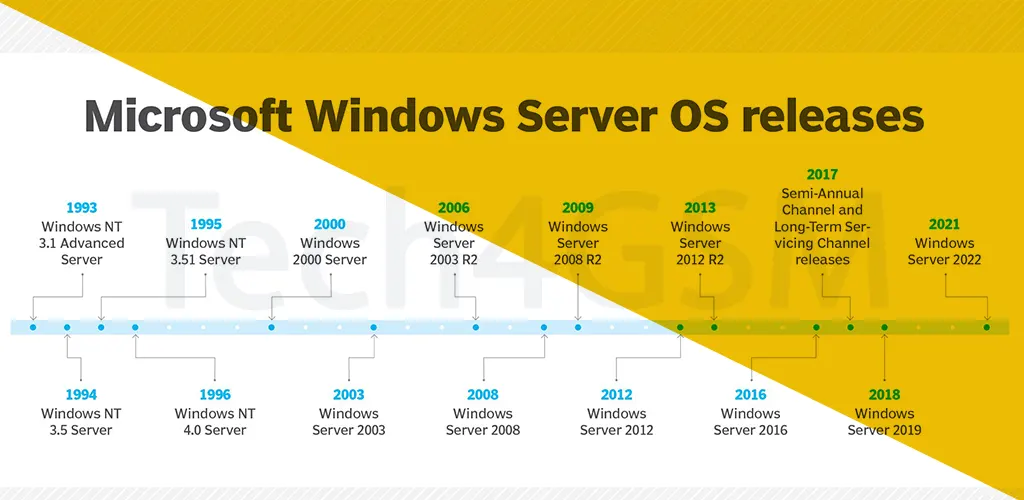
- 1988: Development starts as a collaboration between Microsoft and IBM (originally called OS/2 3.0).
- 1993: Launched as Windows NT 3.1, offering 32-bit architecture and hardware portability.
- 2000: Evolves into Windows 2000, laying the groundwork for modern Windows OS.
- Legacy: Today’s Windows 10/11 and Server editions trace their roots back to NT!
Key Features of Windows NT
- 32-Bit Power: First Windows OS to ditch 16-bit code, enabling faster, more stable performance.
- Hardware Flexibility: Ran on MIPS, ARM, PowerPC, and Intel chips.
- NTFS File System: Introduced secure file storage, long filenames, and better disk management.
- SMP Support: Handled multiple CPUs at once (a big deal for servers!).
- Pre-emptive Multitasking: Could pause tasks to prioritize critical operations.
- Unicode Ready: Supported global languages from the start.
Windows NT Workstation vs. Server
| Feature | NT Workstation | NT Server |
|---|---|---|
| Purpose | For office PCs and power users. | For enterprise networks and web servers. |
| Processors | Max 2 CPUs. | Up to 32 CPUs (NT Server 4.02). |
| User Access | 1 remote user. | 256+ remote users. |
| Networking | Limited to 10 clients. | Unlimited clients, built-in IIS support. |
| Special Features | Similar to Windows 95 interface. | Disk fault tolerance, Mac file support. |
Why Windows NT Was Revolutionary
- Security & Stability: Unlike crash-prone Windows 95, NT rarely froze thanks to its isolated processes.
- Cross-Platform Magic: Ran on both CISC (Intel) and RISC (ARM, MIPS) chips.
- API Versatility: Supported Windows, POSIX, and OS/2 apps—a developer’s dream!
- Server Power: Hosted SQL databases, IIS web servers, and enterprise networks.
Drawbacks of Windows NT
- Hardware Hunger: Needed beefy processors and RAM (slow PCs struggled).
- UNIX Incompatibility: Couldn’t run UNIX apps natively.
- RISC Quirks: Apps like Office faced alignment issues on RISC CPUs.
FAQ About Windows NT
- Does Windows NT still exist in 2025?
No—modern Windows versions (10/11/Server) replaced it. But its DNA lives on! - NTFS vs. FAT: What’s better?
NTFS offers security, long filenames, and large storage—still used today. - Could NT run old DOS games?
Yes, but not as smoothly as Windows 95. NT prioritized stability over gaming. - What killed Windows NT?
Success! It evolved into Windows 2000/XP, which merged NT’s power with user-friendly features. - Is NT still used anywhere?
Rarely—some legacy systems or retro tech enthusiasts might still boot it up. - Where can I learn more about old OS?
Dive into guides and tools at tech4gsm.com.
Why Windows NT Still Matters
While Windows NT is obsolete in 2025, its impact is everywhere:
- Modern Windows: Windows 11 still uses the NT kernel.
- Enterprise Tech: Concepts like multi-CPU support and NTFS shaped cloud servers.
- Security Standards: NT’s focus on isolation inspired today’s malware defenses.
From powering ’90s office PCs to influencing 2025’s AI-driven systems, Windows NT proved that “new technology” can stand the test of time. Whether you’re a tech historian or just curious, NT’s story is a lesson in innovation.