Introduction
When you hit “play” on your favorite show, ever wonder why it streams smoothly even with a shaky internet connection? The hero behind this magic is Average Bit Rate (ABR). Let’s break down what ABR means, how it works, and why it’s essential for your binge-watching sessions in 2025.
What Is Average Bit Rate (ABR)?
ABR is like the speedometer of your data flow. It measures the average speed at which bits (tiny data units) travel over the internet, usually in Kbps (kilobits per second) or Mbps (megabits per second). A higher ABR means sharper video and clearer audio—but only if your internet can keep up!
- Think of ABR as a Smart Traffic Controller: It adjusts video quality in real-time based on your network speed. Slow connection? ABR lowers quality to avoid buffering. Fast Wi-Fi? It boosts quality for a cinematic experience.
Why ABR Matters for Streaming in 2025
Streaming platforms like Netflix or YouTube rely on ABR to keep you glued to the screen. Here’s how it works:
- No More Buffering Nightmares:
ABR stops that annoying spinning wheel by dynamically switching video quality. If your internet dips, it instantly picks a lower bitrate version of the video, so playback stays smooth. - Quality Meets Efficiency:
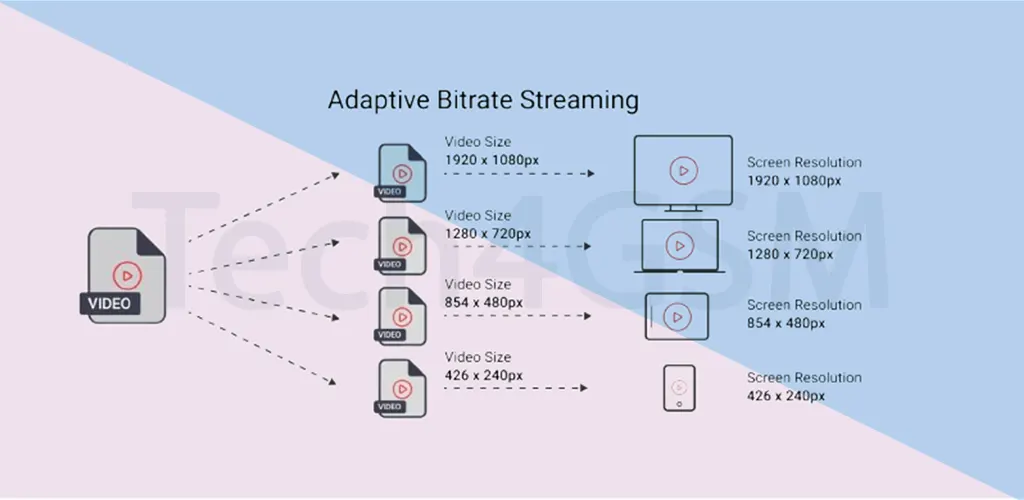
Instead of sending one fixed-quality stream, ABR offers multiple versions of the same video (e.g., 480p, 1080p, 4K). Your device picks the best fit for your network, saving data without sacrificing clarity. - Works on Any Device:
Whether you’re using a smartphone, tablet, or 8K TV, ABR tailors the stream to your device’s screen size and internet speed. Learn how devices optimize streams here.
Top 3 Benefits of ABR You’ll Love
- Seamless Streaming:
Say goodbye to pauses! ABR’s real-time adjustments mean you watch without interruptions, even on crowded networks. - Data Savings:
ABR avoids wasting bandwidth. Why stream 4K if your phone can’t display it? It picks the right balance, saving data for other tasks. - Future-Ready Tech:
As 5G and fiber internet expand in 2025, ABR will leverage faster speeds to deliver 8K streams and immersive audio without hiccups.
How ABR Outshines Old-School Streaming
Before ABR, videos used constant bitrate (CBR), which stuck to one speed no matter what. The result? Buffering on slow networks or wasted data on fast ones. ABR flipped the script by:
- Using Smart Algorithms: Platforms like Spotify and Disney+ analyze your connection 10+ times per minute to optimize streams.
- Slicing Content: Videos are split into 2-10 second chunks. Each chunk’s quality is adjusted individually for flawless transitions.
ABR in 2025: What’s Next?
With AI and machine learning, ABR is getting smarter:
- Predictive Buffering: Apps will guess network drops before they happen, pre-loading low-bitrate chunks.
- Personalized Streams: ABR could customize bitrates based on your habits (e.g., prioritizing audio quality for music lovers).
Final Takeaway
ABR isn’t just tech jargon—it’s the reason you can stream cat videos on a train or watch the big game in HD without lag. As internet speeds soar in 2025, ABR will keep evolving, making pixelated videos a relic of the past.
In short: ABR = Smarter streaming, zero headaches. 🚀