Introduction
Before TikTok DMs, Instagram chats, or even Facebook Messenger, there was AIM—the app that taught a generation how to type “BRB” and master the art of the away message. Let’s revisit this 90s legend and why its spirit lives on in every “ping” you hear today.
What Was AIM?
AOL Instant Messenger (AIM) was the first widely used chat app, launched in 1997. It let you send real-time messages (and emotions!) to friends via the internet. Think of it as Slack for Gen X and Millennials—but with way more teenage drama.
Key Features That Made AIM Iconic:
- Buddy Lists: Track friends’ online statuses (🟢 = available, 🔴 = busy).
- Away Messages: Passive-aggressive quotes like “Out saving the world… or napping.”
- Emoticons: 🙂 meant happy, 😉 meant flirty, and 🙁 meant drama alert.
- File Sharing: Send songs (slowly) and pixelated pics.
Fun Fact: AIM’s door-opening sound (🔔 “You’ve got a message!”) is burned into 90s kids’ brains.
AIM’s Rise & Fall: A Timeline
- 1997: AIM launches, becoming the #1 chat app for teens and adults.
- 2000s: Peaks with 36 million daily users—bigger than TikTok in its prime.
- 2005: Faces competition from MSN Messenger, Yahoo! Messenger, and emo MySpace comments.
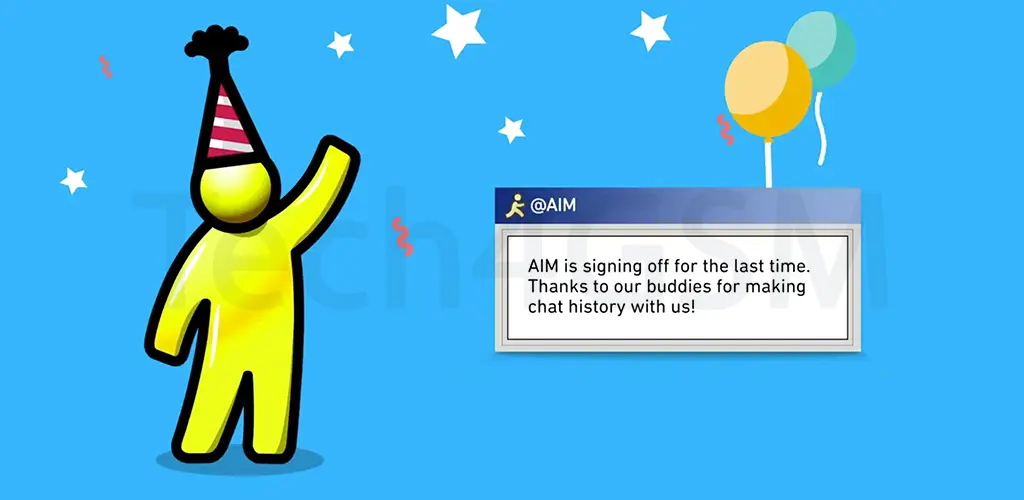
- 2017: AIM shuts down, leaving millions mourning their teenage screen names.
- 2025: Lives on as a nostalgic relic, inspiring modern apps like Discord and WhatsApp.
Why AIM Was Revolutionary
AIM wasn’t just chat—it defined internet culture:
- Screen Names: Your identity was a ~~cool~~ username like XxDarkAngelxX or Sk8erBoi2001.
- Chat Rooms: Meet strangers in “TeenTalk” or “AnimeLovers”—no filters, no regrets.
- Profile Customization: ASCII art, song lyrics, and sparkly GIFs before Instagram bios.
- Privacy Paranoia: Parents couldn’t see your chats… unless they peeked over your shoulder.
Pro Tip: AIM’s file-sharing feature secretly taught us patience (waiting 10 mins to send Hit Me Baby One More Time.mp3).
AIM vs. Modern Chat Apps: Then vs. Now
| Feature | AIM (1997–2017) | 2025 Chat Apps |
|---|---|---|
| Status Updates | Away messages with song lyrics | Instagram Stories & TikTok bios |
| Emojis | 🙂 😛 :'( | 🚀💅🤳 (Thousands of options) |
| Platforms | Windows, Mac, Palm OS, even Symbian phones | iOS, Android, Web, Smart TVs |
| Security | Hackable passwords like “password123” | Face ID, encryption, 2FA |
Why AIM Still Matters in 2025
AIM’s DNA is everywhere:
- Slack/Teams: Group chats and status updates? AIM did it first.
- Discord Servers: Modern chat rooms with better memes.
- DMs: Every “ping” owes a nod to AIM’s notification sound.
But Here’s the Twist: AIM’s simplicity is missed. No ads, no algorithms—just pure, chaotic connection.
AIM’s Legacy: Lessons Learned
- Privacy Matters: AIM hacks taught us to use stronger passwords (RIP “iloveNSYNC”).
- Digital Identity: Your screen name was your brand before LinkedIn profiles.
- Internet Friendships: Pen pals became ASL? (Age/Sex/Location) strangers in your chat list.
AIM in 2025: It’s not just a relic—it’s a reminder that behind every “👋” emoji, there’s a 90s kid who once typed “TTYL” with passion.
“Goodbye for now…” (AIM log-off sound echoes.) 🎶