Introduction
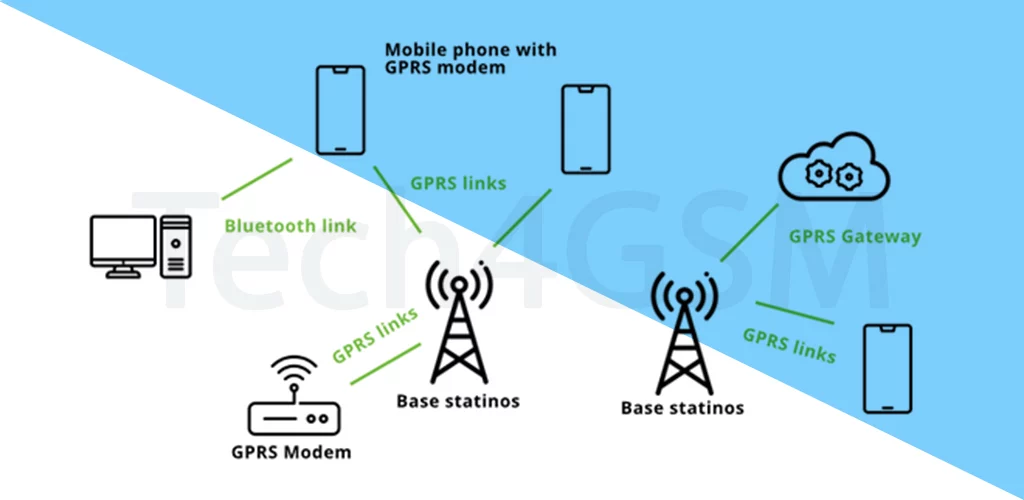
GPRS (General Packet Radio Service) is the technology that brought mobile internet to life before 3G and 4G. Imagine sending emails, browsing basic websites, or sharing pictures via MMS on your old Nokia phone—GPRS made it possible! It’s like the “grandparent” of modern mobile data.
How GPRS Works: No More Waiting for a Connection
Unlike older systems that needed a dedicated line (like a phone call), GPRS uses packet switching. Think of it as sending a puzzle through the mail: your data is split into small pieces (packets), each taking the fastest route to its destination. Once all packets arrive, they’re reassembled. This made internet access “always-on” instead of dial-up!
GPRS Speed: The 115 kbps Dream vs. Reality
GPRS promised speeds up to 115 kbps—enough for basic tasks. But in real life, users got around 35 kbps (slower than a tortoise by today’s standards!). Buffering a song? Forget it! Yet, for its time, this was revolutionary.
Why “2.5G”? The Bridge Between Eras
GPRS is nicknamed 2.5G because it upgraded 2G networks without reaching 3G speeds. It filled the gap, introducing features like mobile internet and MMS, setting the stage for future innovations like EDGE (2.75G) and 3G.
What Could You Do With GPRS?
- Basic Web Browsing: Think text-heavy sites and WAP pages.
- MMS: Send blurry pics or short video clips (slowly!).
- Email & Apps: Check emails or get weather updates—no videos!
GPRS Today: A Legacy of Innovation
While modern networks like 4G and 5G dominate, GPRS laid the groundwork for mobile data. Some older devices, IoT sensors, or rural areas still rely on it. Curious how far mobile tech has come? Explore more at tech4gsm.com—your guide to mobile tech evolution!