Introduction
Before 4G, LTE, or even 3G, there was HSCSD—a little-known hero that tried (and almost succeeded) to make early mobile internet faster. If you’ve ever wondered how people browsed the web on phones in the 1990s, this is your answer. Let’s dive into this retro tech and why it faded into obscurity.
HSCSD Explained: Dial-Up’s Faster Cousin
High-Speed Circuit Switched Data (HSCSD) was a GSM network upgrade in the late ’90s designed to speed up data transfers. Imagine trying to send an email using old-school dial-up internet—but on your Nokia brick phone. HSCSD made that slightly less painful!
How Was It Different from Regular CSD?
- CSD (Circuit Switched Data): The original “mobile internet” with a sluggish 9.6 kbps speed—enough for basic text emails.
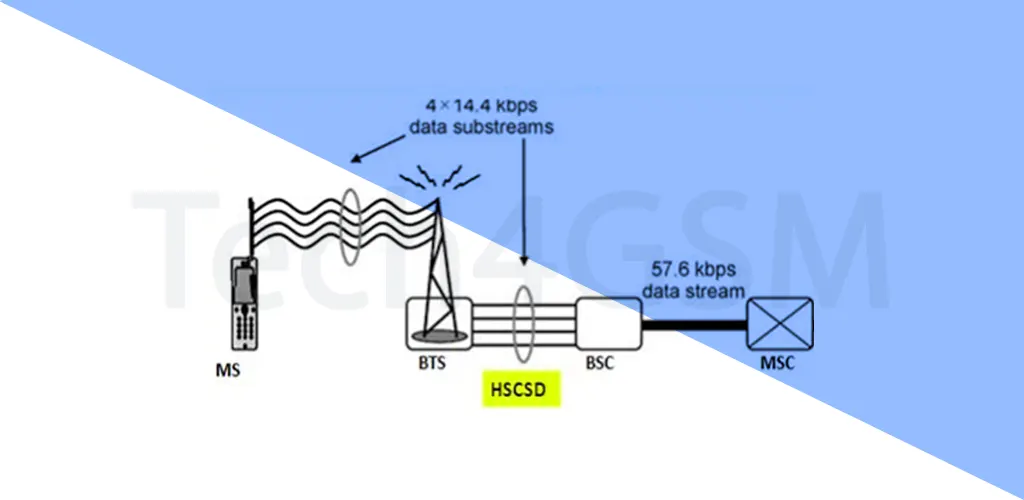
- HSCSD: A turbocharged version with better error correction (fewer glitches) and channel bonding, combining up to four network channels. Result? A blazing 57.6 kbps!
Think of it like turning a single-lane road into a 4-lane highway for data.
How Did HSCSD Work?
- Circuit Switching: Unlike today’s packet-based networks (e.g., 4G), HSCSD used a dedicated connection, like a phone call, for data.
- Channel Bonding: It merged multiple GSM channels (up to four) to boost speed.
- Error Correction: Smarter coding reduced data retransmissions, saving time.
For perspective, a 1MB file would take ~15 minutes with CSD but just ~2.5 minutes with HSCSD. Still slow by today’s standards, but revolutionary back then!
Why Did HSCSD Flop Outside Europe?
Despite its clever design, HSCSD had major flaws:
- Expensive: Carriers charged per minute, like voice calls. Ouch!
- Network Hog: Dedicated circuits blocked other users—bad for crowded networks.
- GPRS Arrived: Packet-based GPRS (launched in 2000) offered “always-on” internet at similar speeds but lower cost.
Europe briefly embraced HSCSD for business users, but the rest of the world skipped straight to GPRS and EDGE.
HSCSD’s Legacy: A Stepping Stone for Mobile Data
While forgotten, HSCSD paved the way for modern mobile tech:
- Proved Speed Matters: Showed users craved faster mobile internet.
- Inspired Efficiency: Its error-correction methods influenced later standards.
- Pushed Innovation: Carriers realized circuit switching wasn’t sustainable, accelerating packet-based networks.
Fun Fact: Some early PDAs and laptops used HSCSD for basic web access—think of it as Wi-Fi’s awkward ancestor!
Could HSCSD Work Today?
In a word: No. Modern apps and video streaming need megabits, not kilobits. But retro tech enthusiasts occasionally revive HSCSD for nostalgia (or to send a very slow selfie).
Final Thoughts
HSCSD was a short-lived but bold attempt to bring speed to early mobile data. While overshadowed by GPRS and 3G, it reminds us how far we’ve come—from waiting minutes to load a webpage to streaming HD videos in seconds. Next time your 5G lags, spare a thought for the ’90s pioneers who dealt with 57kbps!