Introduction
Picture this: You’re hiking, and your phone takes a dive into a muddy puddle. Will it survive? The answer lies in its IP rating—a tiny code like IP67 or IP68 that tells you exactly how tough your gadget is. Let’s decode these numbers in plain language and see why they matter for your phone, earbuds, or smartwatch.
IP Ratings Explained: The “Weather Forecast” for Your Gadget
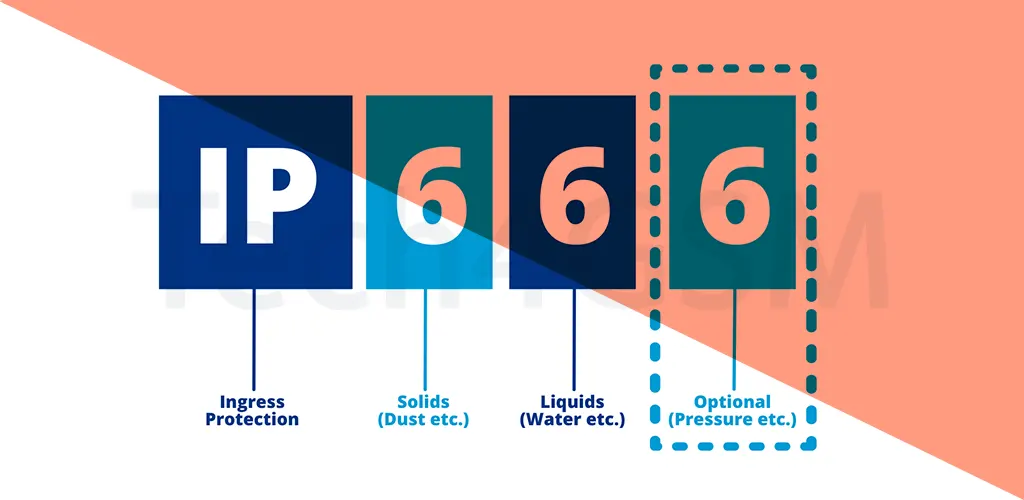
IP (Ingress Protection) ratings are global standards that rate a device’s defense against two enemies: dust and water. The code looks like “IPXX,” where:
- First Digit = Dust/solid protection (0-6).
- Second Digit = Water/liquid protection (0-8).
The higher the numbers, the tougher the device. Let’s break it down!
Dust Protection: The First Digit (0-6)
| Rating | Protection Level |
|---|---|
| 0 | No protection. |
| 1-5 | Blocks larger particles (e.g., sand). |
| 6 | Dustproof (No dust gets in!). |
Example: A phone with “6” (like iPhone 8) can survive a day at the beach.
Water Protection: The Second Digit (0-8)
| Rating | Protection Level |
|---|---|
| 0 | No protection. |
| 1-6 | Resists splashes, sprays, or light rain. |
| 7 | Immersion up to 1m for 30 minutes. |
| 8 | Deeper/longer immersion (1.5m+). |
Example: A Galaxy S8 (IP68) can handle 1.5m underwater for 30 mins.
IP67 vs. IP68: What’s the Difference?
- IP67 (e.g., iPhone 8, Google Pixel 2):
- Dustproof (6).
- Survives 1m water for 30 mins.
- Great for poolside drops or rainstorms.
- IP68 (e.g., Samsung Galaxy S8):
- Dustproof (6).
- Handles deeper water (1.5m+) for 30 mins.
- Ideal for snorkeling selfies (but don’t push it!).
Fun Fact: IP68 isn’t standardized—manufacturers set their own depth/time limits. Always check the fine print!
Why IP Ratings Aren’t Perfect
- No Saltwater Guarantee: Most ratings apply to fresh water. Saltwater or chlorine can damage seals.
- Wear & Tear: Cracked screens or aging seals weaken protection.
- Pressure Limits: High-pressure jets (like waterfalls) aren’t covered.
How to Use IP Ratings When Buying Tech
- Match Your Lifestyle:
- IP67: Good for gym sweat or accidental spills.
- IP68: Better for outdoor adventurers.
- Check Both Digits: A device labeled “IPX8” has no dust rating (first digit missing).
- Don’t Overpay: Not everyone needs IP68—assess your risks!
IP Ratings Beyond Phones
- Smartwatches: Apple Watch (IP6X) vs. Garmin (IP68).
- Earbuds: AirPods Pro (IPX4) resist sweat, but avoid showers.
- Cameras: GoPros (IP-rated) survive snorkeling.
Final Thoughts
IP ratings are like a cheat sheet for gadget durability. While they don’t make devices indestructible, they give you peace of mind against life’s messy moments. Next time you shop for tech, peek at that IP code—it could save your phone from a watery grave!