Introduction
Ever wondered how your smartphone or TV shows such rich blacks and vivid colors? Meet OLED—the magic behind today’s most stunning screens. Let’s dive into how it works, why it’s better than LCDs, and where it falls short.
What is OLED?
OLED stands for Organic Light-Emitting Diode. Unlike traditional screens, it uses tiny organic (carbon-based) materials that glow on their own when electricity passes through them. Imagine millions of microscopic fireflies lighting up your display—no backlight needed!
How Does OLED Work?
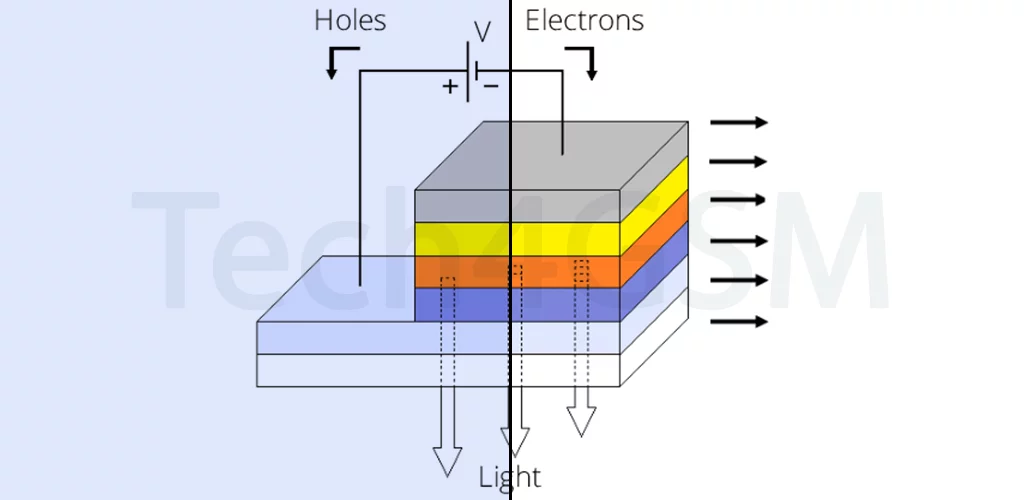
Each pixel in an OLED screen is like a self-lit dot. When you turn on your device:
- Electricity flows through the organic layers.
- Pixels light up individually, creating images.
- No backlight means pure blacks (pixels simply turn off).
This tech is why OLED screens look so crisp and vibrant!
OLED vs. LCD: Why OLED Wins (Mostly)
Here’s why OLED is a game-changer:
- Thinner & Lighter: No bulky backlight layer. Perfect for sleek phones like the latest iPhones!
- Brighter Colors: Pixels emit light directly, so colors pop.
- Better Contrast: Infinite contrast ratio—blacks are truly black.
- Faster Response Time: No motion blur in action movies or games.
- Wider Viewing Angles: Looks great even from the side.
- Energy Efficient: Uses less power, especially with dark themes.
- Cheaper to Make: Simpler design = lower costs over time.
But LCDs aren’t dead yet! They outshine OLEDs in direct sunlight (like on outdoor billboards).
Where You’ll Find OLED Screens
- Smartphones: Flagships like Samsung Galaxy and Apple iPhones.
- TVs: LG’s OLED TVs are famous for cinematic quality.
- SmartWatches: Always-on displays (e.g., Apple Watch).
- Laptops: High-end models for designers and gamers.
The Catch: OLED’s Weaknesses
OLED isn’t perfect:
- Burn-In Risk: Static images (like logos) can leave ghost marks over time.
- Shorter Lifespan: Blue pixels degrade faster than red/green.
- Brightness Limits: Less readable in blazing sunlight vs. LCD.
But for most users, the visual perks outweigh these quirks.
Why OLED is the Future
From foldable phones to rollable TVs, OLED’s flexibility and quality are pushing tech boundaries. As manufacturing improves, expect cheaper prices and longer lifespans—making it the go-to for all devices!
Final Takeaway: OLED = brighter, thinner, and more efficient. LCD = better in sunlight. Choose OLED for eye-popping visuals, but handle with care!
In Short: OLED screens are like a blanket of tiny, self-lit LEDs—offering unmatched color, contrast, and style. Just keep them away from static images and harsh sun! 🌟