Introduction
Imagine downloading your favorite show while video-calling a friend—without buffering! That’s the magic of ADSL, the tech that revolutionized home internet. Let’s break down how this “asymmetric” wonder works, why it’s perfect for your Netflix nights, and how it’s still kicking in 2025.
What Is ADSL?
ADSL stands for Asymmetric Digital Subscriber Line. The “asymmetric” part means it gives you faster download speeds (like streaming movies) than upload speeds (like sending emails). Think of it as a one-way highway with a bigger lane for incoming data—perfect for most homes!
- Why Asymmetric?
Most users download more than they upload. ADSL smartly allocates 80% bandwidth for downloads and 20% for uploads, making it cost-effective for casual use. - Not for Big Businesses:
Companies needing heavy uploads (e.g., video conferences) opt for symmetric connections. ADSL? Ideal for your binge-watching needs!
How ADSL Works: No New Wires Needed!
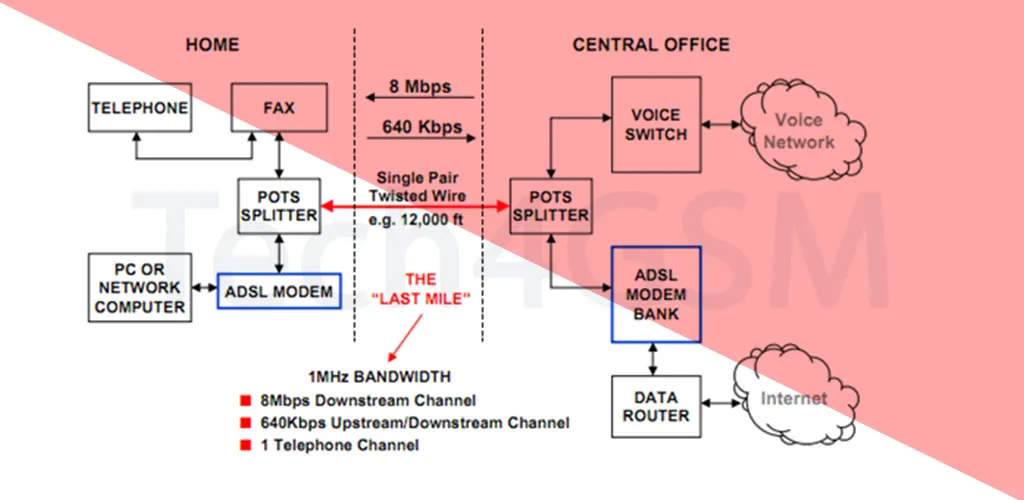
ADSL’s genius lies in using existing copper phone lines. Here’s the breakdown:
- Twisted Pair Local Loops:
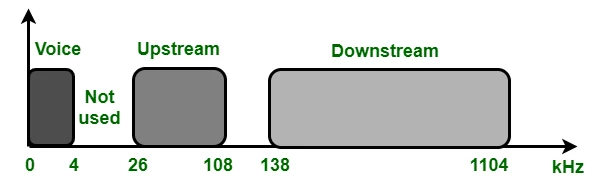
Your old telephone line isn’t just for calls anymore! ADSL repurposes it by splitting bandwidth into voice (4KHz) and data (up to 1.1 MHz). A tiny splitter (installed at home) keeps calls and internet separate. - Adaptive Technology:
ADSL isn’t rigid. It adjusts speeds based on distance from the provider’s office. Live far away? Speeds drop slightly. Close by? Enjoy max bandwidth! Learn how providers manage this here. - Discrete Multitone (DMT):
This tech splits the data stream into 256 mini-channels (like radio stations):- Channels 6–30: Handle uploads (e.g., posting selfies).
- Channels 31–255: Blast downloads (e.g., 4K movies).
- Channels 1–5: Act as a buffer to prevent voice/data clashes.
ADSL Setup: What’s in Your Home?
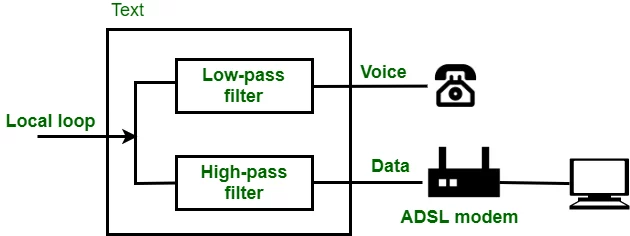
- ADSL Modem: Connects your router to the phone line.
- Splitter: A small box that separates internet and voice signals. No more dial-up noises during Zoom calls!
- Professional Installation: While the splitter is DIY, wiring for data often needs an expert—making setup slightly pricey.
Behind the Scenes: The Telephone Company’s Role
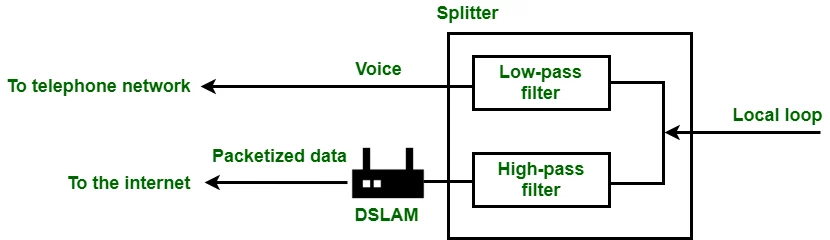
Providers use DSLAM (Digital Subscriber Line Access Multiplexer) at their offices to:
- Bundle data from multiple users into one stream.
- Convert analog signals to digital for internet routing.
- Prioritize traffic to reduce lag during peak hours.
Why ADSL Still Rocks in 2025
- Affordable: Uses existing lines, cutting infrastructure costs.
- Simultaneous Use: Browse and call on the same line—no interruptions!
- Wide Availability: Still a lifeline in rural areas where fiber isn’t feasible. Check out tech4gsm.com for rural internet hacks.
Limitations to Know
- Distance Matters: Living far from the provider? Speeds drop.
- Shared Bandwidth: Peak hours might slow you down.
- Not Future-Proof: Struggles with 8K streaming or VR gaming.
ADSL vs. New Tech: What’s Next?
While fiber and 5G dominate headlines, ADSL remains a budget-friendly option in 2025. Innovations like dynamic line management (automatically optimizing connections) keep it relevant. Plus, hybrid systems (ADSL + LTE) bridge gaps in remote areas.
Final Verdict
ADSL is like the reliable bicycle of the internet world—not the fastest, but gets you there cheaply and efficiently. As we embrace futuristic tech in 2025, ADSL still holds its ground for everyday users.