Introduction
Imagine a world without crisp calls or streaming—where phones were as big as bricks and sounded like walkie-talkies. Welcome to the analog era, the grandparent of modern tech! Let’s dive into this old-school tech and why today’s gadgets left it behind.
What Is Analog?
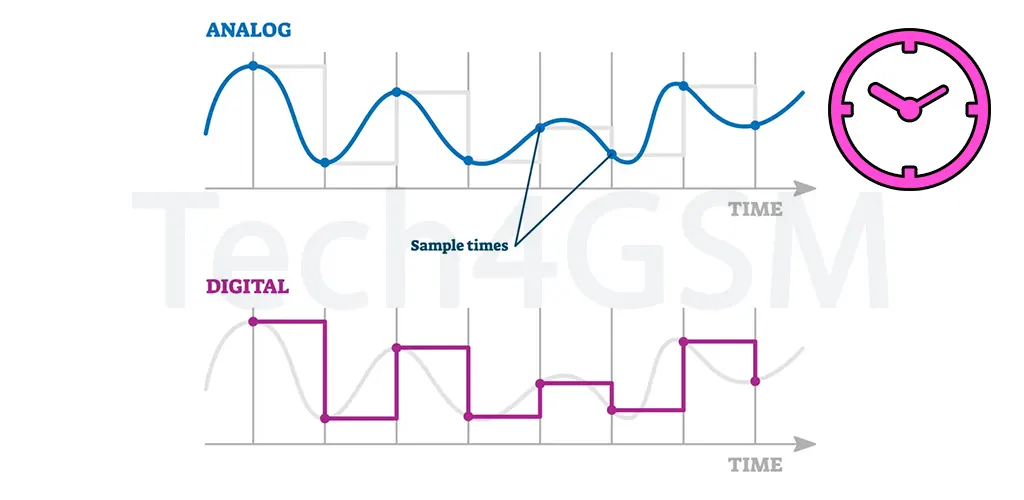
Analog is like a smooth, unbroken wave of energy. It transmits sound, images, or data by mimicking real-world signals. Think of it as:
- Vinyl records: The needle grooves capture continuous sound vibrations.
- Old thermometers: Mercury rises/falls smoothly with temperature changes.
In phones, analog converts your voice into electrical waves that mirror your speech’s pitch and volume. No breaks, no steps—just a natural flow!
Analog vs. Digital: The Battle of the Signals
- Analog: Continuous waves (like a flowing river).
- Digital: Chunked into bits (like Lego blocks).
| Analog | Digital |
|---|---|
| Natural, smooth sound | Clear, precise sound |
| Prone to interference (static) | Resists noise |
| Used in 1G phones | Powers 4G/5G phones |
⚠️ Fun Fact: Ever heard static on a radio? That’s analog picking up interference from microwaves or weather!
1G Phones: Analog’s Glory Days
The 1980s brought 1G (first-gen) mobile networks—clunky devices like the Motorola DynaTAC (aka the “brick phone”). They relied on analog to:
- Transmit voice as radio waves.
- Work within limited range (like a walkie-talkie).
But analog had flaws:
🔹 Security issues: Anyone with a radio scanner could eavesdrop!
🔹 Poor battery life: Massive phones died fast.
🔹 No texts or internet: Just calls.
Why Digital Killed Analog
Digital signals (used in 2G+) solved analog’s headaches:
- Crystal-clear sound: No more “Can you hear me now?!”
- Encryption: Calls became private.
- Multitasking: Texts, emails, and cat videos!
- Smaller devices: Goodbye, brick-sized phones!
By the 1990s, 2G went digital, and analog became a relic—like floppy disks or VHS tapes.
Where Analog Still Lives Today
Analog isn’t fully extinct! You’ll find it in:
- Landline phones: Some still use analog signals.
- AM/FM radios: Tune in to hear raw, uncut waves.
- Vintage gadgets: Turntables, cassette players, and retro tech.
Analog Nostalgia: Love It or Leave It?
Pros: Warm, natural sound (audiophiles swear by vinyl!).
Cons: Static, bulkiness, and zero smart features.
Final Thoughts
Analog paved the way for today’s sleek, smart devices. While it’s outdated for phones, its soul lives on in music, radio, and our tech history books. Next time you video call someone seamlessly, thank digital—but tip your hat to analog for starting the revolution!
Quiz Time: Got an old radio or landline? Try spotting analog quirks like static or hums!