Introduction
Remember the days when 3D games felt like a pixelated slideshow? Enter AGP (Advanced Graphics Port)—a 1990s innovation that transformed how computers handled graphics. Though obsolete by 2025, AGP laid the groundwork for today’s lightning-fast GPUs. Let’s dive into this retro tech and why it still matters!
What is AGP?
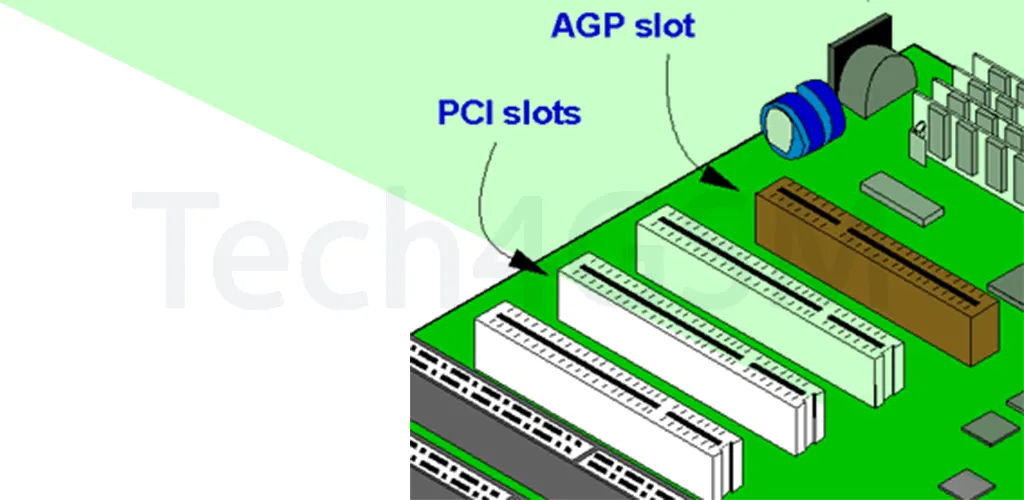
AGP stands for Accelerated Graphics Port. Introduced by Intel in 1996, it was a dedicated highway connecting your graphics card to the motherboard. Unlike older PCI slots, AGP gave GPUs direct access to system memory, making 3D games and design software run smoother.
Fun Fact: AGP slots are brown—a quirky detail that made them easy to spot!
AGP vs. PCI: Why AGP Won (For a While)
Before AGP, graphics cards used PCI slots, which were slow and shared bandwidth with other components. AGP changed the game with:
- Double the Speed: AGP 1.0 ran at 66 MHz (vs. PCI’s 33 MHz).
- Direct Memory Access: GPUs could tap into the PC’s RAM for textures, reducing lag.
- Pipelining: AGP could queue multiple tasks at once, like a multitasking pro.
By 2000, AGP 3.0 hit 2,133 MB/s transfer rates—16x faster than PCI!
AGP Versions: From 1x to 8x
AGP evolved through three key versions:
| Version | Speed | Transfer Rate |
|---|---|---|
| AGP 1.0 | 1x/2x | 266–533 MB/s |
| AGP 2.0 | 4x | 1,066 MB/s |
| AGP 3.0 | 8x | 2,133 MB/s |
Each upgrade meant crisper graphics for games like Half-Life and Quake.
Why AGP Was a Big Deal
AGP wasn’t just about speed—it redefined PC capabilities:
- 3D Design Boom: Architects and engineers could render models without crashes.
- Gaming Goldmine: Titles like Tomb Raider used AGP to deliver immersive worlds.
- Efficiency: By using system memory for textures, AGP cards stayed cheaper than PCI alternatives.
Did You Know? Intel’s i740 was the first GPU built exclusively for AGP!
AGP’s Limitations: Why It Faded
By the late 2000s, AGP’s flaws became clear:
- Bandwidth Cap: Even 8x AGP struggled with HD textures and modern games.
- Heat & Power: Early GPUs overheated, requiring bulky cooling fans.
- Rise of PCIe: PCI Express (launched in 2004) offered double AGP’s speed and scalability.
By 2025, AGP is a relic—but still a nostalgic favorite among retro PC builders.
AGP vs. PCI Express: The Final Showdown
| Feature | AGP | PCI Express |
|---|---|---|
| Speed | Up to 2,133 MB/s | Starts at 4,000 MB/s (PCIe 1.0) |
| Design | Dedicated port (brown slot) | Versatile lanes (x1, x16, etc.) |
| Modern Use | Obsolete | Standard for GPUs in 2025 |
AGP’s Legacy in 2025
While AGP is no longer in use, its impact lives on:
- Paved the Way: Without AGP, PCIe’s direct memory access might not exist.
- Retro Revival: Vintage gamers still hunt AGP cards for classic PC builds.
- Tech Education: AGP teaches us how innovation addresses bottlenecks.
AGP may be retired, but its spirit lives on in every lag-free game and seamless render. 🕹️✨