Introduction
CMYK stands for Cyan, Magenta, Yellow, and Key (Black). It’s the four-color model used globally for color printing. Unlike digital screens that use RGB (Red, Green, Blue), CMYK works by mixing pigments to create a wide range of colors. This guide breaks down how CMYK works, its real-world applications, and why it’s still essential in 2025.
Why CMYK? The Science Behind the Colors
- Subtractive Color Model:
- CMYK is a subtractive model, meaning colors are created by absorbing light.
- When cyan, magenta, and yellow inks overlap, they subtract brightness from white paper, producing darker hues.
- Key (Black) is added to improve contrast and depth.
- The Role of Each Color:
- Cyan: A blue-green shade used for water, skies, and cool tones.
- Magenta: A pinkish-red for flowers, warm accents, and vibrant designs.
- Yellow: Bright and sunny, ideal for highlights and warm gradients.
- Key (Black): Enhances shadows, text, and fine details.
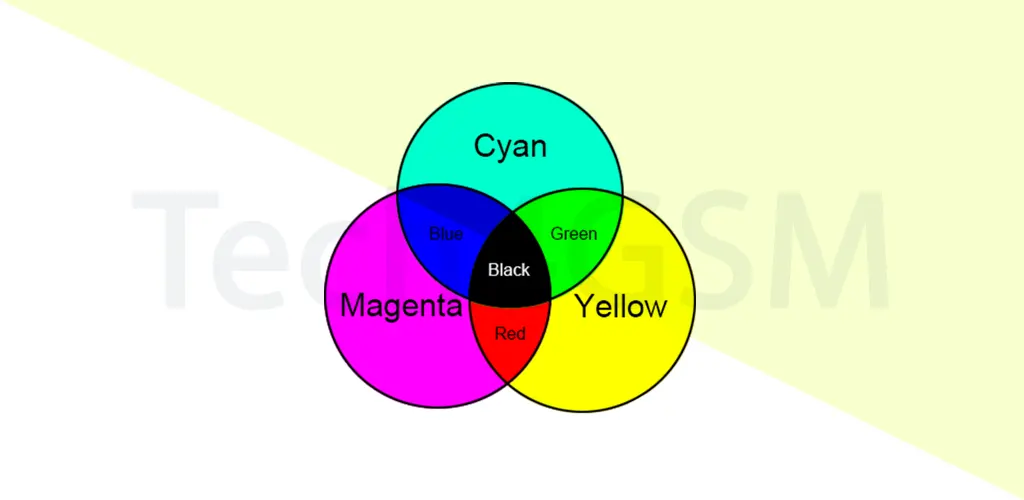
- How Colors Mix:
- Cyan + Magenta = Blue
- Magenta + Yellow = Red
- Yellow + Cyan = Green
- All Three = Dark Brown (Hence why black ink is added separately).
How CMYK Printing Works
Modern printers use CMYK to replicate digital designs on physical surfaces like paper, fabric, or plastic. Here’s the process:
- Design Preparation:
- Artwork is created in CMYK mode (not RGB) to ensure color accuracy.
- Software like Adobe Photoshop or Illustrator separates the design into four layers (C, M, Y, K).
- Halftoning:
- Printers use tiny dots of each color, spaced at different angles, to create the illusion of blended colors.
- Example: A pink rose uses magenta and yellow dots with gaps to mimic lighter shades.
- Printing Process:
- Offset Printing: Uses plates for each CMYK color, ideal for bulk orders like magazines.
- Digital Printing: Directly applies ink to materials, perfect for small batches.
- Large-Format Printing: For banners, posters, and billboards.
Real-World Applications of CMYK
1. Commercial Printing
CMYK is the backbone of:
- Books and Magazines: Sharp text (thanks to black ink) and vibrant images.
- Packaging: Eye-catching cereal boxes, perfume labels, and product tags.
- Business Cards: Professional designs with crisp logos and fonts.
2. Marketing Materials
- Brochures: CMYK ensures photos and graphics pop.
- Flyers: Bright colors attract attention in crowded spaces.
- Posters: Reliable for concerts, movies, and events.
3. Textile and Apparel
- T-Shirt Printing: CMYK screen printing creates detailed graphics.
- Fabric Designs: Used for patterns on dresses, curtains, and upholstery.
4. Signage and Billboards
- Vinyl Banners: Weather-resistant CMYK inks for outdoor ads.
- Vehicle Wraps: Durable prints for cars and trucks.
5. Art and Photography
- Fine Art Prints: Artists use CMYK for limited-edition reproductions.
- Photo Albums: True-to-life skin tones and landscapes.
CMYK vs. RGB: What’s the Difference?
| Feature | CMYK | RGB |
|---|---|---|
| Purpose | Printing | Digital Screens |
| Color Creation | Subtractive (Inks) | Additive (Light) |
| Primary Colors | Cyan, Magenta, Yellow | Red, Green, Blue |
| File Formats | PDF, TIFF, EPS | JPEG, PNG, GIF |
| Color Range | Limited (Gamut) | Wider (Vibrant hues) |
Pro Tip: Always convert RGB designs to CMYK before printing to avoid dull or mismatched colors.
Challenges with CMYK Printing
- Color Consistency:
- Colors may look different on screen vs. print. Use Pantone guides for accuracy.
- Ink Costs:
- Large designs consume more ink, raising expenses.
- Gamut Limitations:
- Some neon or metallic colors can’t be replicated in CMYK.
- Moiré Patterns:
- Occurs when halftone dots clash with patterns in the design.
Future of CMYK in 2025
- Eco-Friendly Inks:
- Soy-based and waterless inks reduce environmental impact.
- 3D CMYK Printing:
- Emerging tech for colorful 3D-printed objects.
- Smart Color Matching:
- AI tools Color Optimizer auto-adjust designs for CMYK.
- Hybrid Models:
- Combining CMYK with Pantone spot colors for premium prints.
FAQs About CMYK
Q1: Why is Black called “Key” in CMYK?
A: “Key” refers to the key plate in printing, which aligns other colors. Black adds depth and detail.
Q2: Can I print neon colors with CMYK?
A: No. Neon shades require spot colors (e.g., Pantone Fluorescent Pink).
Q3: Why do my printed colors look dull?
A: Screens use RGB (backlit), while CMYK relies on reflected light. Always soft-proof designs before printing.
Q4: Is CMYK used in home printers?
A: Yes! Most inkjet printers use CMYK cartridges.
Q5: How to fix color mismatches?
A: Calibrate your monitor and use ICC profiles.
Q6: What’s the cost difference between CMYK and spot colors?
A: Spot colors are pricier but offer precision. CMYK is cost-effective for multi-color designs.
Tips for Designers Using CMYK
- Start in CMYK: Design in CMYK mode from the beginning.
- Test Prints: Order proofs to check color accuracy.
- Use Pantone Bridges: Match CMYK to Pantone for branding consistency.
- Optimize Black: Use “Rich Black” (C:60, M:60, Y:60, K:100) for deeper shadows.
Conclusion
CMYK remains the gold standard for printing in 2025, bridging creativity and practicality. From business cards to billboards, this four-color model continues to shape how we see the world—one ink droplet at a time.