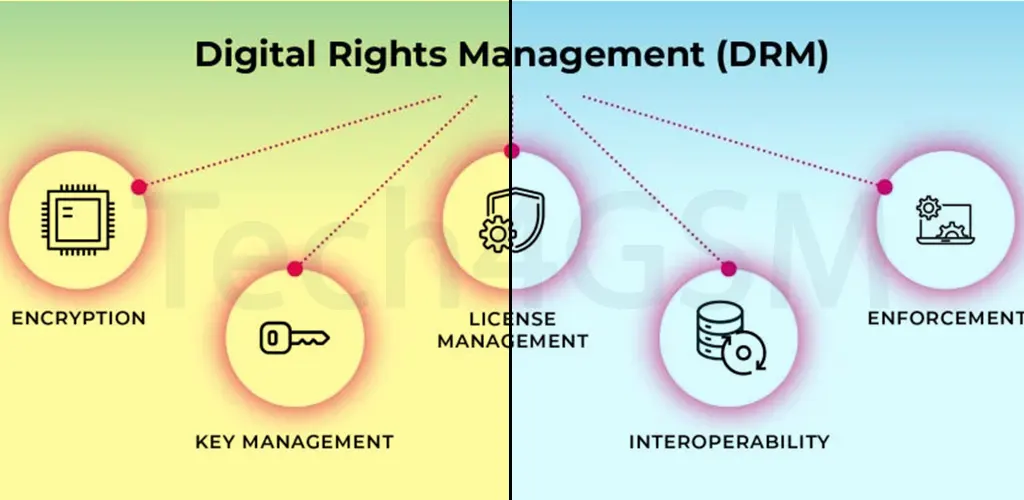
Introduction
You know that catchy song you downloaded or the blockbuster movie you streamed last night? Behind the scenes, there’s a silent protector making sure those files aren’t misused or shared illegally. Meet DRM (Digital Rights Management)—the unsung hero (or sometimes villain) of the digital world. Let’s simplify what DRM does and why it matters to you.
What is DRM?
DRM is like a digital lock for creative work. It’s a technology that controls how you use copyrighted content—music, movies, e-books, games, or even artwork. Think of it as a rulebook that stops people from copying, sharing, or editing files without permission. For example:
- 🚫 No Burning to CDs/DVDs: That downloaded album you bought? DRM might block you from burning it to a disc.
- 🚫 No Sharing with Friends: Tried forwarding a paid ebook? DRM can block that transfer.
- 🚫 No Editing Allowed: Want to remix a song? DRM could lock the original file.
In short, DRM ensures artists, filmmakers, and creators get paid fairly—and their work isn’t pirated.
How Does DRM Work?
Imagine DRM as a bouncer at a club. It checks your “ticket” (your rights) before letting you in. Here’s how it guards content:
- Encryption: Scrambles files so only authorized users (like paying customers) can unlock them.
- Access Rules: Sets limits like “view-only” or “no screenshots” for e-books.
- Expiry Dates: Some content (like rented movies) disappears after a set time.
- Device Limits: Binds content to specific gadgets—like your phone or laptop.
DRM in Real Life: Love It or Hate It?
DRM isn’t perfect. Here’s why people debate it:
👍 The Good:
- Protects artists from piracy.
- Ensures creators earn from their work.
- Lets companies offer flexible plans (like streaming subscriptions).
👎 The Bad:
- Inconvenience: Can’t copy your own purchased music to a CD? Frustrating!
- Compatibility Issues: DRM-locked files might not work on all devices.
- Privacy Concerns: Some DRM tracks how you use content.
Common DRM Examples You’ve Probably Seen
- Netflix/Spotify: Streaming services use DRM to block downloads or screen recording.
- Apple iTunes: Older iTunes music had DRM to limit burning CDs.
- E-books: Can’t copy-paste text from many Kindle books? Thank DRM.
Dealing with DRM Issues
Stuck with a DRM-locked file? Here’s what you can do:
- Check Licenses: Always read the terms before buying digital content.
- Use Authorized Apps: Platforms like Spotify or Kindle require their own apps to play DRM content.
- Convert Files: Some tools (where legal) can remove DRM—but respect copyright laws!
- Need Help? For device-specific DRM troubles, visit tech4gsm.com for expert fixes.
Final Thoughts: Is DRM Here to Stay?
Like it or not, DRM balances creativity and control in the digital age. It keeps piracy in check but can feel restrictive. As tech evolves, companies are experimenting with softer DRM—like watermarking instead of hard locks. Until then, always know what you’re buying!