Introduction
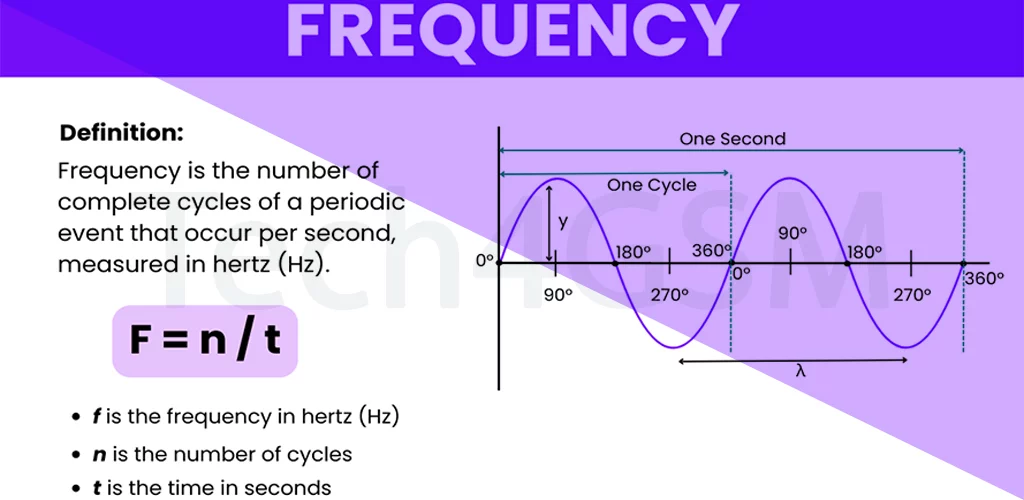
Frequency is all about how often something repeats. Imagine clapping your hands 5 times in a second—that’s a frequency of 5 “claps per second.” In science, frequency measures how fast waves (like sound, light, or radio waves) repeat their cycles.
1. Frequency is Measured in Hertz (Hz)
- The unit hertz (Hz) tells you how many cycles happen in one second.
- Example: A 10 Hz sound wave vibrates 10 times per second.
- Higher Hz = More Repetitions: A 1000 Hz frequency means 1000 cycles per second.
- This measurement applies to everything: your Wi-Fi signal, musical notes, or even your phone’s processor speed!
2. Radio Frequency Bands: The “Zones” of Wireless Communication
Frequency isn’t just for waves—it also describes specific ranges (bands) on the radio spectrum. These bands power wireless tech like phones, radios, and GPS. Common examples:
- 800 MHz: Used for older mobile networks and some radio communications.
- 900 MHz: Balances coverage and capacity, ideal for 2G/4G networks.
- 1900 MHz: Supports faster data speeds in modern 4G/5G networks.
Why Do These Bands Matter?
- Lower Frequencies (e.g., 800 MHz): Travel farther and penetrate walls better—great for rural areas.
- Higher Frequencies (e.g., 1900 MHz): Carry more data but cover shorter distances—perfect for cities.
Fun Fact:
Ever wonder why your FM radio has numbers like 98.5 or 101.2? Those are frequencies in megahertz (MHz)! Each station gets a unique band to avoid overlapping signals.
In Simple Words:
Frequency is the “heartbeat” of waves, measured in Hz. For wireless tech, it’s like dividing a highway into lanes—different bands (800 MHz, 900 MHz, etc.) keep signals organized and efficient.