Introduction
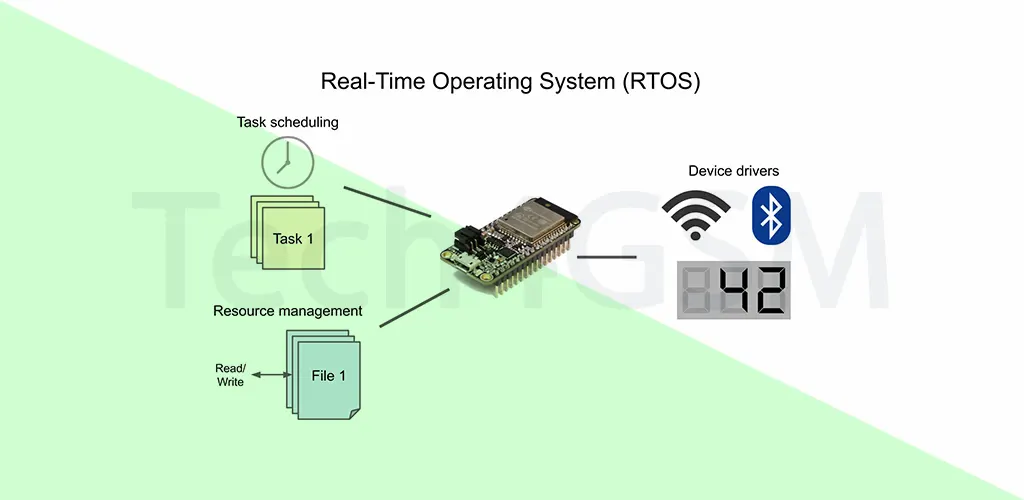
A Real-Time Operating System (RTOS) is a specialized operating system designed to execute tasks with strict timing constraints. Unlike general-purpose operating systems (GPOS) like Windows or macOS, an RTOS guarantees that critical processes are completed within predefined deadlines, often measured in milliseconds or even microseconds. This precision is vital for systems where delays could lead to catastrophic outcomes, such as in air traffic control, medical devices, or automotive safety systems.
For example, in an anti-lock braking system (ABS), an RTOS ensures that sensors and actuators respond instantly to prevent wheel lockup. If the system fails to react within milliseconds, it could result in a life-threatening accident. This is why RTOSes are the backbone of mission-critical applications where timing is non-negotiable.
How Does an RTOS Work?
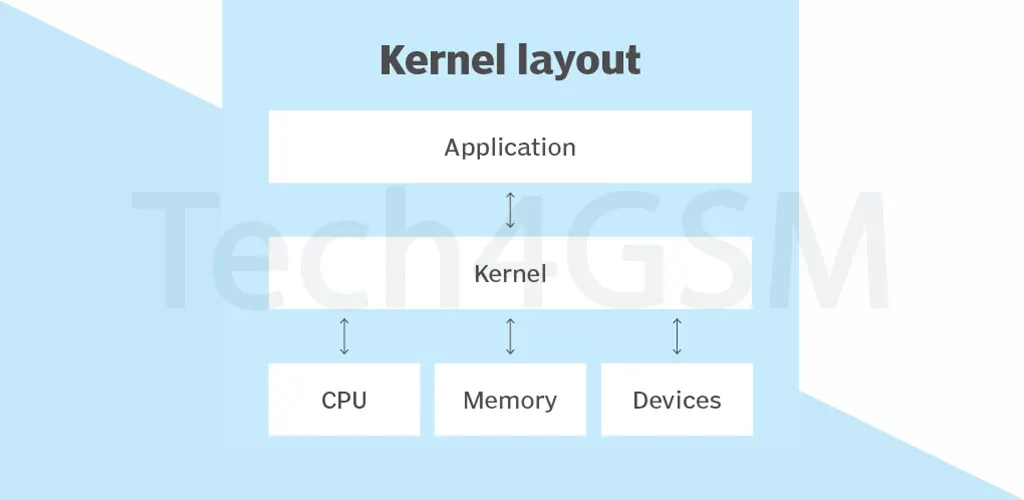
An RTOS operates like a highly efficient manager, prioritizing tasks based on urgency. Here’s a simplified breakdown:
- Task Scheduling:
The RTOS scheduler assigns priorities to tasks. High-priority tasks (e.g., emergency shutdown in a nuclear plant) interrupt lower-priority ones (e.g., logging data). - Kernel Types:
- Monolithic Kernel: All OS services (scheduling, memory management) run in a single space. Faster but less flexible.
- Microkernel: Only essential services run in the kernel. Other components operate in user space, enhancing security but reducing speed.
- Interrupt Handling:
When a sensor detects an anomaly, the RTOS immediately pauses lower tasks to address the interrupt. - Determinism:
Repeating the same input always yields the same output within the same timeframe. This predictability is crucial for systems like pacemakers.
Types of RTOS: Hard, Firm, and Soft
RTOSes are categorized based on their tolerance for missed deadlines:
- Hard RTOS:
- Zero tolerance for delays. Used in life-saving devices (e.g., defibrillators).
- Example: SpaceX’s Falcon 9 uses a hard RTOS to coordinate engine thrust during liftoff.
- Firm RTOS:
- Occasional delays are acceptable but degrade performance.
- Example: Video streaming buffers briefly during network congestion.
- Soft RTOS:
- Deadlines are flexible. Used in consumer electronics like smart TVs.
Key Characteristics of RTOS
- Small Footprint:
RTOSes are lightweight, often occupying just a few KB of memory, making them ideal for microcontrollers. - Priority-Based Scheduling:
Tasks are executed in order of importance. Imagine a hospital ER: critical patients are treated first. - Deterministic Behavior:
Ensures tasks are completed within guaranteed time limits. - High Reliability:
Built-in fail-safes for power outages or hardware failures. - Minimal Interrupt Latency:
Responds to interrupts in microseconds.
Advantages of RTOS
- 24/7 Operation: Ideal for systems that can’t afford downtime (e.g., heart monitors).
- Efficient Resource Use: Maximizes CPU and memory efficiency.
- Error-Free Performance: Reduces jitter and glitches in industrial robots.
Disadvantages of RTOS
- Limited Multitasking: Focuses on critical tasks, leaving others pending.
- Complex Development: Requires expertise in real-time programming.
- High Costs: Licensing fees for commercial RTOSes like QNX.
RTOS vs. GPOS: What’s the Difference?
| Feature | RTOS | GPOS |
|---|---|---|
| Purpose | Time-critical tasks | General computing |
| Latency | Microseconds | Milliseconds |
| Determinism | Guaranteed response | Best-effort |
| Use Case | Medical devices, aerospace | Web browsing, office apps |
RTOS Use Cases in 2025
- Healthcare:
- Smart Insulin Pumps: Adjust doses in real-time based on glucose levels.
- Surgical Robots: Ensure precise movements during operations.
- Automotive:
- Self-Driving Cars: Process LiDAR data instantly to avoid collisions.
- Electric Vehicle (EV) Management: Optimize battery usage.
- Industry 4.0:
- Predictive Maintenance: RTOS analyzes sensor data to predict machine failures.
- Space Exploration:
- Mars Rovers: Execute commands despite communication delays with Earth.
Choosing the Right RTOS: 5 Factors to Consider
- Certifications: Does it meet safety standards like ISO 26262 (automotive) or IEC 62304 (medical)?
- Scalability: Can it handle future project expansions?
- Community Support: Open-source RTOS like FreeRTOS have large developer communities.
- Power Efficiency: Critical for battery-powered devices.
- Hardware Compatibility: Ensure it supports your MCU (e.g., ARM Cortex-M).
FAQs About RTOS
Q1: Can an RTOS run on a regular computer?
Yes, but it’s overkill. RTOS is designed for microcontrollers in embedded systems.
Q2: Is Linux an RTOS?
No, but Linux can be patched (e.g., PREEMPT_RT) for soft real-time tasks.
Q3: What’s the future of RTOS in 2025?
With the rise of AI and IoT, RTOS will drive smarter, interconnected devices like autonomous drones and smart grids.
Q4: How does an RTOS handle memory management?
It uses static memory allocation to avoid delays caused by dynamic allocation.
Conclusion
As we advance into 2025, RTOS will remain indispensable in industries where precision and reliability are paramount. From life-saving medical devices to cutting-edge space tech, RTOS ensures that our world runs safely and efficiently. For developers, mastering RTOS opens doors to innovations that shape the future.