Introduction
Picture this: You’re hiking on a sunny trail, checking your GPS, and poof—the screen goes dark. Or trying to read an ebook in bed without blinding your partner. Enter transflective displays—the tech chameleon that adapts to light like magic! Let’s explore how these screens work, why they’re perfect for outdoor adventures, and where you’ll find them.
What is a Transflective Display?
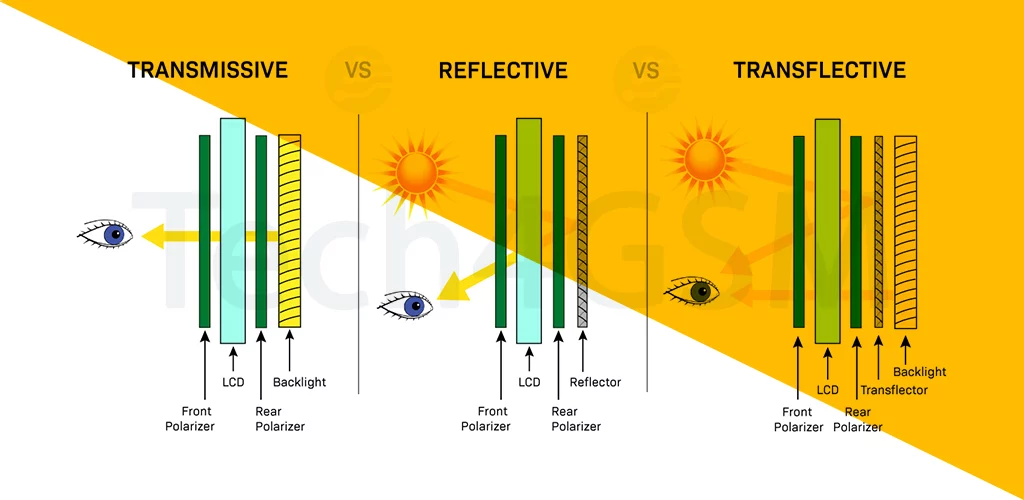
A transflective display is a type of LCD screen that combines two superpowers:
- Reflective Mode: Uses sunlight to brighten the screen (like a Kindle Paperwhite).
- Transmissive Mode: Adds backlighting for low-light settings (like your smartphone).
Result: Crisp visibility whether you’re under the Sahara sun or in a dimly lit tent!
How Transflective Displays Work
Imagine your screen wearing auto-tinting sunglasses:
- Sunlight Hits: The display reflects ambient light to boost brightness.
- Low Light Detected: The backlight kicks in automatically.
- No Manual Tweaking: Forget sliding the brightness bar—it’s all hands-off!
Transflective vs. Traditional Displays
| Feature | Transmissive (Smartphone) | Reflective (E-Reader) | Transflective |
|---|---|---|---|
| Bright Light | Glare city! | Clear & sharp | Perfectly readable |
| Low Light | Glows brightly | Needs external light | Auto-backlight saves the day |
| Battery Life | Drains fast | Sips power | Energy-efficient hybrid |
Verdict: Transflective = Goldilocks’ pick—just right for mixed lighting!
Why You’ll Love Transflective Screens
- Sunlight Warrior: Read maps, texts, or stats under direct sun without squinting.
- Battery Saver: Uses ambient light to reduce backlight dependency.
- All-Day Comfort: No eye strain from constant brightness adjustments.
- Durability: Ideal for outdoor gear (no overheating or glare issues).
Where You’ll Find Transflective Displays
- Outdoor Smartwatches (Garmin, Suunto): Track hikes without screen blackouts.
- Marine GPS Systems: Navigate sunny waters with clarity.
- E-Readers & Rugged Tablets: Read anywhere, from beaches to basements.
- Military Gear: Built for extreme light conditions.
How to Spot a Transflective Display
- Look for “Sunlight Readable” Labels: Common in outdoor gadgets.
- Test in Bright Light: If the screen gets brighter in sunlight, it’s likely transflective.
- Check Spec Sheets: Terms like “transreflective LCD” or “adaptive backlight” hint at it.
Transflective Limitations
- Color Quality: Less vibrant than OLED screens (prioritizes readability over vibrancy).
- Niche Use: Mostly in outdoor/industrial devices, not mainstream smartphones.
- Cost: Slightly pricier than standard LCDs.
Future of Transflective Tech
- Sharper Colors: Newer models aim to balance readability and color richness.
- Smartphones? Rumors say rugged phones might adopt it for outdoor enthusiasts.
- AR Integration: Augmented reality glasses could use transflective layers for daylight use.
Wrapping Up
Transflective displays are the unsung heroes for adventurers, sailors, and anyone tired of battling screen glare. By blending sunlight reflection with smart backlighting, they offer a hassle-free viewing experience—rain or shine.