Introduction
You’ve probably used GPS to find a coffee shop, navigate a road trip, or track your morning run. But how does it actually work? Let’s break it down in everyday language.
GPS: Developed by the U.S. Military, Now a Global Tool
The Global Positioning System (GPS) was created by the U.S. Department of Defense in the 1970s. Today, it’s maintained by the United States Air Force and used worldwide by civilians for everything from maps to food delivery apps.
How GPS Works: Satellites, Signals, and Triangulation
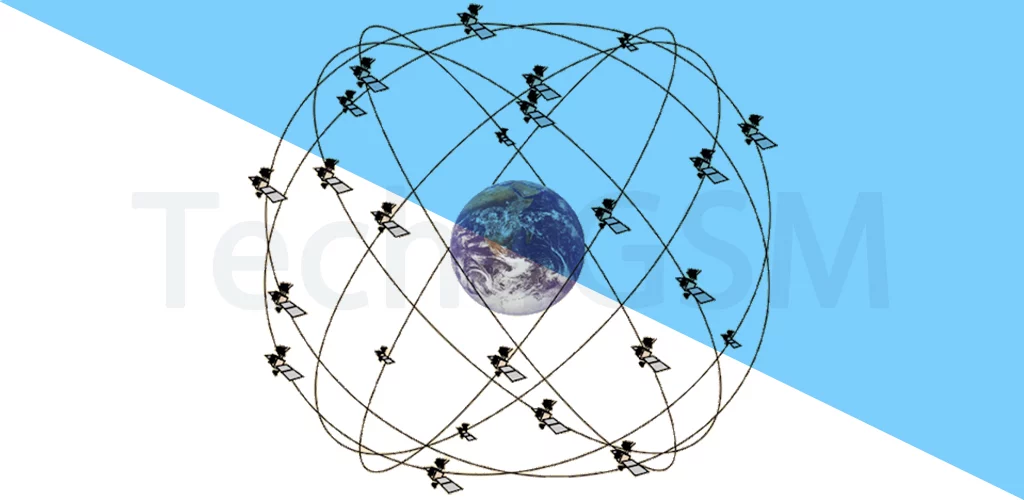
- 24–32 Satellites: GPS relies on a network of 24–32 Medium Earth Orbit satellites (with backups) orbiting 12,550 miles above Earth.
- Microwave Signals: These satellites send precise microwave signals to GPS receivers (like your phone or car navigation).
- Triangulation: To pinpoint your location, a GPS receiver needs signals from at least 3 satellites. Using math called triangulation, it calculates your latitude, longitude, time, and speed—often with 10–100 meter accuracy.
Not Just the U.S.: Other Global Navigation Systems
While GPS is the most well-known, other countries have their own systems:
- Russia: GLONASS (works with GPS for better accuracy).
- European Union: Galileo (civilian-focused, more precise).
- China: BeiDou (covers Asia-Pacific, expanding globally).
- Japan: QZSS (boosts GPS accuracy in mountainous areas).
Why Does Your GPS Sometimes Take Forever to Load?
Getting a GPS lock (connecting to satellites) depends on your device’s “start type”:
- Hot Start:
- Fastest option (seconds).
- Your device remembers its last location, satellites, and time.
- Works if you’re in the same area as your last use.
- Warm Start:
- Takes 10–30 seconds.
- Remembers last location and satellite data but resets which satellites to scan.
- Cold Start:
- Slowest (up to several minutes).
- Device has no prior data—it must search for satellites from scratch.
Assisted GPS (A-GPS): Speeding Things Up
To fix slow GPS locks, phones use A-GPS:
- Uses cellular networks to quickly download satellite data.
- Combines GPS signals with cell tower triangulation for faster results.
- Costs a tiny bit of data (kilobytes) but saves time!
Real-Life GPS Uses Beyond Maps
- Ride-Sharing: Uber, Lyft.
- Fitness Tracking: Measuring running/cycling routes.
- Emergency Services: Locating 911 callers.
- Farming: Guiding tractors for precise planting.
GPS Limitations
- Dense Cities/Valleys: Tall buildings or mountains block signals.
- Indoors: GPS struggles inside malls or parking garages.
- Battery Drain: Constant GPS use kills phone batteries fast.
Final Thoughts
GPS is like an invisible guide in your pocket—powered by satellites, math, and clever engineering. Whether you’re hiking or hailing a cab, understanding how it works helps you use it smarter!
Key Takeaways:
- GPS uses 24–32 satellites to find your location via triangulation.
- Hot, warm, and cold starts explain why GPS locks take time.
- Countries like Russia and China have their own navigation systems.
A-GPS speeds up location tracking using cellular data.