Introduction
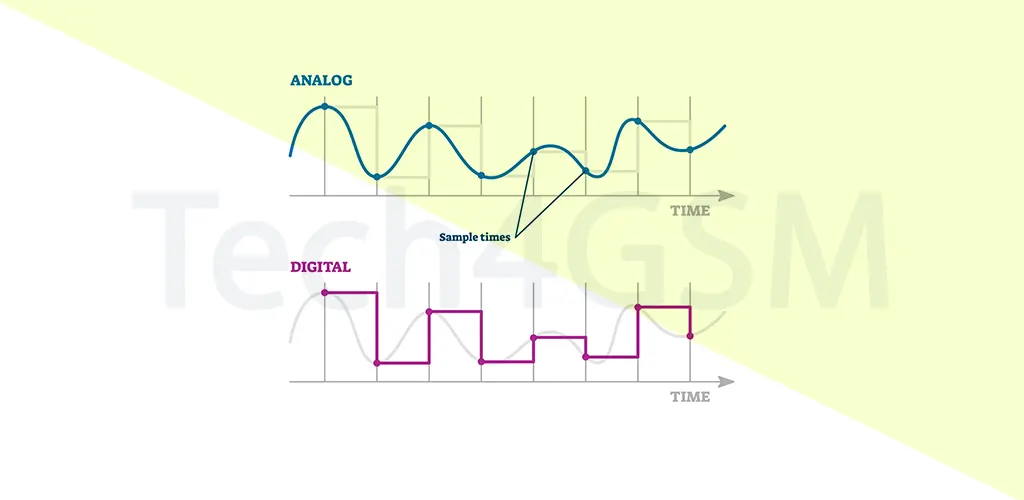
In our tech-driven world, Analog to Digital Conversion (ADC) is the unsung hero that transforms real-world signals (like sound or light) into digital data. Let’s break it down simply!
Analog vs. Digital Signals: The Basics
- Analog Signal: A continuous wave that mirrors real-world phenomena (e.g., vinyl records, traditional radio).
- Digital Signal: A discrete sequence of binary values (0s and 1s) used by computers (e.g., MP3 files, VoIP calls).
Why ADC Matters in 2025
ADC fuels modern tech by converting analog inputs into digital formats. Here’s why it’s crucial:
- VoIP Revolution: Transitioned outdated analog phones to Voice over IP systems, enabling crystal-clear global calls.
- Speed & Efficiency: Replaced sluggish teletypewriters with ultra-fast networks.
- Smart Office Systems: Powered digital PBX systems for seamless business communication.
Key ADC Techniques
1. Pulse Code Modulation (PCM)
The gold standard for ADC involves three steps:
- Sampling: Captures signal snapshots. Follows the Nyquist Theorem (sample rate = 2x signal’s max frequency).
- Quantization: Rounds sampled values to predefined levels, minimizing data size.
- Encoding: Converts quantized values into binary code (e.g., 8-bit or 16-bit).
2. Delta Modulation
Simpler than PCM, it tracks changes in signal:
- Modulator: Generates 1s (if signal rises) or 0s (if falls), creating a “staircase” wave.
- Demodulator: Reconstructs the analog signal using a low-pass filter.
3. Adaptive Delta Modulation
Upgrades delta modulation by adjusting step sizes for steep or gentle signal slopes, boosting accuracy.
Where ADC Shapes Our Lives
- Digital Audio: Records music in studios using high-fidelity ADCs.
- Video Streaming: Converts analog video to digital for platforms like YouTube.
- Scientific Research: Digitizes sensor data in projects like climate monitoring.
FAQs
Q1: What’s the role of ADC in smartphones?
A: ADC converts mic input (your voice) into digital data for calls or voice commands.
Q2: Why is the Nyquist Theorem important?
A: Sampling below the Nyquist rate causes distortion (aliasing), ruining signal quality.
Q3: How does PCM differ from Delta Modulation?
A: PCM captures absolute values, while Delta tracks relative changes, simplifying data.
Q4: Can ADC improve IoT devices?
A: Yes! Precise ADCs enhance sensors in smart homes or wearables.
ADC is the backbone of our digital age, turning analog whispers into digital roars. From music to AI, it’s everywhere—quietly shaping 2025’s tech landscape! 🚀