Introduction
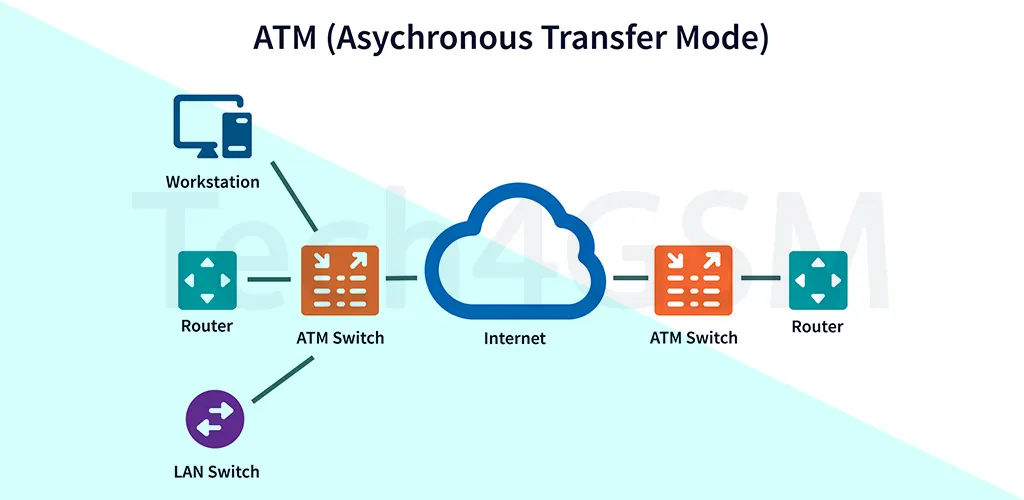
Imagine a world where your video calls, Netflix streams, and online gaming never lag—no matter how many devices are connected. That’s the dream ATM (Asynchronous Transfer Mode) aimed to achieve. Born in the 1980s, ATM was designed to merge the best of phone networks (reliability) and the internet (flexibility) into one powerhouse. Even in 2025, its legacy lives on in critical systems. Let’s break down why ATM mattered, how it works, and where it’s still used today.
Why ATM Networks? The Quest for Perfect Connection
In the 20th century, two giants ruled communication:
- Telephone Networks: Rock-solid for calls but pricey and rigid.
- Early Internet: Cheap and flexible but chaotic—no guarantees your data would arrive smoothly.
ATM was the peacemaker. It promised a “Broadband Integrated Service Vision” (B-ISON)—a single network handling voice, video, and data with guaranteed quality at a reasonable cost. Think of it as a highway with reserved lanes for ambulances (voice), trucks (data), and sports cars (video). No traffic jams, no compromises.
ATM 101: Small Cells, Big Impact
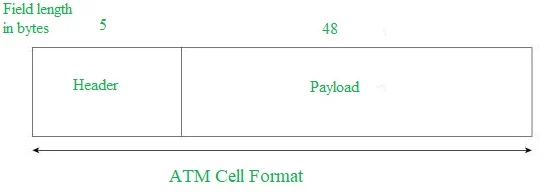
ATM’s secret sauce? 53-byte cells (like digital postcards):
- 5-byte header: Contains address info (like a ZIP code).
- 48-byte payload: Carries snippets of your call, video, or file.
How It Works:
- Setup: Before sending data, ATM sets up a “virtual circuit”—a pre-booked path.
- Transmission: Cells zoom through this path asynchronously (not timed to a clock).
- Flexibility: Handles both steady (e.g., calls) and bursty (e.g., downloads) traffic.
Unlike the internet’s “send and pray” approach, ATM’s connection-oriented design ensured data arrived intact and on time.
ATM Cell Format: Two Flavors
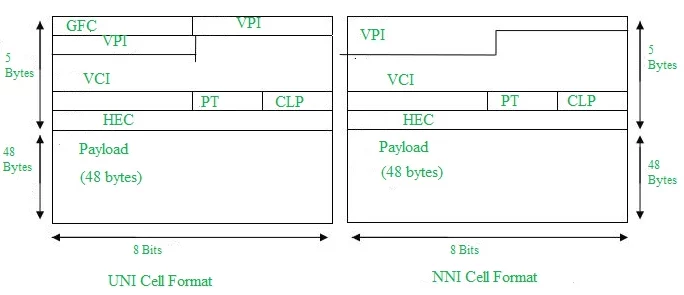
ATM cells come in two types:
- UNI Header: Used between devices and ATM switches. Includes a GFC (Generic Flow Control) field to manage traffic.
- NNI Header: Used between switches. Replaces GFC with a longer VPI (Virtual Path Identifier) for routing efficiency.
Think of UNI as a local post office sorting mail, while NNI is a national hub directing parcels across states.
ATM in Action: Virtual Highways
ATM uses two smart tricks:
- Virtual Path Connections (VPC): Bundles multiple data streams into a single “pipe” (like a subway line with multiple trains).
- Virtual Channel Connections (VCC): Individual lanes within that pipe (specific train cars).
If a link fails, ATM reroutes entire VPCs instantly—like detouring a whole subway line instead of individual trains.
ATM vs. Internet: The Showdown
| Feature | ATM | Internet (IP) |
|---|---|---|
| Connection | Pre-booked virtual circuits | Connectionless (no reservations) |
| Data Units | Fixed 53-byte cells | Variable-sized packets |
| Speed | Predictable, QoS guaranteed | Best-effort, varies with congestion |
| Addressing | 20-byte NSAP addresses for setup | 32-bit IP addresses in every packet |
While IP won the popularity contest, ATM’s precision still shines in places where reliability can’t be compromised.
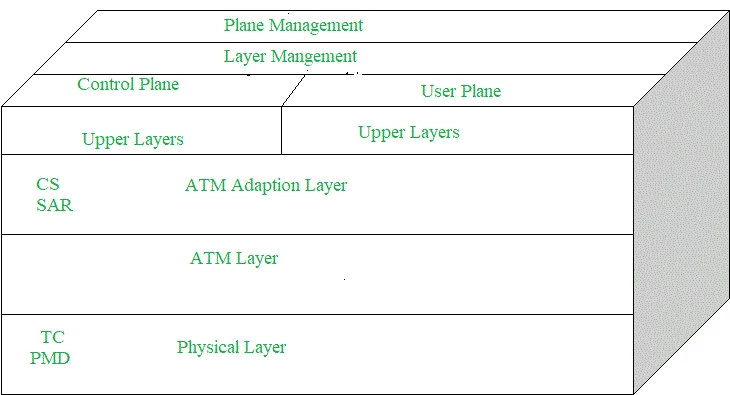
ATM’s Tech Layers: Teamwork Makes the Dream Work
- ATM Adaptation Layer (AAL):
- Prepares data (voice, video) for cell conversion.
- Like a chef chopping ingredients into perfect 48-byte pieces.
- Physical Layer:
- Sends cells as light (fiber) or electrical signals (copper).
- Manages timing and frame boundaries.
- ATM Layer:
- Handles routing, multiplexing, and congestion control using VPI/VCI addresses.
Where is ATM Used in 2025?
- Legacy WANs: Some banks and governments still rely on ATM for secure, high-speed links.
- Telecom Backbones: ATM helps manage traffic on older SONET/SDH fiber networks.
- Residential Broadband: Rare, but ATM once laid the groundwork for early DSL systems.
- Frame Relay Backbones: Supports data services in hybrid network setups.
Why ATM Still Matters
- Heritage: Paved the way for modern QoS in VoIP and streaming.
- Niche Reliability: Vital for industries where latency is a deal-breaker (e.g., aviation, finance).
- Education: Teaches networking principles in universities.
FAQs
Q1. Is ATM faster than the internet?
In theory, yes—thanks to QoS. But modern fiber and 5G have surpassed it in raw speed.
Q2. Can I use ATM at home in 2025?
Unlikely. Most home networks use Ethernet/Wi-Fi, but ATM underpins some ISP infrastructures.
Q3. What killed ATM?
Cost and complexity. Cheaper, simpler IP-based tech (like Ethernet) took over.
Q4. Does ATM support wireless?
No. It’s designed for wired/fiber networks.
Conclusion
ATM was the bridge between the analog past and the digital future. While it’s no longer the star, its DNA lives on in today’s seamless video calls and gaming streams. As we push into 2025, understanding ATM reminds us that good tech never truly dies—it evolves.