Introduction
In the fast-paced tech world of 2025, some older technologies still hold lessons—and the AUI (Attachment Unit Interface) is one! Let’s explore this classic Ethernet component in plain terms.
What is AUI?
The Attachment Unit Interface is a physical and logical interface defined in the IEEE 802.3 standard for 10BASE5 Ethernet (aka “thicknet”). Think of it as the “middleman” between an Ethernet card and the cable, ensuring seamless communication.
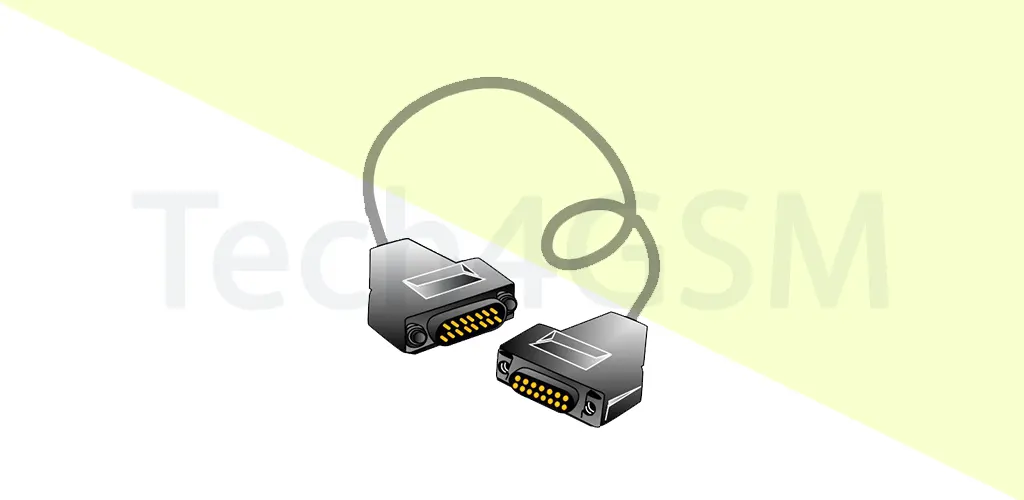
- 15-Pin Design: Uses a DB-15 connector (15 pins in a D-shaped shell).
- MAU Link: Connects the Ethernet node’s circuitry to the Medium Attachment Unit (MAU).
- Legacy Role: Vital for early Ethernet networks but largely replaced by modern ports.
Why AUI Still Matters in 2025
While outdated, AUI shaped today’s networking:
- Foundation for Ethernet: Paved the way for standardized cabling.
- Retro Tech Insights: Helps engineers understand early network design principles.
- Niche Applications: Still used in industrial systems or legacy hardware maintenance.
AUI Connector Pinout Simplified
Here’s a breakdown of the 15-pin AUI connector and its key signals:
| Signal | Description |
|---|---|
| CI-S | Control In Circuit Shield |
| CI-A | Control In Circuit A |
| DO-A | Data Out Circuit A |
| DI-S | Data In Circuit Shield |
| DI-A | Data In Circuit A |
| VC | Voltage Common (0 V) |
| CO-A | Control Out Circuit A (not used) |
| CO-S | Control Out Circuit Shield (not used) |
| CI-B | Control In Circuit B |
| DO-B | Data Out Circuit B |
| DO-S | Data Out Circuit Shield (not used) |
| DI-B | Data In Circuit B |
| VP | Voltage Plus (+12 V) |
| VS | Voltage Shield (not used) |
| CO-B | Control Out Circuit B (not used) |
| PG | Protective Ground (connected to the shell) |
Unused Pins: CO-A, CO-S, DO-S, VS, CO-B (marked “not used” in specs).
How AUI Works
- Connection: The AUI cable links the Ethernet card to an external MAU (transceiver).
- Data Flow:
- DO-A/DO-B: Send data from the device.
- DI-A/DI-B: Receive incoming data.
- Power: VP (+12V) powers the MAU, while VC and PG ensure stable grounding.
FAQs
Q1: Is AUI still used today?
A: Rarely. Modern Ethernet uses RJ45 ports or fiber optics. AUI remains in legacy systems or niche industrial setups.
Q2: What replaced AUI?
A: Integrated transceivers (like RJ45) eliminated the need for bulky external MAUs.
Q3: Why did AUI have a 15-pin design?
A: To support separate data, control, and power lines—a “Swiss Army knife” approach for early networks.
Q4: Can I convert AUI to USB?
A: Yes! Adapters exist, but speeds are limited to 10 Mbps.
Final Word
AUI may seem like a relic, but it’s a cornerstone of Ethernet history. In 2025, it reminds us how far networking has come—and why even “outdated” tech deserves a nod! 🔌