Introduction
Imagine trying to drink a milkshake through a skinny straw. Frustrating, right? That’s what using slow internet feels like! Enter broadband—the thick, smoothie-sized straw of the internet world. But what exactly makes it so fast and reliable? Let’s break it down, minus the tech jargon.
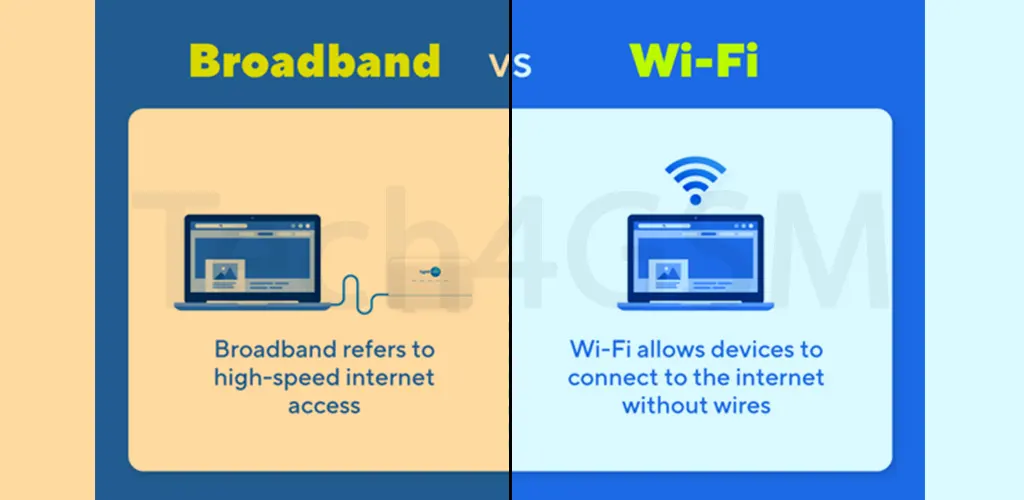
What Is Broadband? No, It’s Not Just “Wi-Fi”!
Broadband is a high-speed internet connection that zips data back and forth faster than 56 kilobits per second (kbps). To put that in perspective:
- Dial-up internet (the old-school “beep-boop” connection) maxes out at 56 kbps.
- Broadband blows past that, offering speeds like 25 Mbps, 100 Mbps, or even gigabit speeds (1,000 Mbps)!
Think of it like upgrading from a bicycle to a sports car. With broadband, you can stream movies, video call, or game online without the dreaded buffering wheel.
Why Does “Speed” Matter? Let’s Talk Real Life!
That “high-speed” label isn’t just marketing fluff. Here’s how broadband transforms your daily grind:
- Streaming Netflix? Broadband delivers HD/4K videos smoothly. No more pixelated faces!
- Zoom Meetings? Say goodbye to frozen screens and robotic voices.
- Online Gaming? Low latency means you won’t die in Fortnite because of lag.
If your connection struggles with these, you’re probably not on broadband. Time to upgrade!
How Does Broadband Work? The Magic Behind the Scenes
Unlike dial-up, which hogs your phone line, broadband uses advanced tech to split signals into multiple “lanes.” This lets it handle tons of data at once. Common types include:
- DSL: Uses phone lines (but faster than dial-up).
- Cable: Shares bandwidth via TV cable lines.
- Fiber-Optic: Sends data as light through glass cables (the fastest!).
The result? A highway for data instead of a single-lane road.
“But My Internet Says It’s Broadband… Why Is It Slow?”
Even broadband can hit snags. Here’s why:
- Too Many Users: If everyone in your house is streaming, speeds drop.
- Weak Wi-Fi: Your router might need a boost (check out tips at tech4gsm.com).
- Plan Limitations: Cheap plans often throttle speeds during peak times.
Pro Tip: Use tech4gsm.com’s guides to test your speed and troubleshoot issues!
Broadband vs. Mobile Data: What’s Better?
Mobile data (4G/5G) is handy for on-the-go browsing, but broadband reigns supreme for:
- Stability: No dropped signals during storms.
- Data Caps: Most broadband plans offer unlimited usage.
- Speed Consistency: Perfect for heavy-duty tasks like downloading large files.
Future of Broadband: Faster, Smarter, Everywhere!
With 5G and fiber networks expanding, broadband is getting even quicker and more reliable. Soon, concepts like smart homes, 8K streaming, and VR gaming will rely entirely on these speedy connections.
Final Takeaway
Broadband isn’t just “fast internet”—it’s the backbone of modern life. Whether you’re binge-watching, working remotely, or yelling at teammates in a game, a good broadband connection keeps the digital world at your fingertips.