Introduction
The cathode ray tube (CRT) revolutionized visual technology in the 20th century. Before the rise of sleek LCDs and LEDs, CRTs dominated televisions, monitors, and specialized equipment. Even in 2025, CRTs hold historical significance and niche applications. This guide explores CRT technology, its unique characteristics, real-world uses, and its enduring legacy.
What is a Cathode Ray Tube?
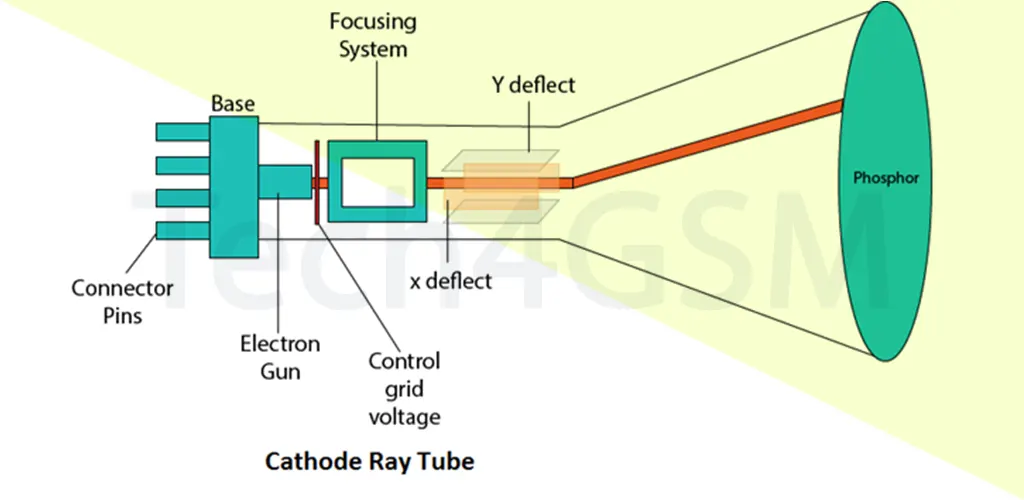
A cathode ray tube (CRT) is a vacuum tube that generates images by firing electrons onto a phosphorescent screen. Key components include:
- Cathode: Heats up and emits electrons.
- Anodes: Accelerate electrons toward the screen.
- Phosphor-Coated Screen: Glows when struck by electrons, creating images.
- Deflection Coils: Steer the electron beam to “paint” the screen line by line.
When voltage is applied, the cathode emits electrons. These electrons are focused into a beam, accelerated, and deflected to hit specific screen areas, lighting up phosphor dots to form images.
Key Characteristics of CRT Technology
- High Contrast and Brightness: CRTs produce deep blacks and vibrant colors, ideal for dark rooms.
- Zero Motion Blur: Thanks to rapid refresh rates (up to 120 Hz), CRTs excel in fast-moving visuals (e.g., gaming).
- Wide Viewing Angles: Unlike early LCDs, CRTs maintain clarity from any angle.
- Durability: CRTs withstand harsh environments, outlasting many modern displays.
- Analog Compatibility: Natively compatible with analog signals (e.g., older gaming consoles).
Real-Life Applications of Cathode Ray Tubes
1. Television Displays
CRTs were the heart of televisions for decades. Bulky CRT TVs dominated living rooms until the 2000s.
- How It Worked:
- Electron beams scanned the screen in horizontal lines (480i/576i resolution).
- Phosphor dots glowed red, green, or blue to create color images.
- Legacy:
- Paved the way for HDTV standards.
- Classic shows like Friends and The Simpsons were designed for CRT aesthetics.
- 2025 Status:
- Rarely used, but vintage CRT TVs are prized by retro enthusiasts. Learn more about retro tech at tech4gsm.com.
2. Computer Monitors
Before flat panels, CRT monitors were essential for offices and gaming.
- Advantages:
- Adaptive Resolutions: CRTs could switch resolutions without scaling issues.
- Color Accuracy: Preferred by graphic designers until the 2010s.
- Decline:
- Bulky design and high power consumption led to their replacement by LCDs.
- Niche Uses in 2025:
- Legacy systems in government or industrial sectors still use CRT monitors.
3. Medical Imaging
CRTs played a critical role in early X-rays and fluoroscopy machines.
- X-Ray Machines:
- Converted X-ray signals into visible images on CRT screens.
- Fluoroscopy:
- Enabled real-time imaging during surgeries.
- Modern Shift:
- Digital detectors (DR) now dominate, but CRT-based systems are still in some rural clinics.
4. Oscilloscopes
CRT oscilloscopes were vital for electronics engineering.
- Function:
- Displayed voltage waveforms to diagnose circuit issues.
- 2025 Relevance:
- Replaced by digital storage oscilloscopes (DSOs), yet CRTs are used in audiophile communities for analog signal purity.
5. Radar Systems
CRTs provided real-time radar tracking during WWII and the Cold War.
- Role:
- Displayed blips representing aircraft or ships.
- Modern Use:
- Some air traffic control towers retain CRT radars for redundancy.
6. Gaming Arcades
CRT arcade cabinets defined 80s-90s gaming culture.
- Iconic Games:
- Pac-Man, Street Fighter II, and Mortal Kombat relied on CRT responsiveness.
- Retro Revival:
- Enthusiasts restore CRT arcades for authentic gameplay.
7. Industrial Control Systems
Factories used CRT monitors to oversee production lines.
- Benefits:
- Resistant to electromagnetic interference (EMI) from heavy machinery.
- 2025 Update:
- Gradually replaced by ruggedized LCDs, but CRTs remain in aging facilities.
8. Scientific Instruments
CRTs aided breakthroughs in physics and chemistry.
- Electron Microscopes:
- Visualized subatomic particles.
- Particle Accelerators:
- Monitored particle collisions.
CRT vs. Modern Display Technologies
| Feature | CRT | LCD/LED |
|---|---|---|
| Power Use | High (300W+) | Low (50W) |
| Size | Bulky | Slim |
| Lifespan | 10+ years | 5–7 years |
| Response Time | Instant (0.01ms) | 1–5ms |
| Color Accuracy | Excellent | Superior (post-2010) |
FAQs About Cathode Ray Tubes
Q1: Why were CRTs phased out?
A: Bulkiness, high energy consumption, and the rise of affordable flat screens led to their decline.
Q2: Are CRTs still manufactured in 2025?
A: No, but refurbished units are available through specialty retailers.
Q3: Do CRTs emit harmful radiation?
A: Minimal X-rays are emitted, but modern CRTs include leaded glass for safety.
Q4: Can CRTs work with modern devices?
A: Yes, with HDMI-to-composite converters.
Q5: Why do gamers prefer CRTs?
A: Zero input lag and smooth motion for retro gaming.
Q6: How to dispose of CRTs safely?
A: Recycle at e-waste centers due to lead and phosphor content.
Conclusion
Though CRT technology is largely obsolete in 2025, its impact on entertainment, medicine, and science remains undeniable. From iconic arcade games to life-saving X-rays, CRTs shaped the technological landscape. As we embrace ultra-HD and OLED screens, understanding CRT history helps us appreciate today’s advancements.