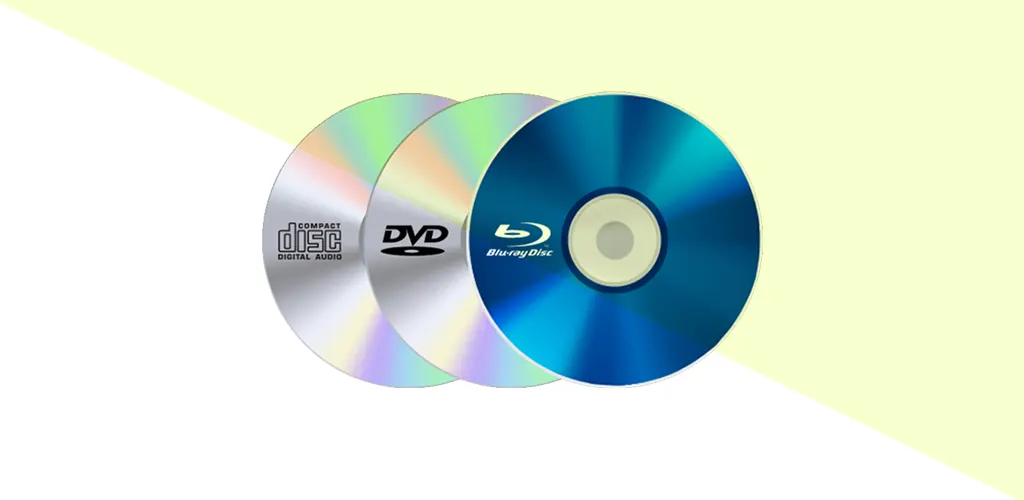
Introduction
Remember the days when music came in shiny, round discs? Let’s explore the Compact Disc (CD)—a groundbreaking tech innovation that revolutionized how we stored and enjoyed digital data.
What is a CD?
A Compact Disc (CD) is a portable, circular storage device made of plastic. It uses laser technology to store and play audio, video, documents, and more. Key features:
- Optically readable: Data is read via laser, not physical contact.
- Metal coating: A reflective aluminum layer holds data as tiny pits (1 micron wide).
- Storage capacity: Up to 700 MB (about 80 minutes of audio).
- Durability: Longer lifespan than magnetic tapes but less than modern USB drives.
History of the Compact Disc
- 1960s: Physicist James Russell envisioned CDs to fix poor vinyl record quality.
- 1970: Russell patented “optical digital recording.”
- 1982: Sony and Philips launched the first commercial CD player (CDP-101).
- 2025 Update: CDs are now nostalgic collectibles, overshadowed by cloud storage and SSDs.
How Does a CD Work?
A CD has 4 layers:
- Top Layer: Label/print area.
- Lacquer Layer: Protects against scratches and oxidation.
- Reflective Layer: Aluminum coating that reflects laser light.
- Polycarbonate Layer: Encodes data as microscopic pits.
Reading Process:
- A CD drive spins the disc (200–500 RPM).
- A laser beam scans the pits, converting reflections into digital data.
- A photoelectric detector decodes the signals for playback.
Types of CDs
- CD-R (Recordable): Write once; ideal for backups.
- CD-ROM (Read-Only): Pre-loaded data (e.g., software).
- CD-RW (Rewritable): Reusable, like a USB drive.
Pros of CDs
- Portable: Lightweight and easy to carry.
- Random Access: Skip tracks or files instantly.
- Reliable: Trusted for software distribution in the ’90s.
- Multi-Use: Stored music, videos, games, and documents.
Cons of CDs
- Low Capacity: Only 700 MB vs. modern TB-sized drives.
- Fragile: Scratches or heat can damage them.
- Outdated: Replaced by DVDs, USBs, and cloud storage.
- Slow Speed: Limited read/write speeds.
FAQs
- How much data does a CD hold?
A standard CD holds 650–700 MB (72–80 minutes of audio). - What were CDs used for?
Primarily for music albums, software, and backups. - What’s the size of a CD?
120mm diameter (4.75 inches) and 1.2mm thick.
Why CDs Still Matter in 2025
While CDs are obsolete, they laid the foundation for today’s digital storage.
From mixtapes to software installs, CDs were the heroes of the pre-internet era. Though replaced, their legacy lives on in every streaming song and cloud-saved file! 🎵💿