Introduction
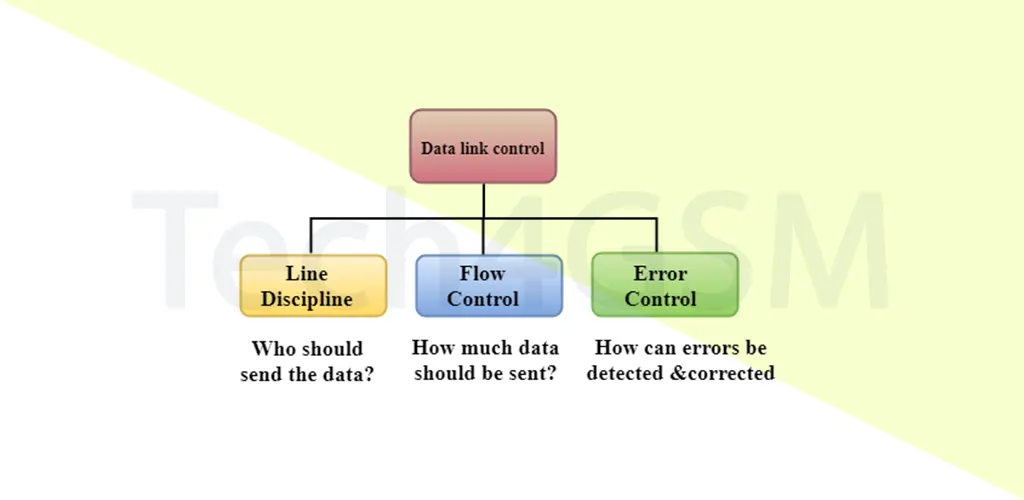
The data link layer (Layer 2 in the OSI model) is the unsung hero of network communication. It ensures data moves smoothly between devices over a physical link. Think of it as a traffic controller—managing how data is packaged, sent, received, and checked for errors. DLC (Data Link Control) protocols are the rules that govern this layer, focusing on two critical tasks: flow control and error control.
In 2025, with faster networks and smarter devices, understanding DLC is vital for IT professionals, developers, and tech enthusiasts. Let’s break down these concepts in easy language and explore how they keep our digital world connected!
What is Flow Control?
Imagine a fast-talking friend vs. a slow listener—it’s frustrating! Similarly, in networking, if a sender transmits data too quickly, the receiver might get overwhelmed, leading to data loss. Flow control ensures both devices sync their speeds.
Bold Point: Two Flow Control Mechanisms
- Stop and Wait Protocol
- Sliding Window Protocol
1. Stop and Wait Flow Control
How It Works:
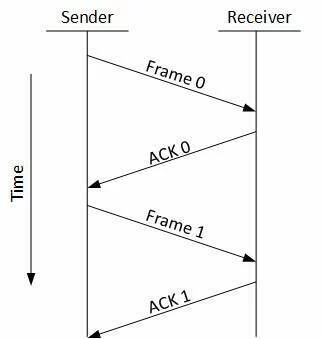
- The sender transmits one data frame and waits for an acknowledgement (ACK) from the receiver.
- Only after receiving ACK does the sender send the next frame.
Pros:
- Simple to implement.
- No risk of overwhelming the receiver.
Cons:
- Inefficient—the sender sits idle while waiting.
- Wastes bandwidth, especially in high-speed networks.
Example:
Sending a text message and waiting for a “read receipt” before typing another.
2. Sliding Window Flow Control
How It Works:
- Both sender and receiver agree on a window size (number of frames sent before ACK).
- The sender can transmit multiple frames without waiting for individual ACKs.
- The receiver sends ACKs for batches of frames, allowing continuous data flow.
Bold Terms:
- Window Size: Determines how many frames can be “in transit” at once.
- Cumulative ACK: Receiver acknowledges all frames up to a certain number.
Pros:
- Maximizes network efficiency.
- Reduces idle time for the sender.
Cons:
- Complex to manage compared to Stop and Wait.
Example:
Streaming a video—buffering several seconds ahead instead of loading each second individually.
Internal Link: For optimizing network settings, explore tools at tech4gsm.com.
Error Control: Keeping Data Accurate
Even with flow control, data can get lost or corrupted. Error control mechanisms detect and fix these issues.
Bold Point: Requirements for Error Control
- Error Detection: Identify corrupted/lost frames.
- Positive ACK: Confirm correct receipt.
- Negative ACK (NACK): Request retransmission.
- Retransmission: Resend lost/corrupted data.
Automatic Repeat Request (ARQ) Techniques
ARQ protocols automate error control. Let’s explore the three main types:
1. Stop-and-Wait ARQ
How It Works:
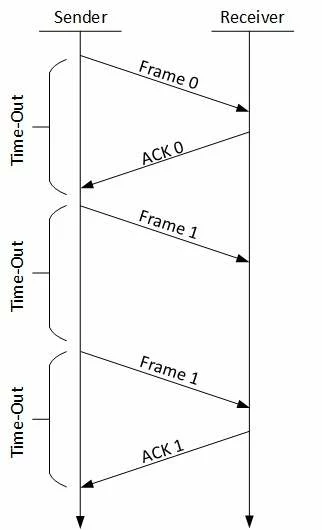
- Sender transmits a frame and starts a timer.
- If ACK arrives before timeout, the next frame is sent.
- If not, the frame is resent.
Pros:
- Simple, minimal storage needed.
Cons:
- Low efficiency—like the basic Stop and Wait flow control.
Scenario:
Mailing a letter and waiting for a reply before sending another.
2. Go-Back-N ARQ
How It Works:
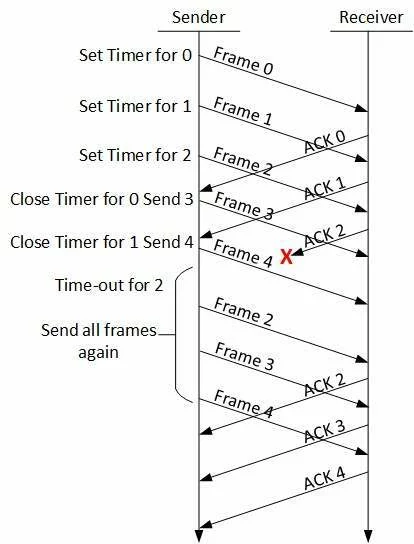
- Sender uses a window to send multiple frames.
- Receiver only accepts frames in order. If a frame is missing, all subsequent frames are discarded.
- Sender retransmits all frames from the lost one onward.
Bold Terms:
- Window Size (N): Maximum frames in transit.
- Sequence Numbers: Track frame order.
Pros:
- Better efficiency than Stop-and-Wait.
Cons:
- Wastes bandwidth resending correct frames after an error.
Example:
A teacher repeating a lecture from the point a student zoned out.
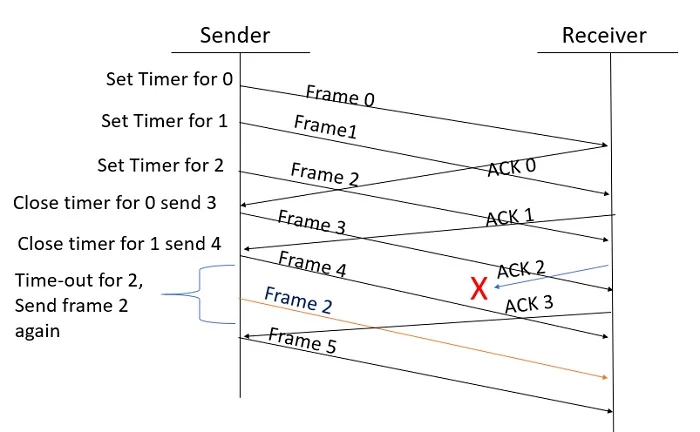
3. Selective Repeat ARQ
How It Works:
- Receiver buffers out-of-order frames.
- Sender only resends the specific frame flagged by a NACK.
Pros:
- Most efficient—no unnecessary retransmissions.
Cons:
- Requires significant receiver memory and processing.
Example:
Editing a document by fixing only the typos, not rewriting entire paragraphs.
DLC in 2025: What’s New?
As we advance into 2025, DLC protocols are evolving with:
- AI-Driven Flow Control: Predicting network congestion.
- Quantum Error Correction: Mitigating data loss in quantum networks.
- 5G/6G Optimization: Faster sliding window adjustments for low-latency apps.
FAQs: Your Questions Answered
Q1: Why is the data link layer important?
It ensures error-free, efficient data transfer between directly connected devices.
Q2: What’s the difference between flow and error control?
Flow control manages data speed; error control fixes transmission errors.
Q3: Which ARQ is best for video streaming?
Selective Repeat ARQ, as it minimizes buffering by resending only lost packets.
Q4: How does tech4gsm.com help with DLC?
It offers tools for network analysis, protocol optimization, and error logging.
Q5: Is Stop-and-Wait ARQ still used in 2025?
Yes, in low-bandwidth IoT devices where simplicity trumps speed.
Final Thoughts
Mastering DLC is key to building robust networks. Whether it’s the efficiency of sliding windows or the precision of Selective Repeat ARQ, these protocols keep our data flowing smoothly.