Introduction
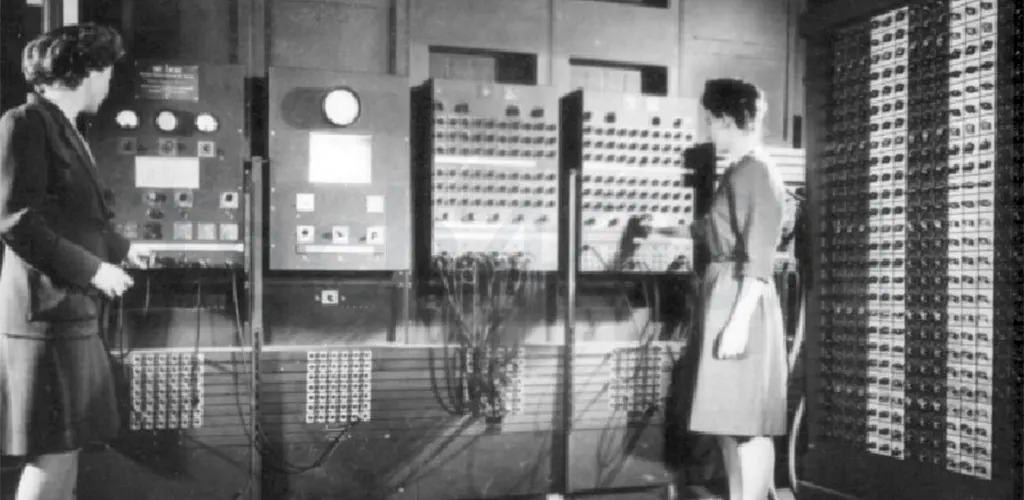
The Electronic Discrete Variable Automatic Computer (EDVAC) was a revolutionary machine designed in the 1940s by J. Presper Eckert and John Mauchly, the same brilliant minds behind ENIAC. While ENIAC is often celebrated as the first general-purpose electronic computer, EDVAC introduced a stored-program architecture—a concept that became the backbone of all modern computers. Though completed in 1949, EDVAC didn’t become fully operational until 1952, two years after SEAC (another early computer based on its design).
Why EDVAC Matters in 2025?
Even in 2025, EDVAC’s legacy persists. Its design principles influence how we build AI systems, quantum computers, and cloud infrastructure. Let’s dive into its history, workings, and lasting impact.
Design and Development: From ENIAC to EDVAC
1. The Need for Improvement
ENIAC, though groundbreaking, had critical flaws:
- No stored memory: Programs were set via physical switches and cables.
- Decimal system: Limited speed and complexity.
- Size and power consumption: 17,000 vacuum tubes and 150 kW of power!
2. The Birth of the Stored-Program Concept
EDVAC’s design was inspired by the von Neumann architecture, named after mathematician John von Neumann, who collaborated on the project. Key ideas included:
- Storing programs in memory: Instructions and data coexist in the same memory space.
- Binary over decimal: Faster calculations using 0s and 1s.
- Simplified reprogramming: No manual rewiring needed.
3. Delays and Challenges
Despite being designed in 1945, EDVAC faced delays due to:
- Funding issues post-WWII.
- Team disputes (Eckert and Mauchly left to start their own company).
- Technical hurdles with mercury delay line memory.
Technical Specifications: What Made EDVAC Unique?
1. Binary System
- Arithmetic operations: Handled only addition and subtraction (multiplication/division via software).
- 44-bit word length: Each word could hold instructions or data.
2. Memory Innovations
- 1K (1,024) words of memory: Stored in mercury delay lines.
- Delay line memory: Data circulated in liquid mercury tubes, accessed sequentially.
3. Speed and Performance
- 1,000 operations/second: 10x faster than ENIAC.
- 3.5 microseconds per addition: Revolutionary for its time.
4. Physical Structure
- 8,000 vacuum tubes: More reliable than ENIAC’s 17,000.
- 12,000 diodes: For logic operations.
- Size: 490 square feet (smaller than ENIAC’s 1,800).
How EDVAC Worked: A Step-by-Step Breakdown
1. Stored-Program Execution
- Programs were fed via punched tape and stored in memory.
- The CPU fetched instructions one by one, enabling automation.
2. Instruction Set
- Simple commands: Add, Subtract, Store, and Branch.
- Conditional logic: Could skip instructions based on results.
- Teletype printers: For human-readable output.
- Magnetic wire recorders: Early form of external storage.
Fun Fact: EDVAC’s memory worked like a “loop” of data—similar to how a cassette tape plays!
EDVAC’s Legacy: How It Shaped Modern Computing
1. Influence on Early Computers
- SEAC (1950): The first operational stored-program computer in the U.S., based on EDVAC.
- IAS Machine (1952): Inspired commercial computers like IBM 701.
2. Advancements in Memory Technology
EDVAC’s delay lines paved the way for:
- Magnetic core memory (1950s).
- Semiconductor RAM (1960s).
- Learn more about early memory technologies.
3. Impact on Software Development
- Programming languages: EDVAC’s simplicity inspired assembly languages.
- Operating systems: The concept of automated workflows began here.
4. Relevance in 2025
- AI and Machine Learning: Parallel processing concepts trace back to EDVAC.
- Quantum computing: Binary foundations remain critical.
EDVAC vs. ENIAC: Key Differences
| Feature | ENIAC | EDVAC |
|---|---|---|
| Program Storage | Manual switches/cables | Stored in memory |
| Number System | Decimal | Binary |
| Memory Type | No internal memory | Mercury delay lines |
| Speed | 5,000 ops/second | 1,000 ops/second |
| Size | 1,800 sq ft | 490 sq ft |
FAQs: Quick Answers About EDVAC
Q1: When was EDVAC developed?
A: Designed in 1945, completed in 1949, operational by 1952.
Q2: Why did SEAC become operational first?
A: SEAC was a smaller, simplified version of EDVAC, built faster due to fewer technical complexities.
Q3: How was EDVAC different from ENIAC?
A: EDVAC used binary numbers and stored programs, unlike ENIAC’s decimal system and manual programming.
Q4: What type of memory did EDVAC use?
A: Mercury delay lines, which stored data as acoustic waves.
Q5: Who designed EDVAC?
A: J. Presper Eckert and John Mauchly, with contributions from John von Neumann.
Q6: When was EDVAC decommissioned?
A: In 1962, after a decade of service.
Conclusion: EDVAC’s Timeless Impact
EDVAC’s stored-program concept revolutionized computing, making machines faster, smaller, and more versatile. Even in 2025, its principles underpin cutting-edge tech like AI, IoT, and edge computing.