Introduction
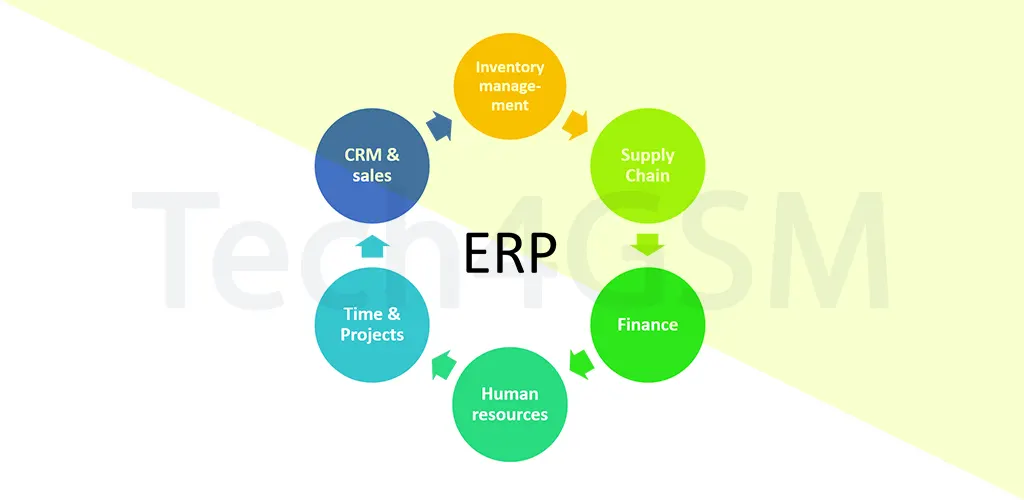
ERP (Enterprise Resource Planning) is a powerful software system that integrates and automates core business processes like finance, HR, supply chain, inventory, and customer relations into a single platform. Designed for businesses of all sizes, ERP eliminates data silos, improves efficiency, and provides real-time insights to drive smarter decisions. By 2025, ERP adoption is expected to surge as companies prioritize digital transformation to stay competitive.
Why ERP Matters in 2025
Modern businesses face complex challenges: global competition, evolving customer demands, and data overload. ERP systems act as the backbone of organizations by:
- Centralizing data for a “single source of truth.”
- Automating workflows to reduce manual errors.
- Enabling scalability to support business growth.
- Enhancing compliance with industry regulations.
Key Components of an ERP System
ERP systems consist of modules tailored to specific business functions. Core modules include:
- Finance Module
- Automates accounting, invoicing, and financial reporting.
- Tracks revenue, expenses, and tax compliance.
- Replaces standalone accounting software with integrated tools.
- Human Resources (HR) Module
- Manages payroll, benefits, and employee records.
- Adds talent management, recruitment, and performance tracking.
- Supply Chain Management (SCM) Module
- Optimizes inventory, warehousing, and logistics.
- Integrates with Warehouse Management Systems (WMS) and Transportation Management Systems (TMS) for advanced logistics.
- Customer Relationship Management (CRM) Module
- Tracks customer interactions and sales pipelines.
- Improves customer retention and marketing strategies.
- Procurement Module
- Streamlines purchasing workflows and vendor management.
- Reduces costs through automated approvals and spend analysis.
How ERP Systems Work
ERP systems rely on a centralized database that connects all modules, ensuring data consistency and real-time updates. Here’s a simplified example of the “Order-to-Cash” process:
- A sales order is created in the CRM module.
- Inventory levels are checked via the SCM module.
- Shipping details are logged, and inventory is updated automatically.
- The finance module generates invoices and records payments.
This seamless integration reduces manual data entry and minimizes errors. Advanced ERP systems even automate these steps using AI-driven workflows.
Top Benefits of ERP Systems
- Cost Savings: Streamline operations and reduce waste.
- Improved Efficiency: Automate repetitive tasks like payroll and invoicing.
- Data-Driven Decisions: Access real-time analytics for forecasting and planning.
- Scalability: Add modules as your business grows (e.g., e-commerce integration).
- Regulatory Compliance: Stay updated with tax laws and industry standards.
By 2025, ERP systems will leverage AI, IoT, and blockchain to offer predictive insights and enhance security.
Types of ERP Systems
- On-Premises ERP
- Hosted locally on company servers.
- Ideal for industries with strict data privacy needs (e.g., healthcare).
- High customization but costly upfront.
- Cloud ERP
- Hosted on vendor servers; accessed via the internet.
- Affordable subscription model with automatic updates.
- Perfect for SMBs and remote teams.
- Hybrid ERP
- Combines on-premises and cloud modules.
- Balances flexibility with control over critical data.
A Brief History of ERP
- 1960s: MRP (Material Requirements Planning) systems emerge for manufacturing.
- 1980s: MRP II integrates finance and HR, laying the groundwork for ERP.
- 1990s: Gartner coins the term “ERP,” and SAP dominates the market.
- 2000s: Cloud ERP revolutionizes accessibility and affordability.
- 2025: AI-driven ERP systems predict trends and automate complex tasks.
Top ERP Vendors in 2025
- SAP: Leader in large enterprise solutions.
- Oracle: Renowned for cloud ERP and AI integration.
- Microsoft Dynamics 365: Popular for mid-sized businesses.
- Infor: Industry-specific ERP for manufacturing and retail.
- NetSuite: Top SaaS ERP for scalability.
FAQ: ERP Simplified
Q1: How much does an ERP system cost?
- Small businesses: 10,000–100,000 annually.
- Enterprises: $1 million+ for custom solutions.
Q2: How long does ERP implementation take?
- SMBs: 3–6 months.
- Large companies: 1–3 years.
Q3: Can ERP work for startups?
Yes! Cloud ERP like NetSuite offers scalable, budget-friendly plans.
Q4: What’s the biggest ERP challenge?
Employee resistance. Proper training ensures smooth adoption.
Q5: Is ERP secure?
Reputable vendors use encryption, multi-factor authentication, and regular audits.
Future of ERP in 2025
ERP systems will become smarter, faster, and more user-friendly with:
- AI-Powered Automation: Predictive analytics for inventory and demand.
- IoT Integration: Real-time monitoring of supply chains.
- Blockchain: Secure, transparent transaction records.
Final Thoughts
ERP is no longer optional—it’s essential for survival in 2025’s digital economy. Whether you’re a small business or a global enterprise, the right ERP system unlocks efficiency, growth, and innovation. Ready to transform? Start your ERP journey today!