Introduction
Business Information Systems (BIS) are the backbone of modern organizations, blending technology, data, and human expertise to streamline operations. In 2025, these systems are more critical than ever, driving efficiency and innovation. Let’s break down what BIS is, its types, and why it matters.
Key Takeaways
- BIS optimizes data management for faster, smarter decisions.
- Types include Transaction Processing Systems (TPS) and Decision Support Systems (DSS).
- Future trends like AI and cloud computing will dominate 2025.
- Implementation challenges? Solutions exist with proper planning.
Understanding Business Information Systems
Definition: BIS integrates hardware, software, and processes to collect, analyze, and share data across departments. Think of it as a digital nerve center for businesses.
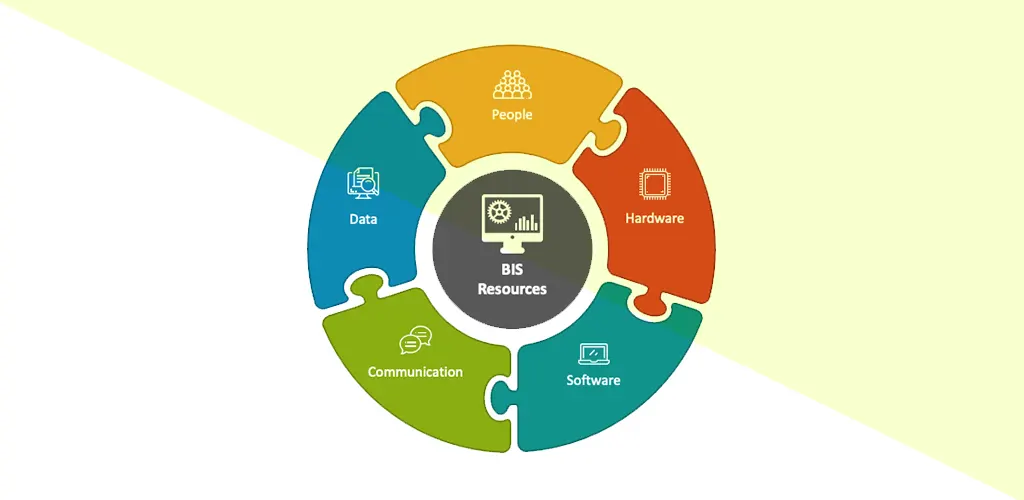
Key Components:
- Hardware: Servers, computers, and mobile devices.
- Software: Tools for data processing (e.g., ERP systems).
- People: Skilled users and IT professionals.
- Processes: Standardized workflows for data handling.
Why It Matters:
BIS eliminates guesswork by turning raw data into actionable insights. From tracking sales to predicting customer trends, it’s a game-changer for competitiveness.
Types of Business Information Systems
- Transaction Processing Systems (TPS):
- Handles daily transactions (e.g., sales, payroll).
- Ensures accuracy and real-time updates.
- Management Information Systems (MIS):
- Generates reports for mid-level managers.
- Highlights trends in sales, inventory, and productivity.
- Decision Support Systems (DSS):
- Uses AI to model scenarios (e.g., “What if we cut costs by 10%?”).
- Aids strategic planning with predictive analytics.
Pro Tip: Combine these systems for end-to-end operational clarity.
Role of BIS in Decision-Making
- Data Collection: Gathers data from IoT devices, CRM tools, and social media.
- Analysis: Identifies patterns (e.g., peak sales seasons) using machine learning.
- Strategic Planning: Helps leaders allocate resources wisely and enter new markets.
Example: A retailer using BIS to track inventory can avoid stockouts during holiday rushes.
Implementing BIS: Challenges & Solutions
- Challenge: High upfront costs.
Solution: Start with modular, scalable systems. - Challenge: Employee resistance.
Solution: Invest in training and highlight benefits like reduced manual work. - Integration: Use APIs to connect BIS with legacy systems. Learn more about seamless integration at tech4gsm.com.
Future Trends in 2025
- AI & Machine Learning: Automating complex tasks like fraud detection.
- Cloud Computing: Enabling remote access and cost-effective scaling.
- Cybersecurity: Prioritizing data protection as cyber threats evolve.
Prediction: By 2025, 60% of businesses will rely on AI-driven BIS for daily operations.
Case Studies
- Retail: Walmart uses BIS to manage global supply chains, reducing delivery times.
- Healthcare: Hospitals track patient data digitally, improving diagnosis accuracy.
- Finance: Banks deploy BIS for real-time fraud alerts and risk assessment.
Conclusion
Business Information Systems are no longer optional—they’re essential for survival in 2025. By adopting BIS, companies boost efficiency, satisfy customers, and stay ahead of trends.
FAQ
Q: How does BIS improve customer satisfaction?
A: By analyzing feedback and purchase history, businesses personalize offers and resolve issues faster.
Q: Are BIS only for large companies?
A: No! Small businesses use cloud-based BIS for affordable scalability.
Q: What’s the biggest risk of ignoring BIS?
A: Falling behind competitors who leverage data for smarter decisions.
Q: How to start with BIS in 2025?
A: Audit your needs, choose user-friendly software, and train your team.
Craft a data-driven future with BIS—your business’s secret weapon in 2025! 🚀