Introduction
In today’s fast-paced world, OMR (Optical Mark Recognition) technology plays a vital role in efficiently gathering and processing data. Whether it’s exams, surveys, or elections, OMR systems ensure accuracy and speed. Let’s explore how this technology works, its history, and why it’s still relevant in 2025.
What is OMR?
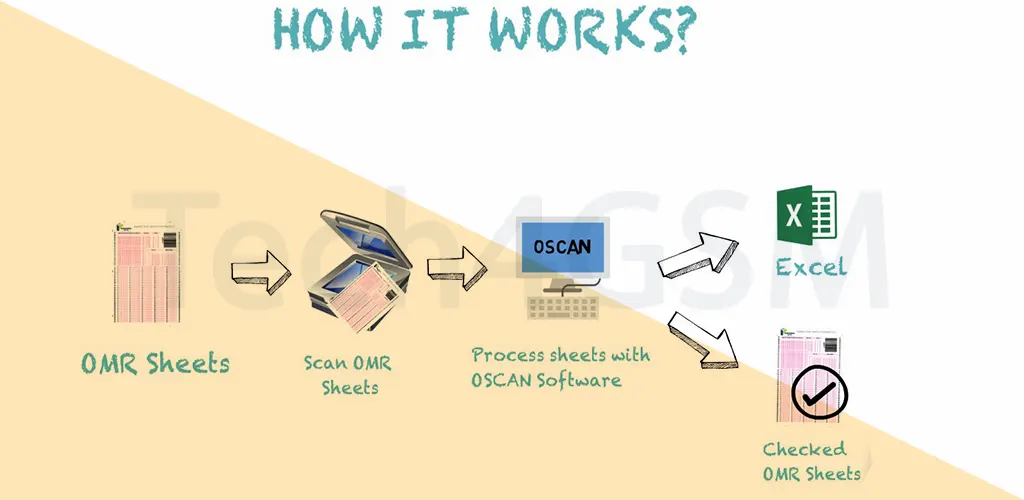
OMR stands for Optical Mark Recognition, a technology that detects human-made marks on specially designed sheets. For example, students darken circles on OMR answer sheets during exams, and the scanner reads these marks to record responses. This method is widely used in scenarios requiring quick, error-free data processing, such as competitive exams or customer feedback surveys.
History of OMR
The journey of OMR began in the early 1900s with machines that read punched paper holes. By the 1950s, it evolved into grading exams automatically. The 1960s introduced bubble sheets, making OMR more versatile. By the 1980s, accuracy improved significantly, and in the 2000s, OMR became affordable and user-friendly. Today, in 2025, it remains a cornerstone in education, healthcare, and elections.
Key Features of OMR Technology
- Precision: Detects marked answers (like checkboxes) with near-perfect accuracy.
- Speed: Processes thousands of sheets in minutes, saving time.
- Cost-Effective: Reduces manual labor and printing costs.
- Security: Protects sensitive data with encryption.
- Scalability: Handles large-scale exams or surveys effortlessly.
Applications of OMR in 2025
- Education: Grading multiple-choice exams swiftly.
- Surveys: Analyzing customer feedback without manual entry.
- Elections: Counting votes securely and transparently.
- Healthcare: Streamlining patient forms and insurance claims.
Advantages of OMR
✅ High Accuracy: Minimizes human errors.
✅ Fast Results: Instant data processing.
✅ Versatile: Works for exams, polls, and more.
Disadvantages of OMR
❌ Limited to Marks: Can’t read handwritten text.
❌ Rigid Format: Requires pre-designed sheets.
FAQs About OMR
Q1: Why is OMR considered an input device?
A: The OMR scanner acts as an input device, sending marked data to a computer for processing.
Q2: What are OMR sheets made of?
A: They’re specialized paper forms with predefined bubbles/boxes for marking answers.
Q3: How is OMR used in elections?
A: Voters mark ballots, which OMR scanners count electronically for quick, tamper-proof results.
Q4: Can OMR handle two-sided sheets?
A: Yes! Double-sided OMR sheets are used for lengthy exams or surveys.
Final Thoughts
As we step into 2025, OMR technology continues to simplify data collection across industries. Its blend of speed, accuracy, and affordability makes it irreplaceable.