Introduction
In today’s digital world, Peer-to-Peer (P2P) networks are revolutionizing how we share resources and communicate. Unlike traditional systems that rely on central servers, P2P networks empower every participant to act as both a client and a server. Let’s break down how this decentralized system works, its history, applications, and why it’s a game-changer in 2025.
What Is a Peer-to-Peer (P2P) Service?
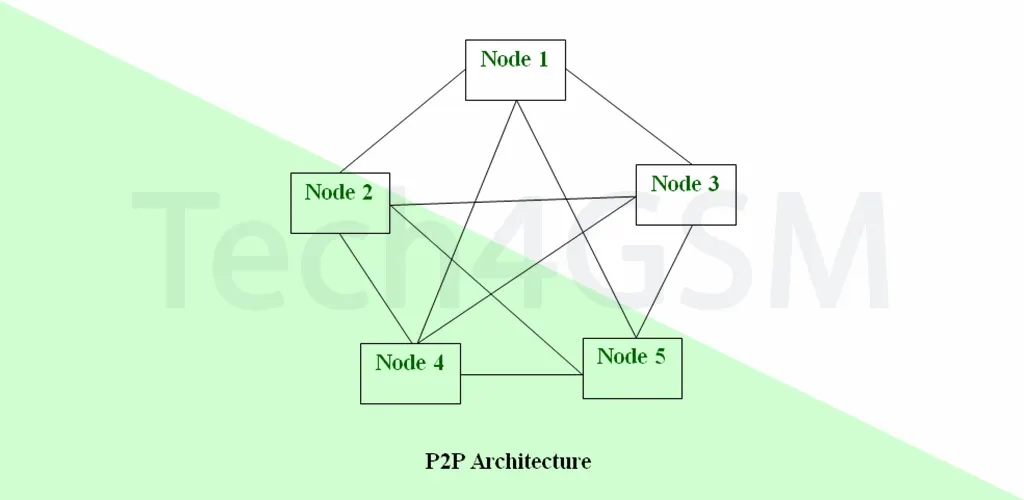
A Peer-to-Peer network is a group of connected devices (called nodes) that share resources directly without a central server. Each node can send or receive data, making the system collaborative and efficient. Imagine a neighborhood where everyone shares tools instead of borrowing from a single shop—this is how P2P networks operate!
- No Central Control: No single server manages the network.
- Shared Workload: Tasks like file sharing are distributed among nodes.
- Resilience: The network stays active unless all nodes stop working.
History of P2P Networks
P2P technology has evolved over decades:
- 1979: USENET emerged, allowing users to share messages without a central server.
- 1988: Internet Relay Chat (IRC) introduced real-time text sharing.
- 1999: Napster popularized audio file sharing but faced legal issues.
- 2000: Gnutella launched as the first decentralized P2P network, letting users access files directly from others’ devices.
By 2025, P2P networks are integral to blockchain, streaming, and more.
Types of P2P Networks
- Unstructured P2P Networks (e.g., Napster):
- Nodes connect randomly.
- Easy to build but harder to locate files.
- Structured P2P Networks (e.g., Bitcoin’s blockchain):
- Uses algorithms to organize nodes.
- Efficient for finding data.
- Hybrid P2P Networks:
- Mixes P2P and client-server models (e.g., Zoom for node discovery).
Key Features of P2P Networks
- Decentralized: No single point of failure.
- Scalable: More nodes = More resources.
- Cost-Effective: Saves server costs.
- Security Risks: Vulnerable to attacks due to open sharing.
How Does a P2P Network Work?
Let’s say you download a movie using P2P software:
- Install Software: Tools like BitTorrent connect you to a P2P network.
- Download Bits: The file comes in pieces from multiple nodes.
- Share Simultaneously: Your device also sends data to others.
This load-sharing speeds up transfers and reduces server strain.
How to Use P2P Networks Safely in 2025
- Share Legally: Avoid copyrighted or suspicious files.
- Update Security Software: Use antivirus tools to scan downloads.
- Limit Access: Shut down P2P apps when not in use.
- Encrypt Data: Protect sensitive information.
Why Are P2P Services So Popular?
- Cost Savings: No need for expensive servers.
- Speed: Faster downloads from multiple sources.
- Privacy: Direct connections reduce third-party tracking.
Applications of P2P Networks
- File Sharing: Torrents for movies, software, etc.
- Blockchain: Bitcoin and Ethereum use P2P for decentralized transactions.
- Messaging Apps: WhatsApp and Skype (initially P2P).
- Content Delivery: Faster streaming via platforms like Netflix (using hybrid models).
Examples of P2P Networks
- Basic: USB transfer between two PCs.
- Intermediate: Office networks sharing printers.
- Advanced: Bitcoin’s global blockchain.
Popular tools include BitTorrent, Skype, and blockchain platforms.
Pros and Cons of P2P Networks
| Advantages | Disadvantages |
|---|---|
| Low cost & easy setup | Security vulnerabilities |
| No single point of failure | Slower speeds with many users |
| Scalable & flexible | Hard to locate scattered files |
Conclusion
Peer-to-Peer networks are reshaping how we share data, collaborate, and transact online. By eliminating central control, they offer resilience, cost benefits, and speed. However, users must prioritize security to avoid risks. As we advance into 2025, P2P technology will continue driving innovations in blockchain, IoT, and beyond.
FAQ
Q: Can businesses use P2P networks?
A: Yes! Companies use P2P for secure file sharing, blockchain transactions, and team collaboration tools.
Q: What’s a “peer” in P2P?
A: A peer is any device (computer, phone) that shares and receives resources in the network.
Q: Name popular P2P protocols.
A: BitTorrent (file sharing), Gnutella (decentralized searches), and Blockchain (cryptocurrency).
Q: Is P2P safe for sensitive data?
A: With encryption and updated security practices, yes. Always use trusted software!