Introduction
In 2025, software development is faster, more collaborative, and more complex than ever. With teams spread globally and updates rolling out hourly, managing changes without chaos is critical. Software Configuration Management (SCM) acts as the backbone of organized software development. Imagine building a skyscraper: without blueprints, version control, and quality checks, the structure would crumble. Similarly, SCM ensures every code change, document update, or feature addition is tracked, tested, and integrated seamlessly.
SCM isn’t just about “controlling changes”—it’s about enabling innovation while maintaining stability. Whether you’re fixing a minor bug or launching a major feature, SCM provides the framework to do it right. Let’s dive into how SCM works, why it’s indispensable in 2025, and how to implement it effectively.
Key Processes in SCM
SCM involves five core processes, each critical to maintaining order in software projects.
1. Identification and Establishment
- What It Means: Identifying all components (code, docs, tools) that make up your software.
- Why It Matters: Without knowing what you’re managing, chaos ensues.
- Steps Involved:
- Baseline Creation: Define a “snapshot” of your system at a specific time (e.g., Version 2.0).
- Relationship Mapping: Link components (e.g., how Module A depends on Library B).
- Tool Setup: Use tools like Git or SVN to track items.
Example: A banking app’s baseline might include login APIs, transaction modules, and user databases.
2. Version Control
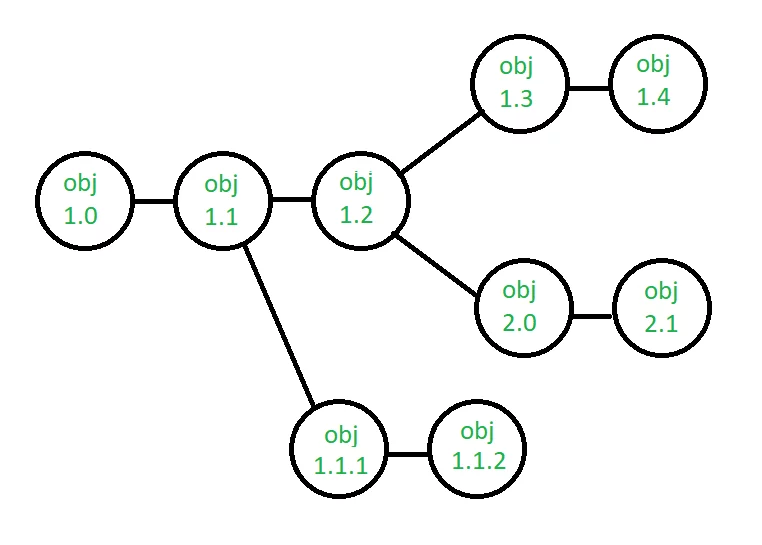
- Purpose: Track every change and enable parallel development.
- How It Works:
- Branching: Developers work on separate branches (e.g.,
feature/new-payment). - Tagging: Mark stable versions (e.g.,
v1.2.3-release). - Semantic Versioning: Use numbering like
MAJOR.MINOR.PATCH.
- Branching: Developers work on separate branches (e.g.,
Case Study: In 2025, Tesla’s Autopilot team uses version control to manage 100+ daily updates across 50+ vehicle models.
3. Change Control
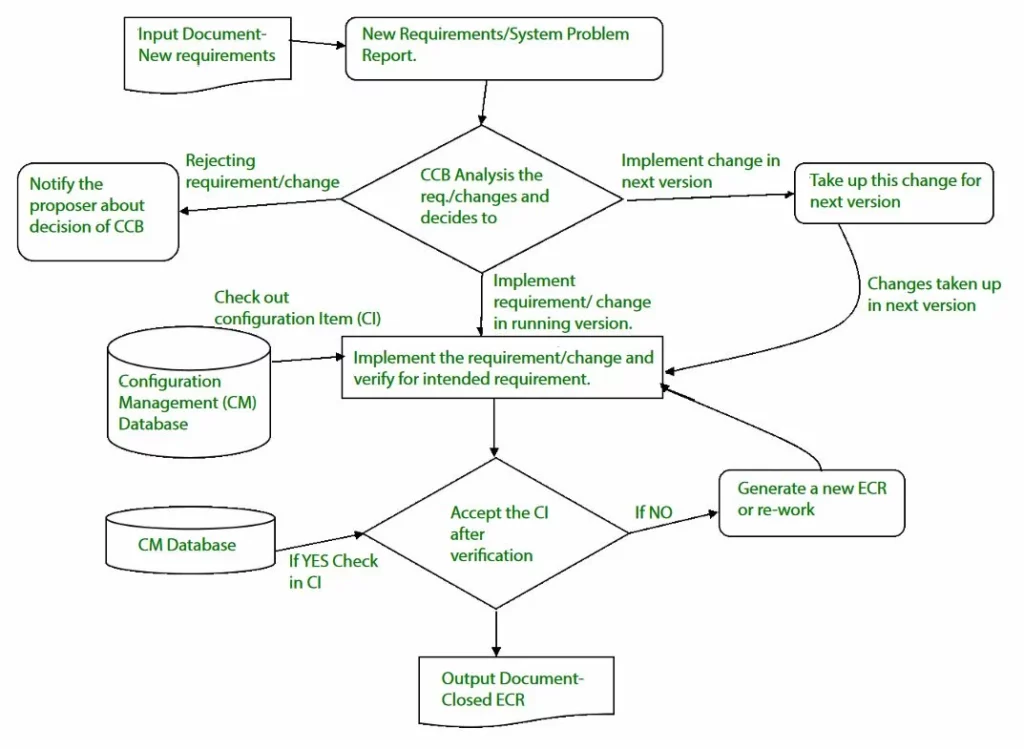
- Process Flow:
- Request: A developer submits a Change Request (CR) to add a dark mode feature.
- Review: The Change Control Board (CCB) evaluates risks, costs, and impacts.
- Approve/Reject: If approved, an Engineering Change Request (ECR) is created.
- Implement: Code is checked out, modified, tested, and merged.
4. Configuration Auditing
- Types of Audits:
- Functional: Does the change work as intended?
- Physical: Are all files properly stored and labeled?
- Outcome: A report highlighting gaps (e.g., “Dark mode breaks accessibility standards”).
2025 Trend: AI-powered audits predict risks before deployment.
5. Reporting
- Key Documents: Release notes, user guides, and audit summaries.
- Tools: Confluence, SharePoint, or custom dashboards.
Example: Netflix’s weekly release notes detail bug fixes, feature updates, and known issues.
Why SCM is Essential in 2025
- Rising Complexity: Apps now integrate AI, IoT, and blockchain—each requiring flawless coordination.
- Remote Teams: With developers across time zones, SCM ensures everyone stays aligned.
- Regulatory Demands: Laws like GDPR and CCPA mandate traceability of data-handling code.
- User Expectations: Users demand zero downtime and instant updates (think TikTok or Instagram).
Key Objectives of SCM
- Control Evolution: Prevent “feature creep” and scope gaps.
- Enhance Collaboration: Avoid “code overwrites” with clear merge rules.
- Ensure Replicability: Rebuild any version of your app, anytime.
- Speed Up Deployment: Automate testing and integration (CI/CD pipelines).
Real-World Example: SpaceX uses SCM to manage software for reusable rockets, ensuring every launch matches exact specs.
Advantages of SCM
- Boosted Productivity: Less time fixing errors, more time innovating.
- Risk Reduction: Catch conflicts early (e.g., “Will Update X break Module Y?”).
- Audit Compliance: Easily prove compliance during inspections.
- Cost Savings: Avoid costly rollbacks or patches.
Disadvantages of SCM
- Learning Curve: Teams need training on tools like Git or Ansible.
- Overhead Costs: Small projects might find SCM excessive.
- Tool Conflicts: Not all tools integrate smoothly (e.g., GitHub vs. Azure DevOps).
FAQs About SCM
Q1: What’s the difference between SCM and Version Control?
A: Version Control tracks code changes; SCM manages all components (docs, builds, tests) and processes (audits, reporting).
Q2: Which SCM tools are best in 2025?
A: Git, Helm, Terraform, and AI-driven tools like DVC .
Q3: How does SCM fit into DevOps?
A: SCM automates CI/CD pipelines, ensuring smooth code → test → deployment flows.
Q4: What is a baseline?
A: A approved snapshot of your system at a point in time (e.g., “Q1 2025 Release”).
Q5: How to resolve merge conflicts?
A: Use tools like Kdiff3 or hire a merge “referee”.
Conclusion
In 2025, Software Configuration Management isn’t optional—it’s survival. By mastering identification, version control, and auditing, teams can deliver high-quality software faster and safer. Whether you’re a startup or a tech giant, SCM is your ticket to staying competitive.