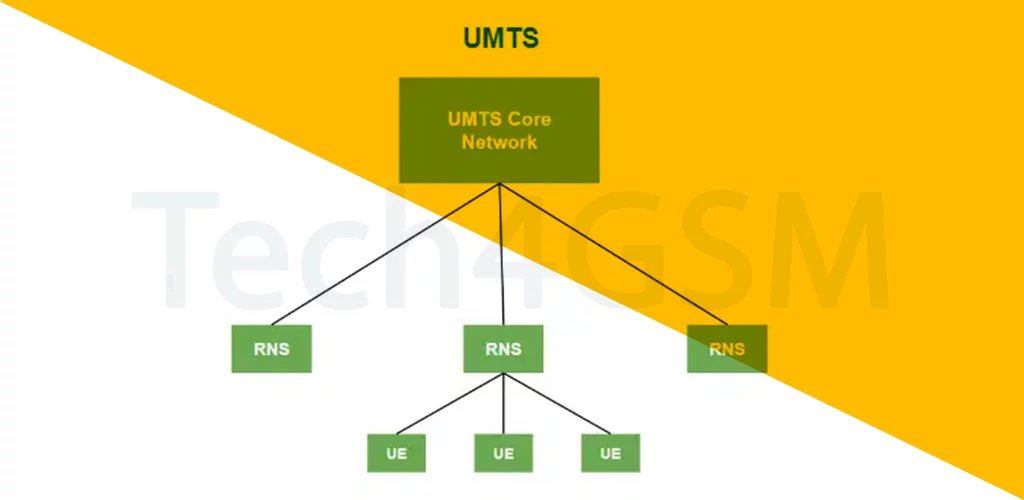
Introduction
Remember the days when sending a photo via text took forever? Thank UMTS (Universal Mobile Telecommunications System)—the tech that kicked mobile internet into high gear! Let’s rewind to the 2000s and explore how this 3G wonder made video calls, streaming, and speedy browsing possible.
What is UMTS?
- 3G’s Backbone: UMTS is the third-gen mobile network that replaced 2G (GSM). It brought 2Mbps speeds—revolutionary for the early 2000s!
- WCDMA’s Twin: Built on WCDMA (Wideband Code Division Multiple Access), a tech that splits signals into “channels” for faster, clearer connections.
- Global Standard: Used worldwide, it paved the way for modern 4G/5G networks.
Fun Fact: UMTS was Europe’s answer to America’s CDMA2000. The battle of the 3Gs!
How UMTS Works: The Magic Behind the Speed
- Wider Bandwidth: WCDMA uses a broader frequency range than 2G, like swapping a bike lane for a highway.
- Data Channels: Splits calls and internet data into separate streams—no more busy signals!
- Smarter Antennas: Improved signal reach in cities and rural areas.
UMTS vs. 2G: Why 3G Was a Game-Changer
| Feature | UMTS (3G) | 2G (GSM) |
|---|---|---|
| Speed | Up to 2 Mbps | 0.1 Mbps (painfully slow) |
| Data Focus | Built for internet | Built for calls/SMS |
| Latency | Lower lag | Delayed responses |
UMTS’s Legacy: What It Gave Us
- Video Calls: Remember FaceTime before FaceTime? UMTS made it possible!
- Mobile TV: Watch news or sports on the go (RIP, buffering).
- App Ecosystems: Faster data fueled early app stores and mobile gaming.
Why “WCDMA” and “UMTS” Are Twins
- Tech Soulmates: UMTS uses WCDMA for its core tech. Think of UMTS as the car and WCDMA as the engine.
- Marketing Mix-Up: Carriers used the terms interchangeably, confusing everyone!
UMTS Today: Still Kicking?
- 3G Sunset: Most carriers are phasing out UMTS to reuse spectrum for 4G/5G.
- Backup Role: Still active in rural areas or as a fallback network.
- Nostalgia Factor: Retro tech fans collect UMTS-era phones like the Nokia N95.
Fun Fact: The First UMTS Phone
The Nokia 6650 (2002) was among the first UMTS phones—a brick with a color screen and video calling (mind-blowing back then!).
From UMTS to 5G: The Evolution
- 4G LTE: Made UMTS look slow with 100+ Mbps speeds.
- 5G NR: Ultra-low latency and gigabit speeds.
- The Bridge: UMTS taught us how to handle mobile data at scale.
Final Thoughts
UMTS was the gateway drug to today’s hyper-connected world. It turned phones into mini-computers and made “mobile internet” a household term. While 4G/5G now rule, UMTS deserves a salute for starting the revolution!
Your Turn!
Got an old 3G phone? Fire it up and take a nostalgic trip to the era of “buffering… please wait”! 📞🌐