Introduction
In the world of networking, cables are the unsung heroes. Among them, Unshielded Twisted Pair (UTP) and Shielded Twisted Pair (STP) cables are widely used for transmitting data, voice, and signals. But what sets them apart? By 2025, understanding these cables will be crucial for building efficient networks. Let’s break down their differences, uses, and which one suits your needs best.
What is UTP Cable?
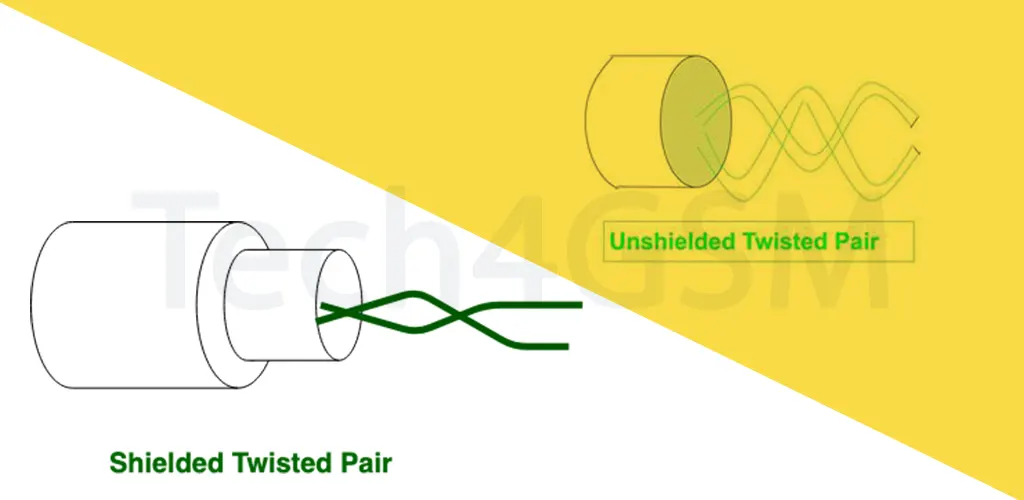
Unshielded Twisted Pair (UTP) is a cost-effective networking cable made of twisted copper wires. The twists reduce electromagnetic interference (EMI) and crosstalk without additional shielding. It’s popular in homes and offices due to its simplicity and affordability.
Key Features of UTP:
- 💰 Budget-Friendly: Cheaper than STP, ideal for small setups.
- 🔧 Easy Installation: Lightweight and flexible; no special tools needed.
- 📡 Limited Range: Works reliably up to 100 meters.
- 🌀 EMI Vulnerability: Susceptible to interference from power lines or machinery.
Common Uses: Home networks, office LANs, telephone wiring.
What is STP Cable?
Shielded Twisted Pair (STP) adds a protective layer (foil or braided mesh) around its twisted wires. This shielding blocks EMI, making it perfect for noisy environments.
Key Features of STP:
- 🛡️ EMI Protection: Extra shielding minimizes signal disruption.
- 🚀 High Performance: Supports longer distances (up to 1000 meters) and faster speeds.
- 🔩 Complex Setup: Requires grounding and skilled installation.
- 💸 Higher Cost: Pricier due to advanced materials.
Common Uses: Industrial areas, data centers, high-radiation zones.
UTP vs. STP: 6 Major Differences
| Parameter | UTP | STP |
|---|---|---|
| Shielding | No extra layer | Foil/braided shielding |
| Cost | Affordable | Expensive |
| Installation | Simple | Requires grounding & expertise |
| Speed | 10 Mbps – 1 Gbps | 10 Mbps – 100 Mbps* |
| Noise Resistance | Low | High |
| Best For | Homes, offices, short-distance | Factories, long-distance setups |
*(Note: Speed values here align with user-provided data; industry standards may vary.)
Similarities Between UTP and STP
- Both use twisted copper pairs to reduce interference.
- Compatible with RJ-45 connectors and Ethernet standards.
- Used in LANs, VoIP, and CCTV systems.
- Limited by distance without repeaters.
UTP or STP: Which Should You Choose in 2025?
- Pick UTP If:
- You need a low-cost solution for a home or office.
- EMI sources (e.g., microwaves, motors) are minimal.
- Pick STP If:
- Your environment has high EMI (e.g., factories, radio towers).
- Long-distance, high-speed data transfer is critical.
Pro Tip: For future-proofing, consider Cat6a or Cat7 UTP/STP cables to handle 10 Gbps speeds!
FAQs About UTP and STP Cables
1. Can I mix UTP and STP cables in one network?
Yes, but avoid using UTP in high-EMI zones to prevent data loss.
2. Does STP require grounding?
Absolutely! Ungrounded STP can cause signal issues.
3. Which cable is better for gaming?
UTP (like Cat6) works well for most homes. STP suits LAN cafes with heavy interference.
4. Are UTP cables obsolete?
No! They’re still dominant in everyday networks due to their affordability.
5. What’s the future of twisted pair cables?
By 2025, expect smarter shielding tech and compatibility with IoT devices.
Final Thoughts
Whether you’re setting up a home office or a factory floor, choosing between UTP and STP boils down to your environment and budget. While UTP keeps things simple and cheap, STP shields your data from chaos. Stay ahead in 2025 by picking the right cable for your needs!