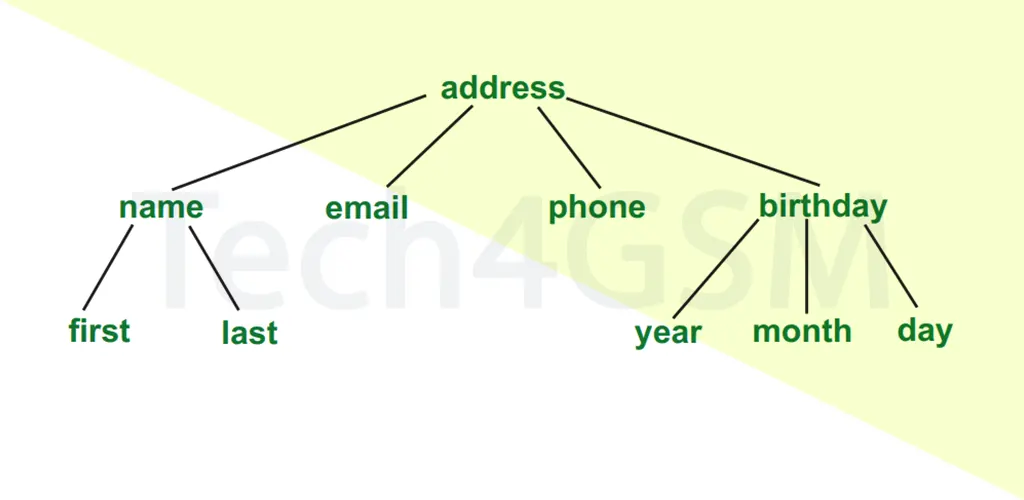
Introduction
In the world of structured data and XML, Document Type Definition (DTD) plays a critical role. Whether you’re a developer, data analyst, or tech enthusiast, understanding DTD is essential for working with XML files. This guide breaks down DTD in simple language, highlighting its features, uses, advantages, and relevance in 2025.
What is DTD?
DTD (Document Type Definition) is a set of rules that define the structure, elements, and attributes of an XML document. Think of it as a rulebook that ensures your XML files follow a specific format. When an XML file references a DTD, it gets validated against these rules, ensuring consistency and accuracy.
Key Takeaways:
- DTD acts as a blueprint for XML documents.
- It ensures data integrity by enforcing validation.
- Widely used in legacy systems, configuration files, and web development.
Features of DTD
DTD offers several features that make it a go-to choice for XML validation:
- Simple Syntax: Easy to read and write, even for beginners.
- Validation: Checks XML files for structural and grammatical errors.
- Default Values: Lets you set default attributes for elements.
- Mixed Content Models: Supports text and elements within the same parent.
- Lightweight: Minimal processing requirements.
Types of DTD
There are two types of DTDs:
1. Internal DTD
- Defined within the XML document itself.
- Ideal for small, standalone files.
Example:
<!DOCTYPE library [
  <!ELEMENT library (book+)>
  <!ELEMENT book (title, author)>
]>2. External DTD
- Stored in a separate file (e.g.,
rules.dtd). - Linked to XML documents using a URL or system path.
Syntax:
<!DOCTYPE library SYSTEM "library.dtd">DTD Syntax Explained
A DTD starts with <!DOCTYPE and includes declarations for elements, attributes, and entities.
Basic Structure:
<!DOCTYPE root-element [
  <!ELEMENT element-name (content)>
  <!ATTLIST element-name attribute-name CDATA #IMPLIED>
]><!ELEMENT>: Defines elements and their child components.<!ATTLIST>: Specifies attributes for elements.#PCDATA: Stands for parsed character data (text content).
Real-World Example:
<!DOCTYPE bookstore [
  <!ELEMENT bookstore (book*)>
  <!ELEMENT book (title, price)>
  <!ATTLIST book category CDATA "fiction">
]>Here, every <book> has a default category of “fiction”.
Advantages of DTD
- Consistency: Ensures uniform data structure across systems.
- Simplicity: Easy to learn compared to XML Schema (XSD).
- Compatibility: Supported by all XML parsers.
- Reusable Entities: Define shortcuts for repeated text.
Disadvantages of DTD
- Limited Data Types: No support for numbers, dates, or custom types.
- No Namespace Support: Struggles with multi-namespace XML files.
- Outdated: Replaced by XSD for complex projects.
- Poor Documentation: Hard to add comments or descriptions.
Where is DTD Used in 2025?
Despite newer alternatives, DTD remains relevant in:
- Legacy XML Systems: Older databases and applications.
- HTML 4.01: Found in vintage web pages (learn more at Tech4GSM.com).
- Configuration Files: Defines rules for software settings.
- RSS/Atom Feeds: Ensures feed compatibility.
- SOAP Protocols: Used in simple web services.
DTD vs. XML Schema (XSD)
| Feature | DTD | XSD |
|---|---|---|
| Data Types | Basic (text-only) | Rich (numbers, dates) |
| Namespace | Not supported | Supported |
| Complex Rules | Limited | Advanced |
| Learning Curve | Easy | Steep |
Why XSD Took Over?
XSD’s support for data types and namespaces makes it better for modern apps. However, DTD is still used where simplicity is key.
Future of DTD in 2025
In 2025, DTD continues to thrive in:
- Legacy Systems: Many enterprises still rely on DTD for old XML setups.
- Education: Taught as a foundational tool for XML beginners.
- Lightweight Projects: Quick validations without complex needs.
FAQ Section
Q1: Can DTD be used with HTML5?
No. HTML5 dropped DTD in favor of <!DOCTYPE html>.
Q2: Is DTD case-sensitive?
Yes. <Book> and <book> are treated as different elements.
Q3: How to link an external DTD?
Use <!DOCTYPE root SYSTEM "file.dtd"> or PUBLIC for public identifiers.
Q4: Why use DTD in 2025?
For simple validation in non-complex systems or learning purposes.
Q5: Can DTD validate JSON?
No. DTD is exclusive to XML.
Conclusion
DTD remains a simple yet powerful tool for XML validation, even in 2025. While XSD dominates modern applications, DTD’s ease of use keeps it alive in legacy systems and education.
Final Tip: Use DTD for quick projects and switch to XSD for complex data needs!