Introduction
Think of a kilobyte (KB) as the “bite-sized snack” of the digital world. It’s small, humble, and often overlooked in an era of massive movies and games. But without KBs, your texts, emojis, and even this article wouldn’t exist! Let’s dive into why this little unit still matters.
What is a Kilobyte (KB)?
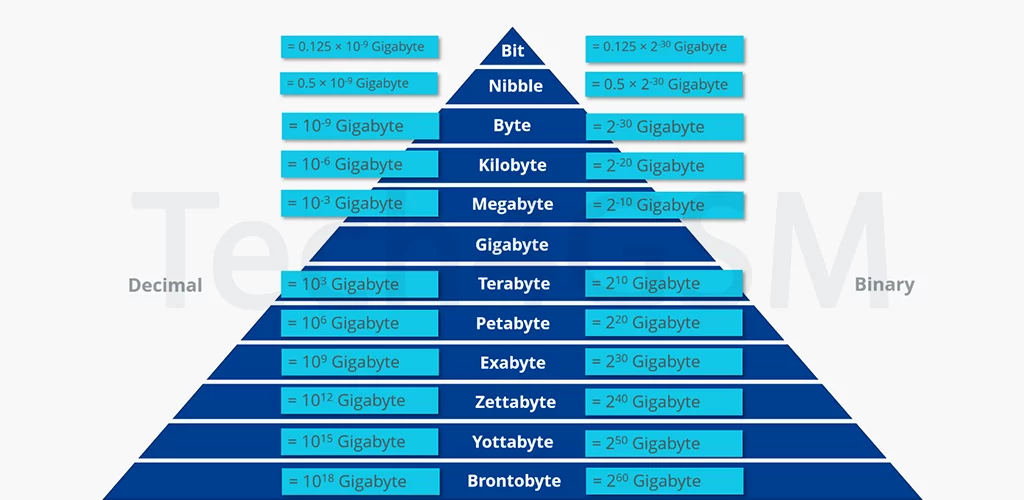
A kilobyte is a unit of digital information equal to 1,024 bytes. Wait, why 1,024 and not 1,000? Blame it on binary! Computers think in powers of two, so 2¹⁰ = 1,024. But in some contexts (like hard drives), companies use 1,000 bytes for simplicity—a quirk that keeps us on our toes!
You’ll spot it abbreviated as kB, K, or Kbyte—all meaning the same thing.
KB in Action: What Can You Fit in 1KB?
- A short text message (“Hey, dinner at 7?”).
- A tiny black-and-white image (think retro phone emojis).
- A simple spreadsheet with a few rows of numbers.
Back in the ‘80s and ‘90s, KBs ruled the roost. Games like Pong or early Word docs lived happily in KB-sized files!
KB vs. KiB: The Alphabet Soup of Storage
Tech folks love debates. Some argue that kibibyte (KiB)—1,024 bytes—should replace KB to avoid confusion with the decimal “kilobyte” (1,000 bytes). But most of us still say “KB” casually.
Why KBs Still Matter Today
- Data Efficiency: Small apps (like calculator tools) use KBs to save phone space.
- Web Performance: Tiny KB-sized files load faster, crucial for slow internet areas.
- Retro Tech: Old devices (think Nokia 3310) rely on KBs for basic functions.
Even your phone uses KBs to store text logs, cookies, or system files you never see!
Fun Fact: The Hidden KBs in Your Life
- A 1-minute WhatsApp voice note ≈ 100 KB.
- A plain email (no attachments) ≈ 2-5 KB.
- This article’s word count ≈ 15 KB.
How to Check File Sizes Like a Pro
- On your phone, go to File Manager > tap any file.
- On a computer, right-click > Properties (Windows) or Get Info (Mac).
KB’s Legacy: Small but Mighty
While terabytes and gigabytes steal headlines, KBs are the unsung heroes of everyday tech. They remind us that big things often start small—like the first step in coding, a single text, or a pixelated heart emoji. ❤️
Next time you send a “👍,” tip your hat to the kilobyte. It’s working overtime to keep your digital life light and speedy!