Introduction
Ever tuned a radio station or wondered why your Wi-Fi works so fast? The answer often lies in MHz (Megahertz)—a unit that measures the “heartbeat” of technology. Let’s break it down in plain, everyday language!
What is Hertz (Hz)?
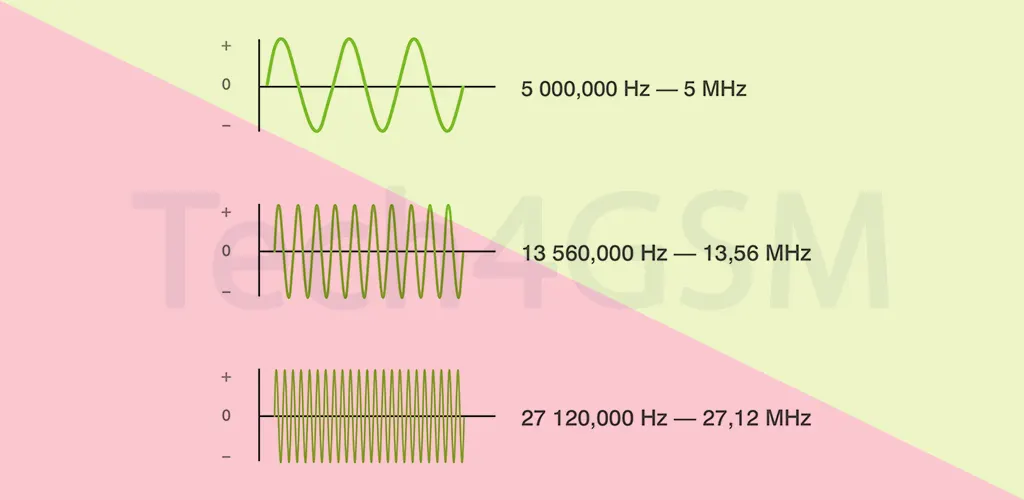
Hertz (Hz) is like a speedometer for waves. It measures how many times something happens in one second. Imagine your heart beating once per second—that’s 1 Hz. If it beats twice, that’s 2 Hz. Simple, right?
In tech terms:
- 1 Hz = 1 cycle per second.
- 1 MHz = 1,000,000 Hz (a million cycles per second!).
Where Do We Use Megahertz?
- Radio Frequencies:
- FM radio stations broadcast between 88 MHz to 108 MHz. Tuning to 99.9 MHz means your radio locks onto 99.9 million waves per second!
- Wi-Fi routers often use 2.4 GHz or 5 GHz (which is 2,400 MHz or 5,000 MHz).
- Audio Frequencies:
- Human hearing ranges from 20 Hz to 20,000 Hz (20 kHz). Megahertz is way beyond what we can hear—so it’s mostly for tech, not music!
- Processors & Clocks:
- Older computers had CPUs running at 500 MHz to 3,000 MHz (3 GHz). Today’s phones use GHz, but MHz still powers simpler gadgets like microwaves or digital thermometers.
Why Should You Care About MHz?
- Faster MHz = More Cycles: A 2.4 GHz Wi-Fi router (2,400 MHz) sends data twice as fast as a 1.2 GHz (1,200 MHz) one.
- Radio Clarity: Higher MHz ranges (like FM radio) reduce interference between stations.
- Tech Compatibility: Bluetooth devices use 2.4 GHz (2,400 MHz)—if your gadget doesn’t match, it won’t connect!
MHz vs. GHz: What’s the Difference?
- 1 GHz = 1,000 MHz: Think of MHz as “miles per hour” and GHz as “supersonic jets.”
- Old vs. New: Your grandma’s 90s computer ran at 500 MHz. Your phone today? Up to 3,500 MHz (3.5 GHz)!
Fun Fact: The First Microprocessor
Intel’s first CPU, the 4004 (1971), ran at 740 kHz (0.74 MHz). Today’s processors are 5,000 times faster—a reminder of how far tech has come!
Pro Tip: Don’t Get Blinded by Big Numbers
Higher MHz doesn’t always mean “better.” For example:
- A 5 GHz Wi-Fi signal is faster but has shorter range than 2.4 GHz.
- Audio speakers don’t need MHz—they focus on kHz for crisp sound.
Final Thoughts
Next time you stream a song or heat leftovers in the microwave, remember the quiet hum of MHz working behind the scenes. It’s the invisible rhythm keeping our gadgets in sync, from radios to routers.