Introduction
Ray tracing—the tech behind hyper-realistic lighting and shadows in games—has been a double-edged sword. While it makes games look incredible, it often tanks performance, even on high-end PCs. Now, Microsoft is stepping in with DirectX Raytracing (DXR) 1.2, promising big performance boosts without sacrificing visuals. Here’s how this 2025 update could transform your gaming experience.
What’s New in DXR 1.2?
At GDC 2025, Microsoft unveiled two groundbreaking tools to optimize ray tracing:
- Shader Execution Reordering (SER)
- Opacity Micromaps (OMMs)
Both aim to make ray tracing faster and more efficient, even on older or mid-tier GPUs. Let’s break them down!
1. Shader Execution Reordering (SER): Smarter Task Management
Imagine your GPU is a busy chef juggling multiple orders. SER acts like a kitchen manager, reorganizing tasks to cut downtime. Here’s how:
- Reduces Delays: Fixes bottlenecks caused by complex shader calculations.
- Boosts Speed: Microsoft claims up to 2x faster performance in path-traced games.
- Future-Proof: Originally an Nvidia RTX 40/50-series feature, SER is now accessible to all GPUs via DXR 1.2.
Result: Games like Alan Wake 2 (which already uses SER) can add more detailed lighting without lag.
2. Opacity Micromaps (OMMs): Simplifying Complexity
Ray tracing struggles with translucent objects like fog, smoke, or stained glass. OMMs solve this by:
- Simplifying Calculations: Maps how light passes through semi-transparent surfaces.
- Speeding Up Rendering: Delivers 2.3x faster performance in scenes with complex transparency.
- Wider Compatibility: Initially an Nvidia RTX 40-series feature, now available across AMD, Intel, and Qualcomm GPUs.
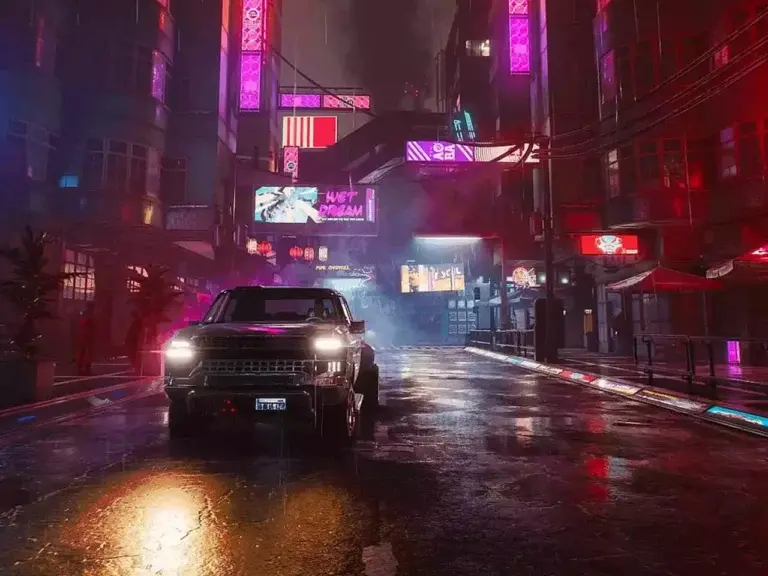
Example: A smoky battlefield or a rain-soaked cityscape will look more realistic without crushing your frame rate.
How Will Gamers Benefit?
You might not see a direct FPS spike, but developers can now push ray tracing further:
- More Effects: Expect richer shadows, reflections, and global illumination.
- Smoother Gameplay: Reduced stutter in demanding scenes.
- Cross-Platform Support: AMD and Intel GPUs get love too!
At GDC 2025, Remedy Entertainment’s CTO showcased how SER and OMMs elevated Alan Wake 2’s eerie atmosphere.
When Can You Try DXR 1.2?
- Developers: Access starts in April 2025.
- Gamers: Improved ray-traced games likely arrive late 2025/early 2026.
The Bigger Picture
Microsoft isn’t just catering to Nvidia fans. By partnering with AMD, Intel, and Qualcomm, DXR 1.2 could democratize ray tracing, making it viable for budget rigs and next-gen consoles.
Final Thoughts
Ray tracing no longer has to mean “laggy mess.” With DXR 1.2, Microsoft is bridging the gap between eye candy and buttery-smooth gameplay.
Will you enable ray tracing after this update? Let us know below! 🎮✨