Introduction
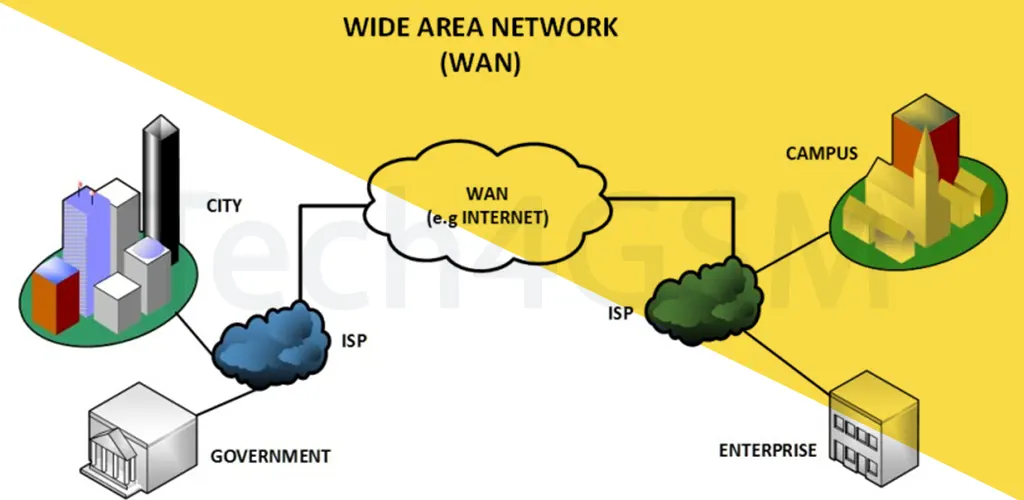
A WAN (Wide Area Network) is like a digital highway that connects smaller local networks (LANs) across cities, countries, or even continents. Imagine your office LAN in New York seamlessly sharing data with another LAN in Tokyo—WAN makes this possible!
A Quick History of WAN
- 1960s: Born from the U.S. Department of Defense’s ARPANET, the precursor to today’s internet.
- 1980s: Businesses adopted leased telephone lines for secure, long-distance data sharing.
- 2025: WANs now use AI-driven routing and 5G connectivity for faster, smarter global communication.
How Does a WAN Work?
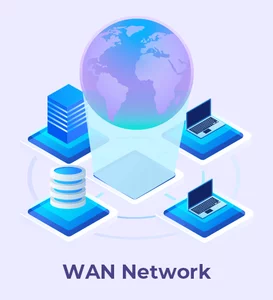
- Connects LANs: Links offices, data centers, or cloud services.
- Uses Routers: Special WAN routers direct data between locations.
- Relies on Carriers: Uses fiber optics, satellites, or cellular networks to transmit data.
Example: A company with branches in Paris and Mumbai uses a WAN to share sales reports in real time.
Types of WAN Technologies
- Circuit Switching: Dedicated path for data (like a phone call).
- Packet Switching: Breaks data into packets for flexible routing (used in the internet).
- MPLS: High-speed traffic management for businesses.
- SD-WAN: Software-Defined WAN uses AI to pick the fastest, cheapest routes (e.g., switching from MPLS to broadband).
Why SD-WAN is a Game-Changer
- Cost Savings: Replaces expensive MPLS lines with affordable internet.
- Smart Routing: Avoids network congestion like a GPS avoiding traffic.
- Easy Setup: Managed via cloud software—no hardware headaches!
Key Features of WAN
- Global Reach: Connect offices worldwide.
- High Capacity: Supports thousands of users.
- Resource Sharing: Access centralized databases or apps remotely.
- Scalability: Expand your network as your business grows.
Pros and Cons of WAN
| Pros | Cons |
|---|---|
| Connects global teams instantly | Slower than LAN due to distance |
| Centralized data storage | Higher security risks |
| Reduces travel costs | Complex setup & maintenance |
FAQs About WAN
Q1. What is WAN-as-a-Service?
A: A cloud-based WAN model that replaces old hardware with software. Just plug in, configure online, and go!
Q2. What’s a leased line?
A: A dedicated high-speed connection rented from providers (e.g., fiber optics for banks).
Q3. Can WAN work with 5G?
A: Yes! 5G WANs offer faster speeds and lower latency, perfect for IoT devices by 2025.
Q4. How secure is WAN?
A: Use VPNs, firewalls, and encryption to protect data during transit.
Q5. What’s the future of WAN?
A: Think AI-powered networks, edge computing, and greener data transmission.
Upgrade Your Network Today!
Whether you’re a startup or a global enterprise, WAN technology keeps your teams connected and productive.