Introduction
Ever picked up an older mobile phone or a budget gadget and noticed the screen isn’t as vibrant or smooth as your latest smartphone? Meet CSTN (Color Super Twisted Nematic)—the display tech that keeps costs low but has its quirks. Let’s unravel what CSTN is, why it’s used, and how it stacks up against modern screens.
What is CSTN? Let’s Start with STN
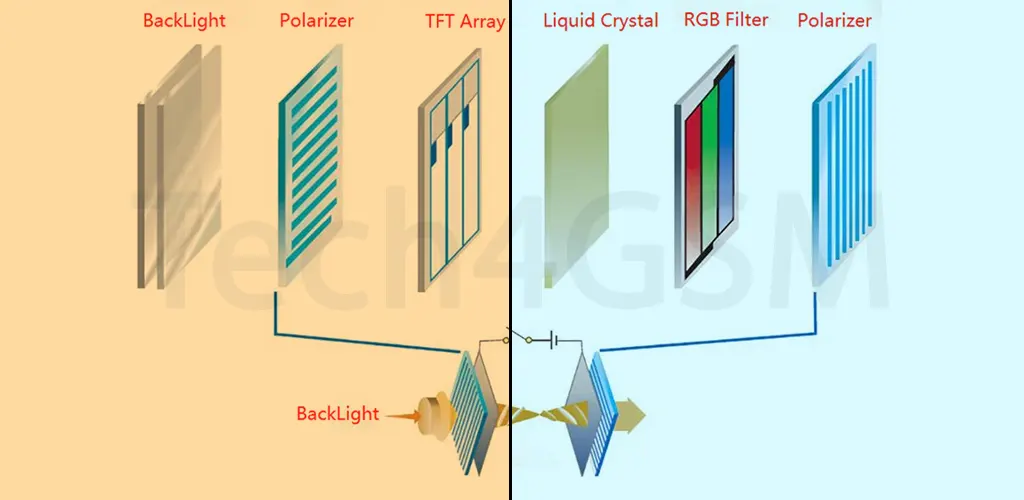
Imagine a screen that’s simple, affordable, and easy on battery life. That’s STN (Super Twisted Nematic), a type of LCD technology. STN displays were originally black-and-white and worked by twisting liquid crystals to control light. Think of it like blinds on a window—twist them one way, light passes through; twist another, it blocks.
Now, add color! CSTN is just STN with a color filter layered on top. It’s like turning a black-and-white TV into a basic color TV. But there’s a catch: while CSTN brings color, it’s still not as sharp or quick as today’s high-end screens.
CSTN vs. TFT LCD: The Budget vs. Premium Showdown
Most modern devices use TFT LCDs (Thin-Film Transistor) for vibrant colors and smooth scrolling. But CSTN? It’s the underdog. Here’s how they compare:
- Image Quality:
- CSTN: Colors look faded, like a washed-out painting. Limited viewing angles—tilt the screen, and it dims.
- TFT: Rich, punchy colors and wide viewing angles.
- Response Time:
- CSTN: Slower updates. Fast-moving scenes (like games) might blur—like flipping a book page slowly.
- TFT: Lightning-fast response. Perfect for videos and apps.
- Cost & Energy:
- CSTN: Cheap to make and sips battery life. Great for devices where price matters more than performance.
- TFT: More expensive but delivers premium quality.
Why Do Budget Devices Still Use CSTN?
Simple: affordability and efficiency. If you’re making a basic phone, calculator, or industrial device, CSTN keeps costs down without draining the battery. It’s like choosing a bicycle over a sports car—it gets the job done without the frills.
For example, older Nokia phones or entry-level feature phones often used CSTN screens. They didn’t need Netflix-quality displays—just something readable and durable.
Pros and Cons of CSTN
Pros:
- Wallet-friendly for manufacturers (and you!).
- Energy-efficient—great for devices used outdoors or with small batteries.
- Lightweight and simple to design.
Cons:
- Dull colors and slow response times.
- Poor performance in bright sunlight.
- Not ideal for videos or gaming.
CSTN Today: Where Does It Stand?
While TFT and OLED dominate smartphones, CSTN isn’t extinct! You’ll still find it in:
- Basic calculators
- Older car dashboards
- Low-cost medical devices
- Industrial equipment
It’s the quiet workhorse for gadgets that prioritize function over flair.
Final Thoughts
CSTN might not win any awards for eye candy, but it’s a key player in making tech accessible. Next time you see a budget device with a “meh” screen, remember: CSTN helped keep it affordable!