Introduction
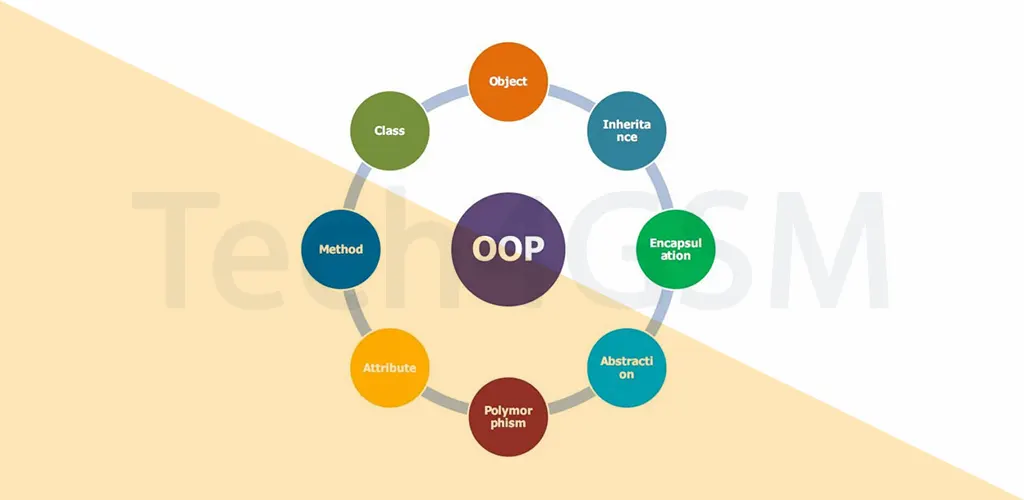
Object-Oriented Programming (OOP) is a way of writing code that mimics real-world entities. Instead of focusing on complex logic, OOP organizes programs into objects that interact with each other. These objects bundle data (like attributes) and actions (like methods) into a single unit, making code easier to manage, reuse, and secure. Let’s break down OOP’s core concepts in easy language!
What Are the Key OOP Concepts?
1. Class: The Blueprint
A class is like a template for creating objects. It defines what an object will look like and what it can do. Think of it as a recipe—for example, a Smartphone class could include properties like model, OS, and storage, along with actions like makeCall() or installApp(). Every smartphone you create (like an iPhone or Samsung) follows this blueprint but has its own unique details.
Example:
All smartphones share features (screen, battery, apps), but each has different specs. Here, Smartphone is the class, and model or OS are its properties.
2. Object: The Real-World Entity
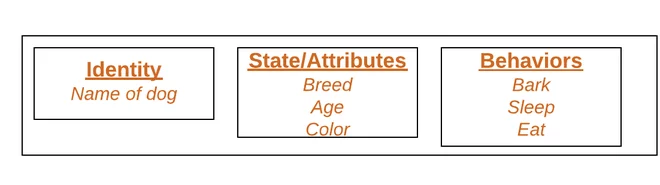
An object is a single instance of a class. When you create an object, it gets its own data and can perform actions defined in the class. For instance, if “iPhone 15” is an object of the Smartphone class, it can store specifics like iOS 17 and 256GB storage.
Example:
A real-world object like a Dog has traits (breed, color) and behaviors (bark, eat). In code, a Dog object could use methods like .bark() or .fetch().
3. Data Abstraction: Simplify Complexity
Abstraction hides unnecessary details and shows only what’s essential. Imagine using a TV remote—you press buttons to change channels without knowing how the circuits inside work. Similarly, in OOP, a BankAccount class might let you .deposit() or .withdraw() money without exposing the math behind it.
4. Encapsulation: Safety First!
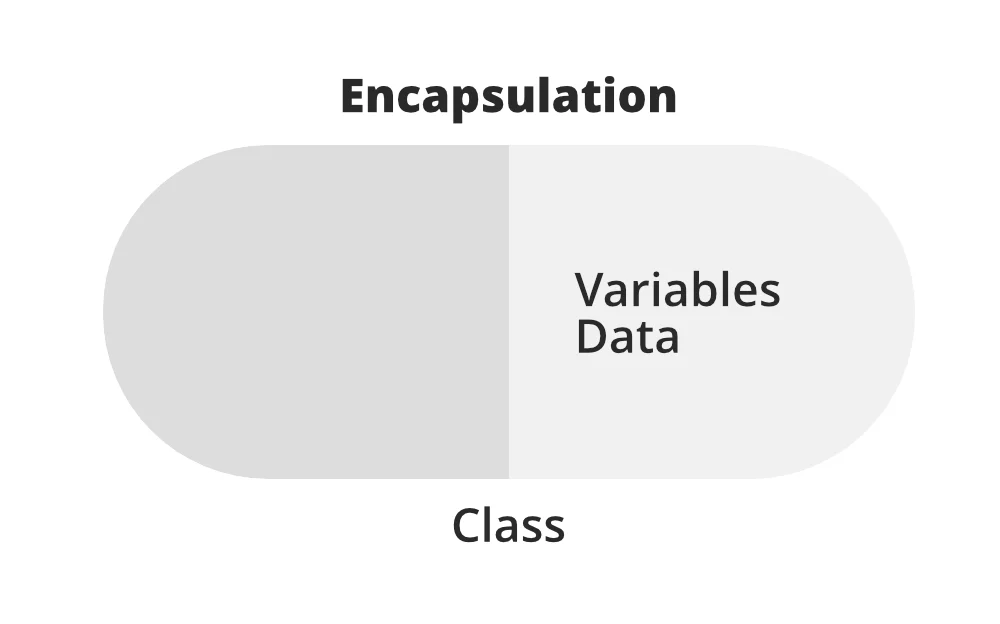
Encapsulation keeps data safe by restricting direct access. It bundles data and methods into a class, like a medicine capsule (the data) inside a protective shell (the methods). For example, a Bank class might hide accountBalance and only let you modify it via .deductFee() or .addInterest().
Analogy:
In a hospital, only authorized nurses can access patient records—others must request data through proper channels.
5. Inheritance: Reuse & Expand
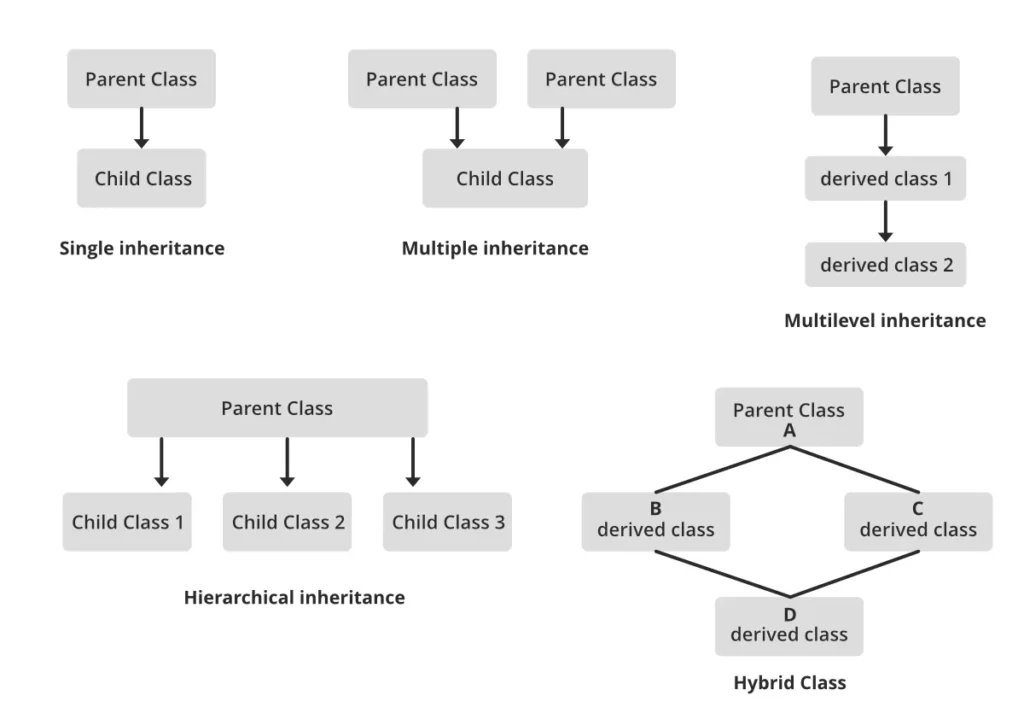
Inheritance lets a new class (child) take properties and methods from an existing class (parent). This promotes code reuse. For instance, an ElectricCar class can inherit from a parent Car class but add features like .chargeBattery().
Example:
A social media app’s AdminUser might inherit basic features from User (like login) but have extra powers like deletePost().
6. Polymorphism: One Name, Many Forms
Polymorphism allows methods to perform different tasks based on context. For example, a Print button in an app might:
- Print text in a document editor.
- Print a receipt in a shopping app.
The same method name (print()) adapts to the situation!
Real-life analogy:
Your friend acts as a student in class, a teammate on the field, and a customer at a café—same person, different roles.
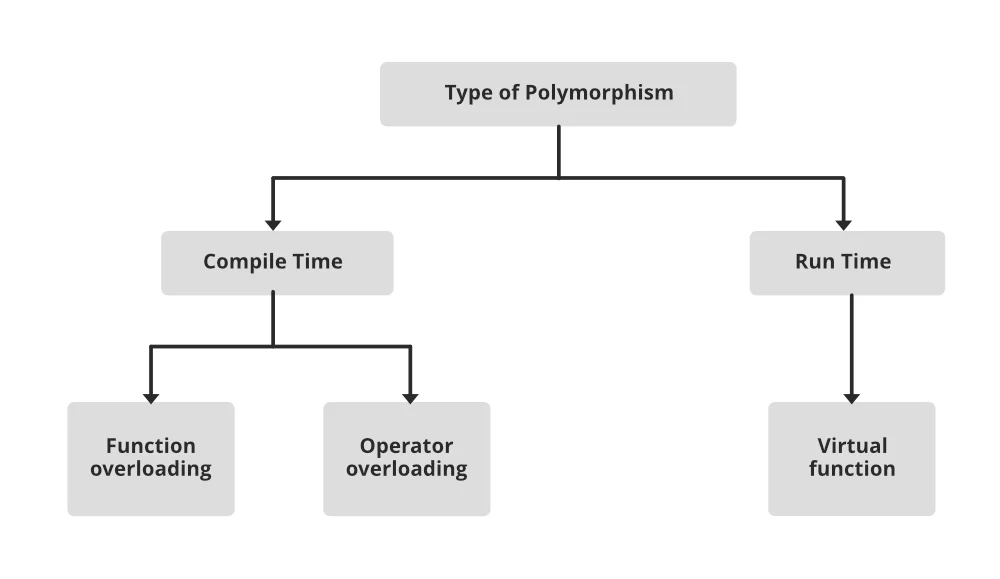
7. Dynamic Binding: Flexibility at Runtime
Dynamic binding delays connecting a method call to its code until the program runs. For example, a Calculate function might behave as Add() or Multiply() based on user input. This makes programs more flexible.
8. Message Passing: Communication Between Objects
Objects interact by sending messages (requests) to each other. For instance, a WeatherApp object might ask a Location object for your city’s data before fetching the forecast.
Why Use OOP?
- Simpler Maintenance: Updates are easier with organized code.
- Data Security: Encapsulation protects sensitive info.
- Reusability: Inherit and reuse code to save time.
- Solve Real Problems: Model real-world scenarios (e.g., banking, gaming).
- Scalability: Add features without rewriting entire code.
FAQs
Q1: What’s the difference between a class and an object?
A class is a blueprint (e.g., Smartphone), while an object is an actual instance (e.g., iPhone 15).
Q2: How does OOP improve security?
By hiding data via encapsulation, OOP prevents unauthorized access.
Q3: Can OOP work with any programming language?
Languages like Python, Java, and C++ support OOP, but others (like C) don’t.
Q4: What are OOP trends in 2025?
Expect more AI integration and modular coding practices!
Q5: Is OOP suitable for small projects?
Yes! It keeps even small projects organized and scalable.
Mastering OOP helps you write cleaner, efficient, and future-proof code. Start experimenting with classes and objects today! 🚀