Introduction
In the fast-evolving world of computing, efficiency is king. The Input-Output Processor (IOP) stands out as a game-changer, enabling seamless communication between devices and systems while freeing up the CPU for critical tasks. Let’s dive into what makes IOPs indispensable in 2025, their features, applications, and pros & cons—all explained in simple, easy-to-understand language.
What is an Input-Output Processor (IOP)?
Imagine your computer’s CPU as a busy chef in a kitchen. While cooking (processing data), the chef also needs to manage ingredient deliveries (input) and plate servings (output). This slows everything down. Enter the IOP—a specialized sous-chef that handles all deliveries and serving, letting the chef focus on cooking.
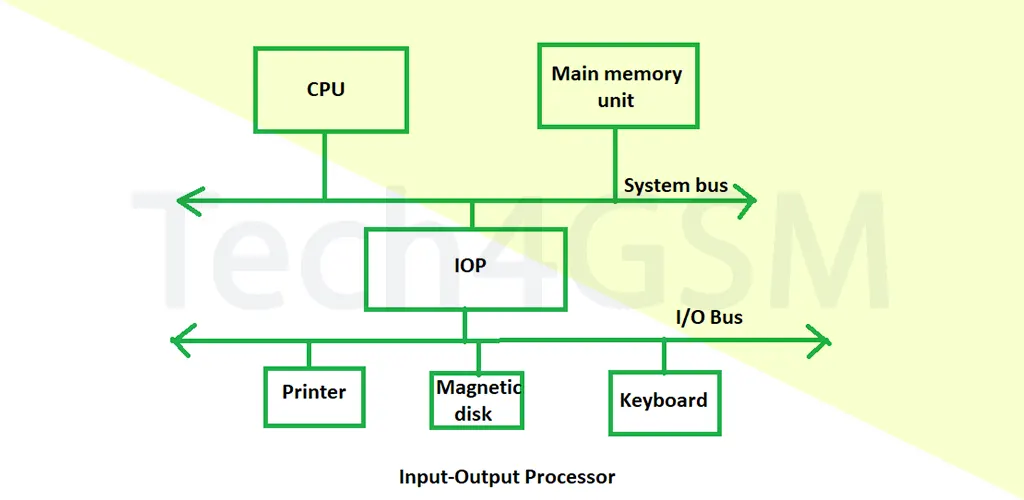
In technical terms, an IOP is a dedicated processor that manages input/output operations independently. It evolved from DMA (Direct Memory Access) technology, which allows devices to access memory without CPU intervention. However, IOPs go further by executing complex I/O instructions, performing arithmetic, and even handling protocols—making them far more advanced than basic DMA controllers.
Key Features of an Input-Output Processor
1. Specialized Hardware
IOPs come with hardware optimized for I/O tasks, including ports, DMA controllers, and interrupt handlers. This setup ensures rapid data transfers and minimal CPU disruption.
2. DMA Capability
Like a VIP pass, DMA lets IOPs move data directly between devices and memory. For example, when you save a file, the IOP transfers it to storage without bothering the CPU.
3. Interrupt Handling
IOPs manage device interrupts independently. If your printer runs out of paper, the IOP handles the alert, allowing the CPU to keep running your game or video editor smoothly.
4. Protocol Mastery
Whether it’s USB, Ethernet, or SCSI, IOPs speak the language of devices. This versatility means they can interface with almost any hardware, from keyboards to servers.
5. Buffering Brilliance
IOPs act as traffic cops, regulating data flow between fast CPUs and slower devices (like keyboards). Buffering prevents data jams, ensuring smooth operation.
6. Command Autonomy
IOPs execute device commands on their own. When you hit “print,” the IOP processes the command, checks printer status, and manages the print job—no CPU needed.
7. Parallel Processing Power
While the CPU crunches numbers, the IOP handles data backups or network requests simultaneously. This parallelism boosts overall system speed.
How Does an IOP Work?
Here’s a step-by-step breakdown:
- Request Receipt: A device (like a hard drive) asks the IOP to transfer data.
- Instruction Fetch: The IOP fetches commands from memory (e.g., “send 500MB to RAM”).
- DMA Magic: Using DMA, the IOP moves data directly to memory, bypassing the CPU.
- Error Checks: The IOP verifies data integrity and handles issues (e.g., retrying a failed transfer).
- Completion Signal: Once done, the IOP alerts the CPU via an interrupt.
This process slashes CPU workload, letting it focus on tasks like rendering graphics or running software.
Applications of I/O Processors in 2025
1. Data Acquisition Systems
In industries, IOPs collect real-time sensor data (temperature, pressure) and process it instantly. For instance, in smart factories, IOPs monitor assembly lines 24/7.
2. Industrial Control Systems
IOPs manage robotic arms, conveyor belts, and safety systems. Their precise timing ensures machinery operates in perfect sync.
3. Multimedia Applications
Streaming 8K videos? IOPs handle encoding/decoding, ensuring smooth playback without taxing your CPU.
4. Network Communication
IOPs manage data packets in routers, performing encryption and filtering. This is vital for high-speed 5G networks in 2025.
5. Storage Systems
From SSDs to cloud servers, IOPs accelerate data reads/writes. They’re why your files save in a blink!
Advantages of I/O Processors
1. CPU Freedom
The CPU isn’t bogged down by I/O tasks. Result? Faster app performance and multitasking.
2. Lightning-Fast Transfers
DMA enables speeds matching device capabilities—no CPU bottleneck.
3. Rock-Solid Reliability
IOP failures don’t crash the system. Networks stay up, factories keep running.
4. Easy Scalability
Add more IOPs as your device count grows. Perfect for expanding data centers.
5. Universal Compatibility
IOPs work with countless devices, from vintage printers to cutting-edge VR gear.
Disadvantages of I/O Processors
1. Higher Costs
Advanced hardware = pricier systems. Not ideal for budget setups.
2. Complexity Overload
More components mean more potential glitches. Troubleshooting can be a headache.
3. Diminishing Returns
For simple tasks (like typing), IOPs offer little gain. Overkill for basic PCs.
4. Sync Struggles
Multiple processors accessing memory risk data clashes. Sophisticated protocols are needed.
5. No One-Size-Fits-All
Varied IOP architectures complicate software development. Custom solutions often rule.
The Future of IOPs in 2025
By 2025, IOPs will drive innovations in AI, IoT, and quantum computing. Expect:
- AI-Optimized IOPs: Handling massive neural network data flows.
- Edge Computing: IOPs processing data locally in smart devices, reducing cloud dependence.
- Eco-Friendly Designs: Energy-efficient IOPs for green data centers.
FAQs
1. How does an Input-Output Processor work?
Answer: IOPs let devices access memory via DMA. When a device sends a request, the IOP coordinates with the CPU to grant memory access, enabling direct data transfers.
2. What connects device drivers to I/O devices?
Answer: Device drivers are software that let operating systems communicate with hardware, translating OS commands into device-specific actions.
3. Do all computers have IOPs?
Answer: No. Many systems rely on CPUs for I/O tasks. IOPs are common in servers, industrial systems, and high-performance PCs.
Conclusion
The Input-Output Processor is the unsung hero of modern computing, tackling tedious I/O tasks so CPUs can shine. As we advance into 2025, IOPs will become even more critical, powering everything from smart cities to immersive tech. While challenges like cost and complexity exist, the benefits of speed, reliability, and scalability make IOPs a cornerstone of tomorrow’s digital world.